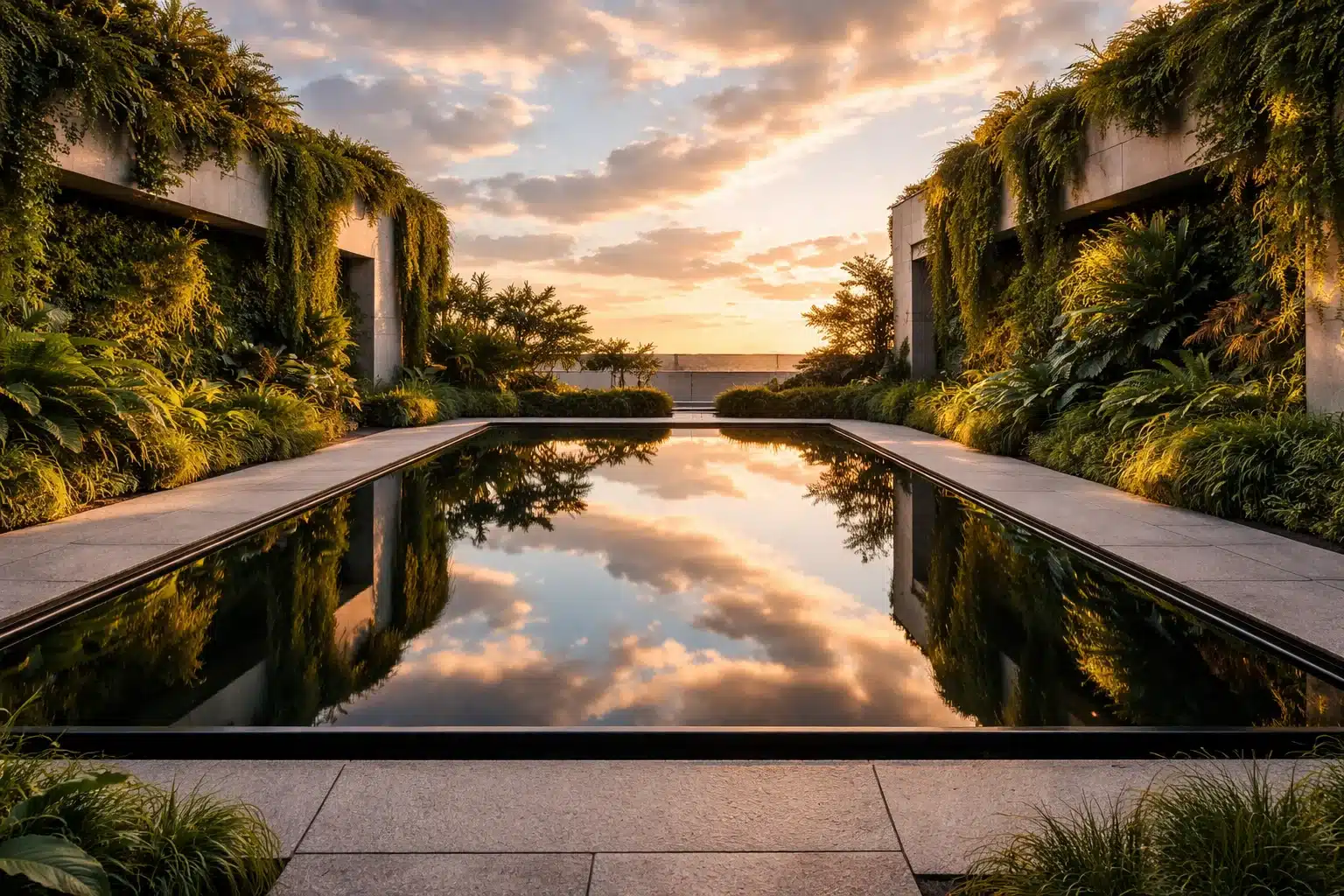
Introduction: When Water Meets the Sky
In contemporary landscape and architectural design, rooftops and vertical gardens are no longer merely functional extensions of buildings. They have evolved into expressive, experiential spaces, urban sanctuaries that reconnect people with nature above the city. Among the most captivating innovations in this realm is the concept of Sky Mirrors: reflective fountains specifically designed for rooftops and vertical gardens.
A sky mirror is more than a shallow pool or decorative water feature. It is a carefully engineered reflective surface that captures the sky, surrounding architecture, vegetation, and light, creating the illusion of infinite space. When integrated into rooftops and vertical gardens, reflective fountains become dynamic design elements that shift throughout the day, mirroring clouds, sunsets, rain, and even the subtle movement of plants and people.
This blog explores sky mirrors in depth: what they are, why they matter, how they function technically, and how they can be used creatively in rooftop and vertical garden design. We’ll also examine sustainability considerations, psychological benefits, and future trends shaping this elegant fusion of water, light, and architecture.
What Are Sky Mirrors?
Sky mirrors are reflective water features, typically shallow fountains or pools, designed to act as living mirrors. Unlike traditional fountains that emphasize height, motion, or sound, sky mirrors focus on stillness, reflection, and visual depth.
Key Characteristics of Sky Mirrors
- Ultra-shallow water depth, often just a few centimeters
- Dark or neutral basin finishes to enhance reflectivity
- Minimal ripples, sometimes with subtle circulation rather than jets
- Architectural precision, with crisp edges and seamless integration
- High-quality filtration and leveling systems to maintain clarity
On rooftops and vertical gardens, sky mirrors are carefully adapted to structural, spatial, and environmental constraints, making them both an aesthetic and engineering achievement.
Why Sky Mirrors Are Perfect for Rooftops
Rooftops present a unique design challenge: limited space, structural load restrictions, wind exposure, and intense sunlight. Sky mirrors respond to these challenges with elegance and restraint.
Expanding Space Through Reflection
In dense urban environments, rooftops can feel confined despite being open to the sky. Reflective fountains visually double the perceived space by mirroring the sky and surroundings. A compact rooftop suddenly feels expansive, serene, and immersive.
Softening the Urban Skyline
Hard architectural lines dominate city rooftops. Sky mirrors introduce softness without clutter. The reflection of clouds, stars, or nearby buildings blurs rigid edges and creates a more organic visual rhythm.
Enhancing Luxury and Exclusivity
High-end residential towers, boutique hotels, and corporate headquarters increasingly use sky mirrors to convey refinement. The presence of a reflective fountain signals thoughtful design, calmness, and a connection to nature, qualities associated with premium environments.
Sky Mirrors in Vertical Gardens: A Vertical Dialogue
Vertical gardens already redefine how greenery interacts with architecture. Adding reflective fountains introduces a horizontal counterpoint that balances vertical growth with visual stillness.
Reflecting Living Walls
When positioned at the base of a vertical garden, a sky mirror reflects foliage downward, creating the illusion that the garden continues beneath the ground plane. This visual loop enhances the sense of abundance and immersion.
Amplifying Light
Vertical gardens can sometimes create shaded or enclosed areas. Reflective water surfaces bounce light upward, illuminating leaves from below and improving plant health while enhancing visual contrast.
Creating Multi-Sensory Experiences
Vertical gardens engage sight and smell. Sky mirrors add subtle sound (through gentle circulation) and temperature moderation, making the space more comfortable and calming.
Design Principles for Reflective Rooftop Fountains
Designing a successful sky mirror requires precision. Small imperfections, uneven water levels, poor finishes, excessive ripplingm, can break the illusion.
1. Precision Leveling
Even a few millimeters of imbalance can disrupt reflection. Rooftop sky mirrors often use adjustable pedestals, laser leveling during installation, and self-leveling overflow systems.
2. Basin Materials and Finishes
Dark stone, blackened concrete, porcelain slabs, or resin-coated steel are common. The goal is to absorb light rather than reflect it directly, allowing the water surface to become the primary mirror.
3. Edge Detailing
Infinity edges, knife-edge profiles, or concealed overflows help create a seamless visual plane. On rooftops, edges are often designed to align with parapets or seating elements.
4. Controlled Water Movement
Minimal circulation prevents stagnation while preserving clarity. Laminar flow inlets, hidden perimeter slots, or micro-bubblers can maintain water quality without disturbing reflections.
Engineering Considerations for Rooftop Sky Mirrors

Beyond aesthetics, sky mirrors must meet rigorous technical standards, especially when installed above occupied spaces.
Structural Load Management
Although shallow, water is heavy. Engineers carefully calculate load distribution, often integrating sky mirrors into structural zones designed to handle additional weight.
Waterproofing and Drainage
Advanced membrane systems, redundant drainage layers, and leak detection sensors are essential. Sky mirrors are typically installed above protected waterproof assemblies to prevent damage.
Wind and Evaporation Control
Rooftops are exposed environments. Wind screens, strategic placement, and automated refill systems help manage evaporation and surface disturbance.
Sustainability and Environmental Benefits
Sky mirrors are not just visually compelling, they can also support sustainable design strategies.
- Passive Cooling
- Water surfaces absorb heat during the day and release it slowly, reducing rooftop temperatures and contributing to urban heat island mitigation.
Improved Microclimates
When combined with vertical gardens, sky mirrors help regulate humidity and air temperature, creating more comfortable outdoor environments.
Water Efficiency
Modern reflective fountains use closed-loop systems, rainwater harvesting, and smart controls to minimize water waste. Shallow depth significantly reduces total water volume compared to traditional fountains.
Supporting Green Building Certifications
Sky mirrors can contribute to LEED, WELL, and other green building standards through heat reduction, biophilic design, and water efficiency credits.
Psychological and Emotional Impact
Water and reflection have deep psychological effects. In fast-paced urban settings, sky mirrors offer moments of pause and contemplation.
Encouraging Mindfulness
The still surface of a reflective fountain naturally draws attention. Watching clouds drift across water encourages slower breathing and mental clarity.
Reducing Stress
Studies consistently show that exposure to water features lowers stress and improves mood. On rooftops and vertical gardens, sky mirrors bring these benefits into daily urban life.
Strengthening Connection to Nature
By reflecting the sky, weather, and plants, sky mirrors remind users of natural cycles, even in dense cities, fostering emotional well-being.
Use Cases Across Sectors
Sky mirrors are versatile and adaptable to many contexts.
Residential Rooftops
Luxury penthouses and shared amenity decks use reflective fountains to create tranquil gathering spaces and elevate property value.
Hospitality and Wellness
Hotels, spas, and wellness centers use sky mirrors to reinforce themes of calm, reflection, and renewal, especially in rooftop pools and meditation gardens.
Corporate and Institutional Buildings
Reflective fountains in rooftop gardens provide restorative spaces for employees, improving productivity and workplace satisfaction.
Cultural and Public Architecture
Museums, galleries, and civic buildings use sky mirrors as symbolic elements, reflecting the sky as a metaphor for openness, continuity, or collective identity.
Integrating Sky Mirrors with Lighting
Lighting transforms sky mirrors after sunset, extending their impact into the night.
Subtle Underwater Lighting
Low-lumen, warm-white LEDs can softly illuminate the water surface without overpowering reflections.
Edge and Perimeter Glow
Concealed linear lighting emphasizes geometry while preserving the mirror effect.
Reflecting the Night Sky
In darker environments, sky mirrors reflect stars, moonlight, and architectural lighting, creating a poetic nocturnal experience.
Maintenance and Longevity
Despite their refined appearance, sky mirrors are relatively low-maintenance when designed correctly.
- Regular Cleaning
Shallow depth makes debris removal easier. Automated skimmers and fine filtration systems reduce manual effort. - Water Quality Management
UV sterilization, ozone, or low-chemical treatments keep water clear and safe without harsh additives. - Seasonal Adaptation
In colder climates, rooftop sky mirrors can be designed for seasonal drainage or freeze protection, ensuring longevity.
The Future of Sky Mirrors
As cities grow vertically, rooftops and façades will play an even greater role in urban life. Sky mirrors are poised to evolve alongside emerging technologies.
Smart Water Features
AI-controlled systems will adjust circulation, lighting, and refill cycles based on weather, occupancy, and environmental data.
Integration with Renewable Energy
- Solar-powered pumps and lighting will further reduce operational footprints.
- Modular and Lightweight Systems
- Advances in materials will allow sky mirrors to be installed on more buildings, even where structural capacity is limited.
Conclusion: Reflecting the Future of Urban Design
Sky mirrors represent a powerful idea: that even in the densest cities, we can create moments of stillness, beauty, and connection to the sky. As reflective fountains for rooftops and vertical gardens, they transform underutilized spaces into contemplative landscapes, merging architecture, water, and nature into a single experience.
More than decorative elements, sky mirrors are tools for sustainability, well-being, and poetic expression. They invite us to look up, slow down, and rediscover the sky, reflected quietly at our feet.