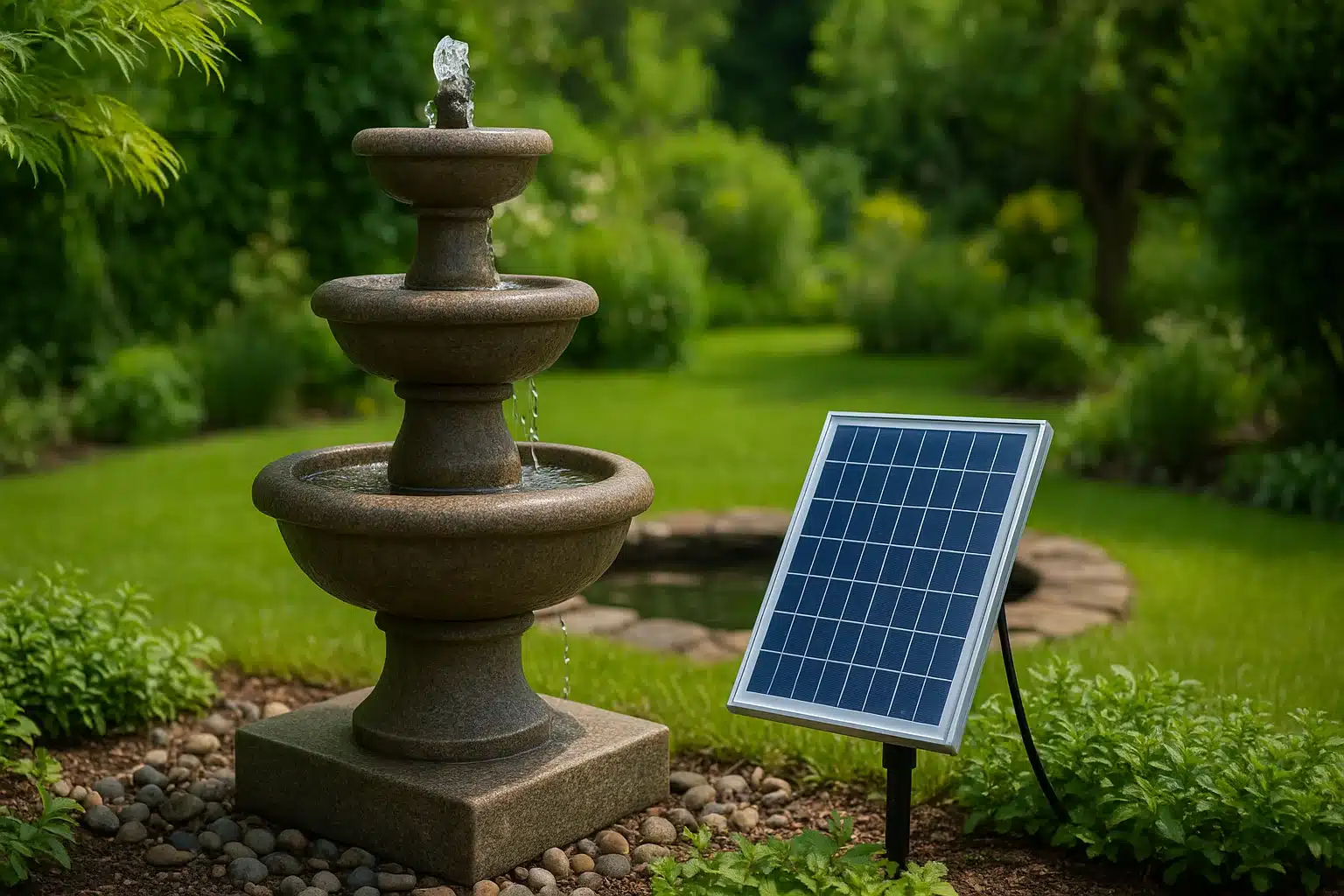
Designing a beautiful fountain for your home is already a fulfilling DIY project. But imagine taking it one step further: making your water feature self-sufficient by harnessing solar energy. Whether you’re building garden fountains, indoor fountains, or even a sleek rain curtain fountain, integrating solar power can save you money, reduce your environmental footprint, and make your fountain truly off the grid.
In this comprehensive guide, you’ll learn how to choose the right solar setup for your fountain, understand the basics of solar power, and get practical tips for powering outdoor fountains, tabletop fountains, wall fountains, and more.
Why Go Solar for Your Fountain?
1. Sustainability and Savings
Solar-powered water fountains use free, renewable energy from the sun, lowering your electricity bill and contributing to environmental sustainability. This is particularly attractive for outdoor water fountains, where running power lines might be costly or impractical.
2. Flexible Placement
By using solar power, you’re no longer constrained by the location of electrical outlets. This makes it easier to place garden fountains, floor fountains, or even rain curtain water features in the most aesthetic spots in your yard or patio.
3. Low Maintenance
Modern solar panels are durable and require very little maintenance. Combined with a small water pump, your fountain can operate reliably with minimal effort.
Understanding the Basics of Solar Power
Before diving into components, it’s helpful to understand how solar power works in the context of water features. A solar panel collects energy from the sun and converts it into electricity. This power then runs a small fountain pump, which circulates water through your fountain.
Some setups include a battery backup, which stores energy for cloudy days or evening operation—great for outdoor water fountains you want to enjoy at night.
Choosing the Right Fountain to Power
Not all fountains are created equal when it comes to solar power. Consider the following types:
- Outdoor Fountains: Perfect for solar setups because they’re directly exposed to sunlight. Classic garden fountains, floor fountains, or even dramatic rain curtain water features can all benefit.
- Wall Fountains: Wall-mounted fountains can also run on solar, but make sure the panel can be placed somewhere with ample sun exposure.
- Indoor Water Fountains: These are trickier since they’re indoors. But you can use a portable solar panel outside and wire it in, or use a hybrid solar-electric system.
- Tabletop Fountains: For tabletop fountains, small portable solar panels or solar kits work perfectly, as these require less power.
Components You’ll Need
Here’s a checklist of the main parts of your solar-powered fountain system:
1. Solar Panel: Choose a panel based on wattage and size. Most small fountains require between 1–20 watts depending on pump size.
- For small tabletop fountains: 1–5W panels are sufficient.
- For medium garden fountains or floor fountains: 10–15W.
- For large outdoor fountains or rain curtain water features: 20W and above.
2. Solar Water Pump: This is the heart of your fountain. Look for submersible pumps rated in gallons per hour (GPH). Match the pump’s power requirements to your solar panel output.
3. Battery Backup (Optional): A rechargeable battery allows your fountain to keep running when the sun isn’t shining.
4. Charge Controller: Protects your battery from overcharging and ensures efficient energy flow.
Step-by-Step Guide to Setting Up Your Solar Fountain
Step 1: Select a Sunny Location
Even the most efficient solar panels need direct sunlight. Position your fountain where it gets at least 6 hours of sun daily. For wall fountains, ensure the panel can be mounted nearby.
Step 2: Assemble the Fountain
Build or set up your fountain structure. Whether it’s a rain curtain fountain, garden fountain, or indoor water fountain, ensure the basin is level and watertight.
Step 3: Install the Pump
Place the submersible pump in the basin and connect the tubing to the fountain spout. Make sure the pump intake stays submerged to avoid damage.
Step 4: Connect Solar Panel and Pump
Position the solar panel in full sun. Most solar pumps have plug-and-play connectors. If you’re using a battery, connect the charge controller between the panel and pump.
Step 5: Test and Adjust
Fill the fountain basin with water, turn on the pump, and adjust the flow. You may need to move the panel slightly to maximize exposure.
Tips for Optimizing Performance
✅ Keep the panel clean and dust-free.
✅ Use distilled water to minimize mineral deposits on your water features.
✅ For indoor fountains powered by solar, consider hybrid setups.
✅ Place the panel at an angle that matches your latitude for maximum efficiency.
✅ Protect the pump from freezing in winter by draining and storing it.
Creative Fountain Ideas That Work Well with Solar Power

- Rain Curtain Fountain: Combine a solar pump with a sleek rain curtain panel for a modern, mesmerizing water effect.
- Tiered Garden Fountain: Classic tiered garden fountains with cascading water are perfect for solar kits.
- Wall Fountains: Add a tranquil sound and aesthetic to a patio wall using solar power.
- Tabletop Fountains: Bring a soothing vibe to your workspace or patio table with a portable solar panel.
- Floor Fountains: Tall, freestanding floor fountains create an impressive statement, especially when powered sustainably.
Common Mistakes to Avoid
❌ Choosing a panel that’s too small for the pump.
❌ Placing the panel in shade.
❌ Running the pump dry (always keep it submerged).
❌ Forgetting to clean the pump regularly.
❌ Expecting nighttime operation without a battery backup.
Keywords in Context
When designing your solar-powered fountain, remember that outdoor water fountains like garden fountains, floor fountains, and wall fountains are ideal for solar setups. Even smaller indoor fountains or tabletop fountains can benefit when you position a panel outdoors and wire it in. Modern designs such as rain curtain fountains or rain curtain water features lend themselves beautifully to solar-powered sustainability, turning any space into a serene haven without relying on grid electricity.
By choosing the right water features and components, you can enjoy the calming sights and sounds of flowing water guilt-free and off the grid.
Final Thoughts
Powering your DIY fountain with solar energy is not only eco-friendly but also practical and cost-effective. Whether you prefer the quiet simplicity of indoor water fountains, the grandeur of garden fountains, or the modern elegance of a rain curtain water feature, going solar lets you enjoy the beauty of water anywhere sunlight reaches.
Start small with a tabletop fountain, or make a bold statement with an outdoor water fountain powered entirely by the sun. Whatever you choose, you’re making a choice that’s better for you and better for the planet.
FAQs:
Outdoor fountains like garden, wall, floor, and rain curtain fountains are ideal because they can be placed in direct sunlight.