...
454.1.Boutique-Hotel-Fountain

The Boutique Hotel Fountain: Creating Intimacy at Scale

Boutique hotels thrive on a promise that large chain hotels often struggle to deliver: intimacy. Guests expect character, atmosphere, and a sense that every detail has been intentionally crafted. Yet many boutique properties are still designed to host dozens or even hundreds of guests at once. The challenge becomes clear, how do you scale hospitality without losing the feeling of personal luxury?

One of the most powerful tools designers use to achieve this balance is surprisingly elemental: water.

From elegant indoor fountains in a lobby to dramatic rain curtain fountains in atriums and tranquil garden fountains in courtyards, water has the unique ability to transform large spaces into immersive, intimate environments. In boutique hospitality design, fountains and water features are not merely decorative. They become emotional anchors that shape the guest experience.

The boutique hotel fountain is where architecture, psychology, and atmosphere meet.

Why Water Creates Instant Intimacy

Water engages multiple senses simultaneously. When guests encounter water fountains in a hotel environment, they are not just seeing an object; they are experiencing sound, movement, light, and texture all at once.

This multisensory effect immediately softens large spaces.

The gentle sound of flowing water masks background noise, making lobbies feel calmer. Light reflecting on moving water creates visual warmth. Even the subtle cooling effect of water contributes to physical comfort.

For boutique hotels, this sensory layering creates the illusion of a smaller, more personal environment, even when the architecture itself is expansive.

A carefully placed indoor water fountain can turn a vast lobby into a series of emotional zones, encouraging guests to linger, relax, and connect with the space.

The Lobby Fountain: A First Impression That Feels Personal

The hotel lobby is often the first emotional touchpoint of a guest’s stay. Boutique hotels rely on atmosphere rather than size to make a lasting impression, and this is where indoor fountains excel.

Unlike massive resort fountains designed for spectacle, boutique hotel lobby fountains are typically more refined. They may appear as sculptural floor fountains, elegant wall fountains, or minimalist reflecting pools.

These features serve several purposes:

  • They create a visual centerpiece.
  • They provide calming ambient sound.
  • They subtly guide movement through the space.

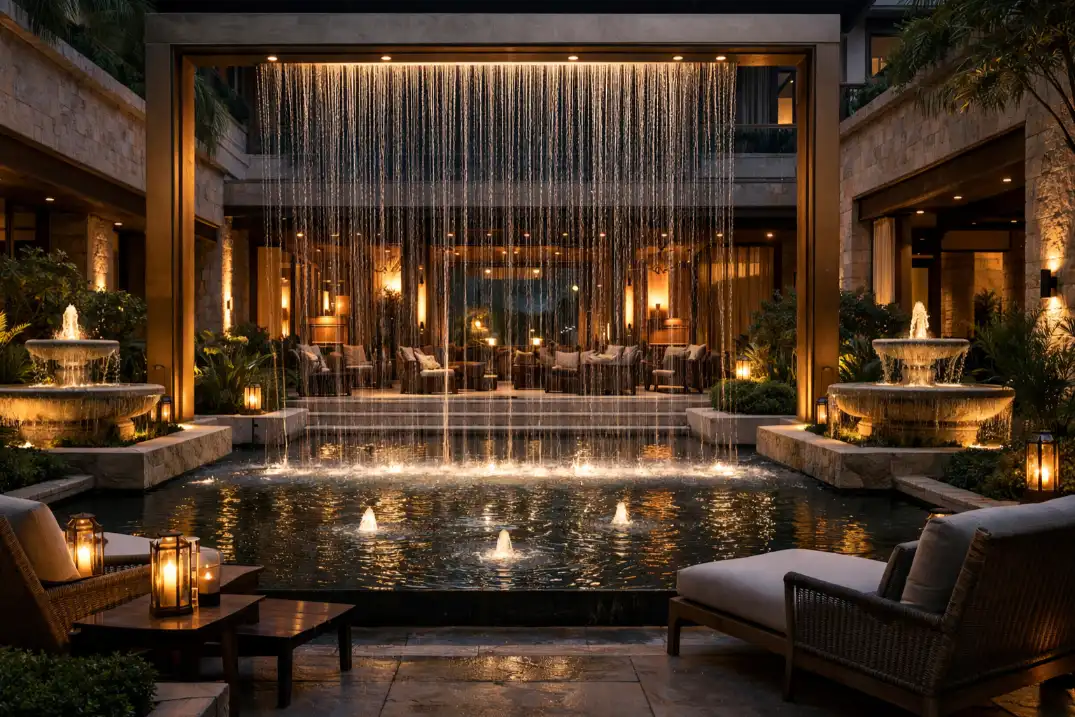
A rain curtain water feature, for example, can function as a living architectural divider. Instead of solid walls that feel rigid or closed off, a curtain of falling water creates separation while maintaining openness and light.

Guests instinctively slow down around moving water. In hospitality design, that pause is valuable. It allows guests to transition from the outside world into the hotel’s atmosphere.

Courtyard Garden Fountains: The Heart of Boutique Hospitality

Many boutique hotels incorporate courtyards, terraces, or internal gardens as quiet retreats. Within these outdoor spaces, garden fountains often become the emotional center of the property.

Unlike decorative landscaping elements, outdoor fountains in boutique hotels are designed to invite interaction. Guests may gather around them for morning coffee, afternoon reading, or evening conversation.

The presence of water changes how outdoor spaces feel.

Without water, a courtyard may appear beautiful but static. With a garden water fountain, the environment becomes alive. Movement, sound, and reflection create a dynamic setting that encourages guests to linger.

This is why many boutique hotels choose outdoor water fountains as focal points within their gardens. The fountain becomes both a visual landmark and a social gathering point.

Scaling Intimacy Through Multiple Water Features

One of the most effective design strategies for boutique hotels is distributing several smaller water features throughout the property rather than installing one monumental fountain.

This approach creates layers of discovery.

Guests might first encounter a sculptural wall fountain in the lobby. Later, they notice a tranquil tabletop fountain in a reading lounge. Outside, a garden fountain quietly anchors the courtyard.

Each water element reinforces the hotel’s atmosphere while maintaining the sense of personal scale.

This layered approach also allows designers to tailor each water fountain to its environment. Quiet lounges may benefit from subtle indoor features, while outdoor terraces may feature larger outdoor fountains that interact with natural light and landscape.

Rain Curtain Fountains: Boutique Drama Without Excess

Among modern hospitality designers, the rain curtain fountain has become one of the most striking yet versatile water features.

Instead of water flowing through traditional basins, a rain curtain fountain creates a vertical sheet of falling water. This effect can be integrated into glass walls, metal frames, or architectural openings.

In boutique hotels, rain curtain water features often serve multiple roles simultaneously:

  • Visual art installation
  • Architectural divider
  • Ambient sound generator
  • Lighting canvas

LED lighting can transform the falling water into a dynamic visual experience at night. Soft white illumination creates elegance, while programmable lighting allows hotels to adapt the atmosphere for events or seasonal themes.

Because rain curtain systems are typically slim and modular, they fit easily into boutique properties where space is precious.

The Rise of Indoor Water Sanctuaries

Beyond lobbies and courtyards, boutique hotels increasingly incorporate indoor water fountains into wellness areas, spa entrances, and quiet lounges.

These installations create environments that feel almost sacred.

Water has long been associated with tranquility and restoration. The gentle sound of flowing water reduces stress levels and encourages relaxation. For hotels emphasizing wellness or slow travel, indoor fountains reinforce that message through design rather than marketing.

Guests entering a spa or meditation room accompanied by a subtle wall fountain immediately feel the difference.

The soundscape shifts.
The atmosphere softens.
The environment becomes restorative.

Tabletop Fountains: Small Details, Big Emotional Impact

While large installations shape architectural spaces, small details define boutique hospitality. This is where tabletop fountains quietly excel.

Placed on reception desks, lounge tables, or spa counters, tabletop fountains introduce the calming presence of water in a subtle and elegant way.

They create moments of surprise.

Guests sitting down with a drink might suddenly notice the gentle sound of flowing water beside them. That sensory detail contributes to the hotel’s identity as a carefully curated environment.

In boutique hospitality, intimacy is built from hundreds of small design choices. A well-placed tabletop water fountain can become one of those memorable touches.

Outdoor Water Fountains and the Boutique Landscape

Landscape design plays a critical role in boutique hotel identity. Whether the property is located in a historic city, coastal retreat, or mountain village, outdoor environments often shape the guest experience as much as interior spaces.

Outdoor water fountains help connect architecture with landscape.

A fountain placed at the end of a garden path draws visitors forward. A reflecting basin mirrors the surrounding architecture. Cascading outdoor fountains can even mask street noise in urban environments.

This relationship between water and landscape helps boutique hotels feel rooted in their surroundings.

Instead of feeling like a detached hospitality space, the property becomes part of the natural environment.

Floor Fountains as Sculptural Statements

Some boutique hotels embrace a more artistic approach by integrating floor fountains directly into architectural spaces.

These fountains often appear flush with the floor, allowing water jets or gentle bubbling effects to emerge directly from stone or tile surfaces.

The result is a feature that feels simultaneously modern and timeless.

Floor fountains are especially effective in:

  • Atriums
  • Courtyard walkways
  • Luxury spa entrances
  • Boutique retail spaces within hotels

Because they sit at ground level, these fountains invite interaction while maintaining an understated elegance that aligns with boutique aesthetics.

Sound Design: The Hidden Power of Water Fountains

The Boutique Hotel Fountain Creating Intimacy at Scale (1)

One of the most overlooked aspects of hospitality design is sound.

Hotels must carefully balance background music, conversation, and environmental noise. In large spaces, echoes and mechanical sounds can easily disrupt the atmosphere.

Water fountains naturally solve this problem.

The consistent sound of flowing water masks unwanted noise while creating a soothing acoustic environment. This technique has been used in architecture for centuries, from Mediterranean courtyards to Japanese gardens.

For boutique hotels, sound design is essential. The right water feature ensures the environment feels calm rather than chaotic.

Lighting and Water: Creating Nighttime Atmosphere

Boutique hotels often come alive at night. Bars open, courtyards glow with ambient lighting, and guests gather for evening drinks.

This is where water fountains become even more powerful.

Lighting transforms moving water into a dynamic visual element. Reflections shimmer across surrounding surfaces, and illuminated water becomes a focal point within darkened environments.

Rain curtain fountains are particularly effective at night because falling water captures and diffuses light beautifully. Soft illumination can turn a simple architectural element into a living sculpture.

For boutique properties that prioritize atmosphere, this nighttime transformation is invaluable.

Sustainability and Modern Water Features

Modern fountain systems are far more sustainable than many people assume.

Today’s water features use recirculating pumps, filtration systems, and efficient lighting to minimize environmental impact. Many boutique hotels integrate smart fountain controls that adjust water flow and lighting based on time of day or occupancy.

Additionally, well-designed fountains can contribute to microclimate cooling in outdoor environments, making courtyards and terraces more comfortable in warm climates.

When thoughtfully implemented, outdoor water fountains support both sustainability and guest comfort.

Designing the Boutique Hotel Fountain Experience

Creating successful hotel fountains requires more than simply placing water in a space. Designers must consider how the feature interacts with architecture, lighting, acoustics, and guest movement.

Key considerations include:

  • Scale relative to the space
  • Sound level of flowing water
  • Lighting integration
  • Guest sightlines
  • Maintenance access
  • Water sustainability

The goal is not to overwhelm the environment but to enrich it.

In boutique hospitality, restraint often produces the most luxurious results.

Water as the Soul of Boutique Hospitality

Ultimately, the boutique hotel fountain represents something deeper than decoration.

It embodies the philosophy that luxury is not defined by size but by experience.

A hotel may welcome hundreds of guests each week, yet still feel intimate if every space has been thoughtfully designed. Indoor water fountains, garden fountains, rain curtain water features, and sculptural wall fountains all contribute to this sense of intentional atmosphere.

Water slows people down.

It encourages reflection.

It transforms architecture into experience.

And in the world of boutique hospitality, that transformation is everything.

FAQs:

Boutique hotels use water fountains and water features to create a calming, intimate atmosphere. The sound and movement of water help soften large spaces, reduce background noise, and create memorable sensory experiences for guests.

Common installations include indoor fountains, garden fountains, wall fountains, rain curtain fountains, and elegant outdoor water fountains placed in courtyards or terraces.

Yes. Rain curtain water features are popular in boutique hotel lobbies and atriums because they provide dramatic visual impact while also functioning as architectural dividers and ambient sound elements.

SPRING SALE: 10% OFF ALL PRODUCTS
Use Code: MAY10 | Ends MAY 31