...
Hotel-Fountain

The Hotel Fountain as a Social Compass for Shared Spaces

Introduction: Why Fountains Matter More Than We Think

Hotels are more than places to sleep. They are temporary communities, micro-cities where strangers coexist, interact, and observe one another. In these shared environments, subtle design cues guide behavior far more than signage ever could. Among the most powerful and overlooked of these cues is the hotel fountain.

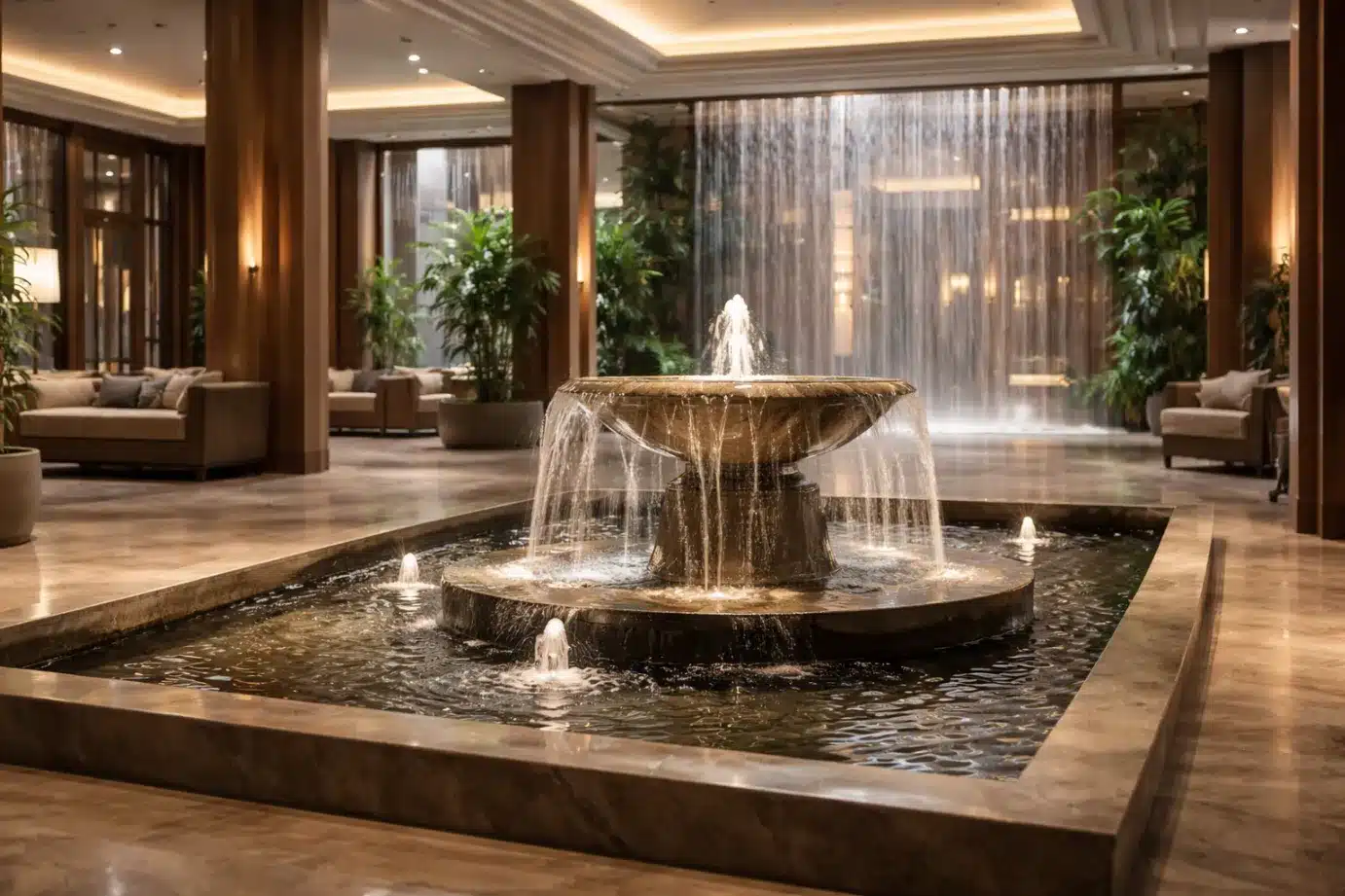
Whether it’s a dramatic lobby installation, a serene courtyard feature, or an elegant rain curtain water feature cascading down a wall, fountains act as social compasses. They orient guests, define emotional tone, and quietly signal how a space should be used. Long before a guest checks in or speaks to staff, water features begin communicating.

From grand outdoor fountains welcoming arrivals to understated indoor water fountains creating calm in busy lobbies, fountains shape movement, conversation, and memory. In this article, we’ll explore how fountains, across styles like wall fountains, floor fountains, tabletop fountains, and garden fountains, function as social anchors in hotel shared spaces, influencing how people gather, linger, and connect.

The Psychology of Water in Shared Environments

Water as a Universal Social Signal

Across cultures and history, water has always been a gathering point. Ancient Roman forums, Islamic courtyards, and Asian temple gardens all relied on water features to attract people and structure social life. Hotels, consciously or not, tap into this same instinct.

The sound and motion of water fountains activate a sense of safety and abundance. Psychologically, flowing water lowers stress, slows breathing, and increases dwell time. In shared spaces, this translates into guests being more willing to pause, observe, and interact.

Why Guests Gravitate Toward Fountains

Guests may not articulate it, but they often:

  • Choose seating near indoor fountains
  • Pause longer by outdoor water fountains
  • Take photos near distinctive water features
  • Use fountains as informal meeting points

In effect, the fountain becomes a non-verbal instruction: “This is a place to stop.”

The Fountain as a Spatial Anchor

Defining the Center Without Walls

Unlike furniture or partitions, fountains define space without closing it off. A centrally placed floor fountain in a lobby creates a natural nucleus while allowing free movement around it. Guests intuitively orient themselves: “Meet me by the fountain.”

This is particularly effective in large, open-plan hotels where guests might otherwise feel disoriented. The fountain becomes a landmark, more memorable than a column or desk.

Wayfinding Through Water

Hotels increasingly use water features as navigational aids:

  • A rain curtain fountain marks the transition from lobby to lounge
  • Outdoor fountains signal entrances, courtyards, or pool areas
  • Wall fountains guide foot traffic along corridors or atriums

In this sense, fountains quietly replace signs, reducing cognitive load while enhancing aesthetic appeal.

Outdoor Fountains: Social Life Beyond the Lobby

Courtyards as Community Spaces

Outdoor fountains are often the heart of hotel courtyards. Whether classical garden fountains or contemporary outdoor water fountains, they establish atmosphere and social rhythm.

Morning: Guests enjoy coffee near softly flowing water; casual conversations emerge organically.

Afternoon: The fountain becomes a visual break from meetings or sightseeing.

Evening: Lighting transforms the fountain into a focal point for socializing.

A well-designed outdoor fountain doesn’t just decorate a courtyard, it activates it.

Poolside vs. Fountain-Centered Socializing

Pools encourage activity; fountains encourage presence. Many luxury hotels intentionally separate these functions. A serene water feature near seating areas provides a quieter social option for guests who want connection without chaos.

This balance is critical in multi-generational or mixed-use hotels where not all guests want the same energy level.

Indoor Water Fountains and Behavioral Cues

Lobby Fountains: Setting Emotional Tone

The lobby fountain is often the first sensory impression a guest experiences. Its design communicates brand values instantly:

  • A minimalist wall fountain suggests modern sophistication
  • A grand, sculptural fountain conveys luxury and drama
  • A subtle indoor water fountain signals calm and wellness

The sound level matters too. Louder cascades energize; softer flows soothe. Designers use this intentionally to shape guest behavior, encouraging either vibrant social interaction or quiet contemplation.

Encouraging Pause in High-Traffic Areas

Hotels are full of movement: check-ins, check-outs, arrivals, departures. Indoor fountains introduce stillness into this flow. Guests naturally slow down near water features, which:

  • Reduces perceived wait times
  • Makes lobbies feel less chaotic
  • Encourages informal interactions

A fountain doesn’t just beautify space, it regulates tempo.

Rain Curtain Fountains: Visual Privacy and Social Comfort

The Rise of the Rain Curtain Water Feature

Rain curtain fountains have become increasingly popular in modern hotels, especially in urban and business-focused properties. These vertical water features act as semi-transparent dividers, creating intimacy without isolation.

How Rain Curtains Shape Social Zones

A rain curtain fountain can:

  • Separate a lounge from a walkway
  • Provide acoustic masking for conversations
  • Create a sense of enclosure without walls

Guests feel more comfortable lingering and talking when subtle boundaries exist. The movement of falling water gives a sense of privacy while maintaining openness, a perfect solution for shared spaces.

Wall Fountains and Vertical Storytelling

Making Use of Vertical Space

Wall fountains are especially effective in hotels with limited floor area. Instead of occupying valuable square footage, they turn vertical surfaces into living design elements.

Social Impact of Wall Fountains

Wall fountains often:

  • Encourage guests to line seating along walls
  • Create quieter zones for reading or conversation
  • Act as visual backdrops for photos and social media

In boutique hotels, wall fountains often become brand signatures, instantly recognizable and emotionally resonant.


Hotel Fountain

Floor Fountains: Drama and Movement

When Water Becomes Performance

Floor fountains, especially programmable or interactive ones, introduce an element of performance into hotel spaces. While more common in outdoor plazas, indoor versions are increasingly used in atriums and large lobbies.

Social Behavior Around Floor Fountains

Guests tend to:

  • Gather in groups to watch the water patterns
  • Take photos and videos
  • Use the space as a meeting or waiting area

In family-friendly or resort hotels, floor fountains also add playfulness, subtly signaling that interaction and enjoyment are welcome.

Tabletop Fountains: Micro-Experiences in Macro Spaces

Small Scale, Big Impact

Tabletop fountains may seem insignificant compared to grand installations, but they play a crucial role in intimate hotel spaces like:

  • Spa lounges
  • Library rooms
  • Private dining areas
  • Executive floors

Encouraging Quiet Social Interaction

The gentle sound of tabletop fountains creates a cocoon of calm, making guests feel comfortable sharing space without pressure to engage. They support parallel social behavior, being together without constant interaction.

Garden Fountains and the Ritual of Return

Creating a Sense of Place

Garden fountains in hotel landscapes do more than decorate, they create ritual. Guests pass them daily, often unconsciously forming emotional attachments.

Over time, these outdoor water fountains become symbols of the hotel experience itself. Guests remember “the fountain in the garden” long after forgetting room numbers.

Social Memory and Brand Association

Hotels that invest in distinctive garden fountains benefit from:

  • Higher emotional recall
  • Increased photo sharing
  • Stronger word-of-mouth marketing

Water features become part of the story guests tell others.

Fountains as Cultural and Social Equalizers

A Place for Everyone

One of the most powerful aspects of fountains is their neutrality. Unlike bars or restaurants, fountains don’t require participation, spending, or social confidence. Anyone can stand, sit, or pass by.

This makes fountains:

  • Inclusive
  • Non-judgmental
  • Universally appealing

In diverse hotel environments, fountains quietly level social differences.

Sustainability and the Modern Hotel Fountain

Water Features in a Conscious Era

Modern fountains are increasingly designed with sustainability in mind:

  • Closed-loop systems
  • Efficient pumps
  • Smart filtration
  • Minimal water loss

Communicating Responsibility Through Design

When hotels visibly invest in responsible water features, fountains become symbols not of excess, but of thoughtful stewardship.

The Fountain as a Silent Host

Hotels employ concierges, hosts, and staff to guide guests, but fountains do this silently, continuously, and without language barriers.

A well-placed fountain:

  • Welcomes without words
  • Guides without instructions
  • Connects without forcing interaction

It is, in many ways, the most patient and consistent host a hotel can have.

Conclusion: Designing Social Flow Through Water

The hotel fountain is not merely decorative. It is a social compass, guiding movement, shaping emotion, and influencing how shared spaces are experienced.

From indoor fountains calming busy lobbies to outdoor fountains activating courtyards, from rain curtain fountains creating privacy to tabletop fountains fostering quiet presence, water features define the social architecture of hotels.

In an age where experiences matter more than amenities, fountains offer something rare: a sensory, emotional, and social anchor that guests feel rather than consciously notice. And that is precisely their power.

FAQs:

Fountains influence guest behavior by creating focal points, reducing stress, and encouraging social interaction in shared spaces without the need for signage or staff intervention.
Indoor water fountains, wall fountains, and rain curtain water features are particularly effective in lobbies because they guide movement, soften acoustics, and set emotional tone.
Modern hotel fountains typically use closed-loop systems and energy-efficient pumps, making them environmentally responsible while still enhancing guest experience.