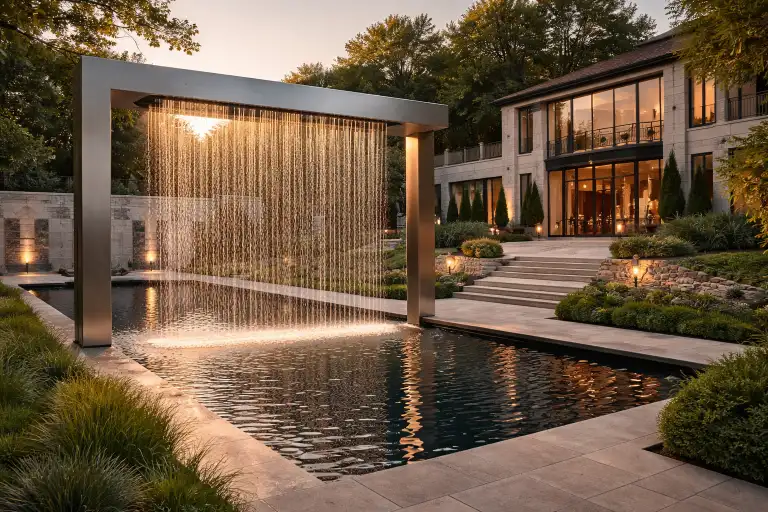
Water has always held a special place in architecture and landscape design. From the grand plazas of ancient Rome to the tranquil courtyards of Mediterranean villas, fountains have served as symbols of beauty, movement, and prestige. Today, the modern estate fountain continues that legacy, yet it also reflects a new era of creativity, technology, and environmental awareness.
Contemporary estates often integrate water fountains as central design elements that combine heritage inspiration with innovative engineering. Designers are no longer limited to classical sculptures or simple basins. Instead, they explore sleek architectural forms, dramatic vertical features, and immersive sensory experiences.
Whether it is a stately garden fountain, a striking rain curtain water feature, or elegant indoor water fountains placed in a grand foyer, these installations now function as both art and atmosphere.
In this guide, we explore how the modern estate fountain balances tradition and innovation, and how homeowners, architects, and landscape designers can use water features to transform luxury spaces.
The Historic Legacy of Estate Fountains
To understand modern fountain design, it helps to first appreciate the long history behind these installations.
For centuries, fountains symbolized wealth, engineering mastery, and artistic refinement. Ancient civilizations such as the Greeks and Romans built elaborate public water fountains that celebrated their control over water systems. During the Renaissance, Italian villas showcased ornate garden fountains featuring mythological sculptures and tiered basins.
These historic designs shared several defining characteristics:
- Symmetry and classical proportions
- Stone carvings and sculptural elements
- Multi-tier basins with flowing water
- Placement within formal gardens or courtyards
European estates later expanded the concept with monumental outdoor water fountains surrounded by landscaped grounds. These fountains served as focal points, guiding the layout of gardens and pathways.
Even today, many luxury properties reference these classical styles. However, modern estates often reinterpret tradition rather than replicate it.
Instead of elaborate statues, contemporary designers might use minimalist forms or architectural materials. Yet the emotional appeal remains the same: the soothing presence of moving water.
The Evolution of Modern Water Features
While heritage plays a role, modern technology has expanded the possibilities for water features dramatically.
Advances in pump systems, filtration, lighting, and materials have allowed designers to experiment with new fountain types that would have been difficult, or impossible, in earlier centuries.
Today’s estate fountains often incorporate:
- LED lighting systems for nighttime illumination
- Smart pump controls for energy efficiency
- Stainless steel or glass construction
- Hidden recirculation systems
- Custom water patterns and flow effects
These innovations allow architects to create unique installations such as wall fountains, dramatic floor fountains, or even fully transparent rain curtain fountains.
Rather than existing solely in outdoor gardens, modern fountains also appear throughout interiors. Luxury homes now integrate indoor fountains, tabletop fountains, and even cascading lobby installations.
The result is a design approach that treats water as a dynamic architectural material.
Outdoor Fountains as Landscape Centerpieces
Few elements elevate a property quite like well-designed outdoor fountains.
In modern estates, outdoor fountain installations often anchor the entire landscape design. Pathways, terraces, and garden beds radiate outward from the fountain’s placement.
Garden Fountains
Traditional garden fountains remain one of the most popular choices for estate landscaping. They add movement and sound while blending naturally into greenery and flowers.
Common styles include:
- Tiered classical fountains
- Stone basin fountains
- Sculptural centerpiece fountains
- Reflecting pool fountains
These installations often sit within formal garden layouts or courtyard spaces where their gentle sound enhances the surrounding environment.
Architectural Outdoor Water Fountains
Contemporary estates often favor bold geometric designs instead of classical sculptures.
Large rectangular basins, polished stone edges, or stainless steel structures transform outdoor water fountains into architectural statements. Some estates even integrate fountains directly into terraces, entryways, or pool areas.
These installations emphasize clean lines and modern aesthetics while preserving the timeless appeal of flowing water.
Indoor Water Fountains in Luxury Interiors
Although fountains traditionally lived outdoors, interior designers now embrace indoor water fountains as a way to introduce movement and calm into living spaces.
A carefully placed indoor fountain can become the visual centerpiece of a room while also influencing the ambiance through gentle sound and reflective surfaces.
Lobby and Entrance Fountains
Luxury estates frequently place indoor fountains near entrances or grand staircases. These installations immediately create a sense of sophistication.
Vertical water panels, cascading stone walls, or modern wall fountains can transform an entry hall into an immersive experience.
Tabletop Fountains
Smaller tabletop fountains provide subtle elegance in offices, lounges, and personal spaces.
These compact fountains deliver the relaxing sound of water without requiring large installations. Many homeowners choose them for meditation areas, reading corners, or private offices.
Floor Fountains
In larger interior spaces, designers may install dramatic floor fountains that emerge directly from the ground.
Water flows through hidden grates or stone basins, creating the illusion of water rising naturally from the floor. These features are especially popular in luxury spas or wellness rooms within estate homes.
The Rise of Wall Fountains
One of the most visually striking innovations in modern design is the wall fountain.
Unlike traditional basin fountains, wall fountains emphasize vertical water movement. Water flows down a surface, often glass, stone, or metal, creating a sleek and contemporary appearance.
These fountains serve multiple purposes:
- Decorative wall art
- Acoustic water feature
- Architectural focal point
Because they require less floor space, wall fountains work well in both interior and exterior environments. Designers often place them along courtyard walls, patio boundaries, or interior corridors.
Their visual simplicity aligns perfectly with modern estate architecture.
Rain Curtain Fountains: A Modern Statement
Among the most dramatic modern fountain designs is the rain curtain fountain.
Unlike traditional fountains where water flows along surfaces, rain curtain systems create a vertical sheet of falling droplets. Water appears to rain from above, forming a transparent curtain of movement.
A rain curtain water feature typically uses specialized nozzles or distribution systems that release water in evenly spaced streams.
These installations often incorporate lighting to highlight the falling water, creating mesmerizing visual effects.
Why Rain Curtain Fountains Are Popular
Several factors explain the rising popularity of rain curtain designs in luxury estates:
- Architectural drama – The vertical water curtain commands attention.
- Modern aesthetics – Clean lines fit contemporary architecture.
- Customizable lighting – LEDs transform the fountain at night.
- Indoor or outdoor flexibility – Works in lobbies, courtyards, and patios.
A well-designed rain curtain fountain becomes both sculpture and sensory experience.
Integrating Technology into Modern Fountains
Technology plays a crucial role in the success of modern estate water fountains. Today’s installations use sophisticated systems that ensure reliable performance and efficiency.
Smart Pump Systems
Modern pumps regulate water flow automatically and adjust based on usage. Some even connect to smartphone controls.
Advanced Filtration
High-performance filtration keeps water clear and reduces maintenance needs.
LED Lighting
Programmable LED lighting transforms fountains into nighttime art installations. Designers often pair lighting with rain curtain water features to highlight falling water patterns.
Sustainable Water Management
Modern fountains frequently use recirculating systems that minimize water waste. Sensors and timers help conserve energy while maintaining continuous operation.
These technological advancements make large estate fountains easier to maintain than ever before.
Sustainability and Environmental Considerations
As environmental awareness grows, modern estates increasingly prioritize sustainable fountain design.
Fortunately, contemporary fountain technology allows homeowners to enjoy beautiful water features without unnecessary resource consumption.
Sustainable strategies include:
- Closed-loop water recirculation systems
- Energy-efficient pumps
- Solar-powered fountain options
- Rainwater harvesting for fountain supply
- Low-evaporation fountain designs
These approaches reduce environmental impact while preserving the aesthetic and sensory benefits of flowing water.
Sustainability now complements heritage design rather than competing with it.
Designing a Cohesive Estate Fountain Experience
A successful fountain installation does more than simply move water. It contributes to the overall experience of a property.
Estate designers often consider several factors when planning fountain placement:
Architectural Alignment
Fountains should complement the architectural style of the home. Classical estates may favor traditional garden fountains, while modern homes often use minimalist wall fountains or floor fountains.
Sound Design
Water sound plays a major role in the ambiance. Gentle trickling creates calm environments, while larger cascades produce dramatic acoustic effects.
Lighting and Visibility
Strategic lighting ensures that fountains remain visually engaging at night.
Landscape Integration
Outdoor fountains work best when integrated with pathways, gardens, and seating areas.
When these elements align, the fountain becomes a natural extension of the estate’s design.
The Emotional Impact of Water
Beyond aesthetics and engineering, the enduring appeal of water fountains lies in their emotional influence.
Moving water engages multiple senses simultaneously:
- Visual movement
- Gentle sound
- Reflections of light
- Cooling microclimate
These qualities create environments that feel peaceful and restorative.
In luxury estates, fountains often serve as gathering points where residents and guests pause to relax. Whether it is a tranquil tabletop fountain in a study or a dramatic rain curtain water feature in a courtyard, water invites contemplation.
This emotional connection explains why fountains have remained relevant for thousands of years.
Choosing the Right Fountain for an Estate
When selecting fountains for a property, designers typically consider scale, purpose, and architectural context.
Here are several common estate fountain options:
- Statement Outdoor Fountains – Large sculptural installations placed in driveways, courtyards, or gardens.
- Garden Fountains – Classic tiered or basin designs that blend with landscaping.
- Wall Fountains – Vertical features suitable for patios, entry halls, or courtyards.
- Rain Curtain Fountains – Contemporary water curtains ideal for dramatic architectural spaces.
- Indoor Water Fountains – Interior installations that enhance ambiance in living areas.
- Tabletop Fountains – Small decorative features for intimate spaces.
By combining multiple fountain types, estates can create layered water experiences throughout the property.
The Future of Estate Fountain Design
Looking ahead, fountain design will likely continue evolving alongside architecture and technology.
Emerging trends include:
- Interactive fountains controlled by smart systems
- Integrated sound and lighting experiences
- Sculptural minimalist designs
- Sustainable water reuse technologies
- Custom artistic water patterns
At the same time, designers will continue drawing inspiration from historical precedents.
The modern estate fountain succeeds precisely because it balances both worlds: the timeless beauty of water and the limitless possibilities of innovation.
Conclusion
From Renaissance gardens to contemporary luxury homes, fountains have always captured the imagination of architects and designers.
Today’s estate fountains combine centuries of artistic tradition with advanced engineering. Whether installed as elegant garden fountains, sleek wall fountains, immersive rain curtain fountains, or calming indoor water fountains, these features transform spaces through movement, sound, and reflection.
Modern estates no longer treat fountains as simple decorations. Instead, they serve as immersive water features that shape the experience of the entire property.
By balancing heritage inspiration with modern technology, the estate fountain continues its long tradition as one of architecture’s most captivating elements.