Introduction: When Time Becomes a Design Partner
In most areas of design, aging is treated as a flaw to be hidden, repaired, or reversed. Scratches are polished out, discoloration is painted over, and wear is seen as a failure of materials or maintenance. But in the world of fountains and water features, age can be an asset rather than a liability. Enter the patina factor, the idea that well-designed fountains don’t just endure time, they collaborate with it.
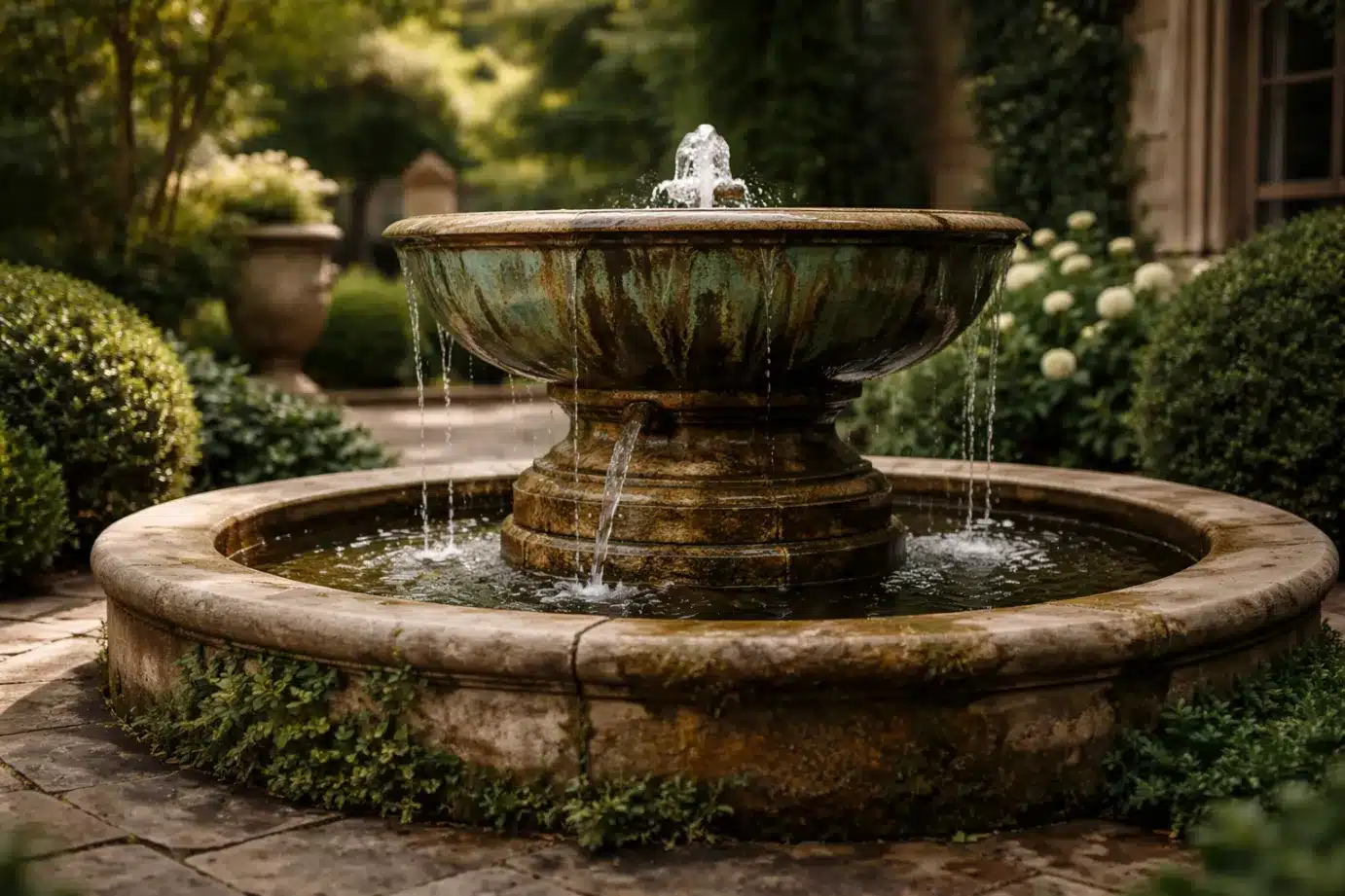
Patina is the natural surface transformation that occurs as materials interact with water, air, minerals, sunlight, and use. It’s the soft green of oxidized copper, the deepening tones of weathered stone, the subtle darkening of cast bronze, and even the micro-textures that form as water flows year after year. When embraced intentionally, patina adds character, authenticity, and emotional depth that brand-new finishes simply can’t replicate.
This is especially relevant today, as homeowners, designers, and architects move away from disposable décor and toward long-lasting, meaningful design. From outdoor fountains anchoring a landscape to indoor water fountains creating atmosphere in modern interiors, the most compelling water features are often those that look better after ten or twenty years than they did on day one.
In this article, we’ll explore what patina really is, why it matters in fountain design, and how to intentionally design fountains, outdoor and indoor, that grow more beautiful with age. Whether you’re planning garden fountains, wall fountains, rain curtain water features, or tabletop fountains, understanding patina will help you make smarter, more timeless design decisions.
What Is Patina, Really?
Patina is often misunderstood as simple wear or corrosion. In reality, it’s a controlled, predictable, and often desirable transformation of a material’s surface over time.
The Difference Between Damage and Patina
Not all aging is equal. Damage weakens structure and function; patina enhances appearance without compromising integrity. A crack in poorly cured concrete is damage. The gentle darkening of limestone from mineral-rich water is patina.
Well-designed fountains anticipate how materials will change and select those changes intentionally. This is why historic fountains in Europe, Asia, and the Middle East remain beloved centuries later. Their designers understood that water, time, and material would work together.
Common Patina Processes in Water Fountains
- Oxidation: Copper and bronze develop rich greens and browns
- Mineral deposition: Calcium and lime subtly alter stone textures
- UV exposure: Sunlight deepens and softens surface tones
- Water flow polishing: Moving water smooths and refines edges
When these processes are planned for, fountains evolve gracefully instead of deteriorating.
Why Patina Matters in Fountain Design
Patina isn’t just about aesthetics, it’s about storytelling, sustainability, and emotional resonance.
1. Patina Creates Visual Depth
New fountains often look flat or uniform. Over time, patina introduces variation, highlights where water flows most, darker tones in sheltered areas, and subtle gradients that give water features dimension. This is especially powerful in outdoor water fountains, where changing light and seasons amplify surface changes.
2. Patina Signals Authenticity
In an age of mass-produced décor, patina communicates permanence. A fountain with visible age feels rooted and real. It suggests craftsmanship rather than consumption. For luxury homes, boutique hotels, and public spaces, this authenticity elevates perceived value.
3. Patina Reduces Maintenance Anxiety
When aging is expected and embraced, minor surface changes stop feeling like problems. Homeowners with garden fountains or indoor fountains designed for patina worry less about “keeping it perfect” and enjoy the fountain as a living element.
4. Patina Aligns With Sustainable Design
Designing fountains that improve with age discourages replacement and waste. Instead of swapping out a water feature every few years, patina-driven design encourages long-term ownership and stewardship.
Materials That Age Beautifully in Fountains
The foundation of patina-friendly design is material choice. Not all materials are equal when exposed to water over long periods.
Copper and Bronze: Icons of Fountain Patina
Copper and bronze are legendary in fountain design. Over time, they develop complex layers of oxidation ranging from warm browns to iconic verdigris greens.
- Ideal for wall fountains, rain curtain fountains, and sculptural outdoor fountains
- Patina develops faster with flowing water
- Each installation becomes visually unique
These materials are especially effective in rain curtain water features, where thin sheets of water accentuate color changes.
Natural Stone: Timeless and Expressive
Stone fountains have been aging beautifully for thousands of years.
- Limestone: Softens and darkens subtly
- Travertine: Gains warmth and texture
- Granite: Polishes where water flows, remains matte elsewhere
Garden fountains and outdoor water fountains made from stone feel increasingly integrated with the landscape over time.
Concrete (When Done Right)
Architectural concrete, especially GFRC, can develop a refined patina when properly sealed and mixed.
- Suitable for modern floor fountains and minimalist water features
- Can darken or gain mineral character
- Must be designed to avoid cracking or staining issues
Stainless Steel: A Controlled Alternative
While stainless steel doesn’t develop traditional patina, it does gain micro-scratches and softening reflections over time.
- Best for indoor water fountains and contemporary wall fountains
- Offers a “designed aging” look rather than organic patina
Designing Outdoor Fountains That Improve With Age
Outdoor fountains experience the most dramatic patina evolution because they interact with sun, rain, wind, and seasonal changes.
Designing for Water Flow Patterns
Water flow determines where patina forms most visibly. Thoughtful designers consider:
- Where water will polish surfaces
- Where mineral deposits may accumulate
- How splash zones affect surrounding materials
In outdoor water fountains, asymmetrical flow often produces the most interesting aging patterns.
Integrating Fountains Into the Landscape
Patina looks best when fountains feel connected to their surroundings.
- Stone garden fountains blend with soil and greenery
- Bronze fountains echo natural color shifts in plants
- Moss and lichen (in moderation) enhance aged character
The goal is harmony, not isolation.
Climate Matters
Designing for patina requires understanding climate:
- Humid climates accelerate oxidation
- Hard water increases mineral patina
- Freeze-thaw cycles require durable construction
A well-designed outdoor fountain accounts for these factors from day one.
Indoor Fountains and Patina: Subtle but Powerful
While patina is often associated with outdoor fountains, indoor water fountains can also benefit from intentional aging, just in more restrained ways.
Wall Fountains as Living Art
Wall fountains inside homes or commercial spaces evolve slowly. Over time, water interaction softens surfaces and enhances depth without dramatic color shifts.
- Stone wall fountains develop gentle tonal variation
- Metal accents gain warmth
- Water sound improves as surfaces smooth
Tabletop Fountains: Small Scale, Big Impact
Even tabletop fountains can benefit from patina-conscious design.
- Ceramic glazes deepen with use
- Stone bowls polish naturally
- Minor surface changes add character
These small water features often become more personal as they age, especially in home offices or meditation spaces.
Floor Fountains in Modern Interiors
Floor fountains with minimalist materials, concrete, stone, or metal, gain quiet sophistication over time. Rather than fighting surface changes, designers can frame them as part of the aesthetic narrative.
Patina and Contemporary Water Features
Modern fountain design often emphasizes clean lines and minimalism, which might seem at odds with aging. In reality, patina can enhance contemporary water features by softening their edges over time.
Rain Curtain Fountains: Designed to Transform
Rain curtain fountains are particularly well-suited to patina-driven design.
- Water sheets highlight oxidation and mineral patterns
- Vertical flow emphasizes color gradation
- Changes remain elegant rather than chaotic
A rain curtain water feature often looks more refined after several years of operation than when first installed.
Blending Technology and Time
Modern fountains rely on advanced pumps, filtration, and controls, but their visible surfaces can still age organically. The key is separating functional components from aesthetic ones, allowing patina to develop without affecting performance.
Maintenance vs. Over-Maintenance: Letting Patina Happen
One of the biggest mistakes fountain owners make is over-cleaning.
The Right Kind of Care
- Clean debris and algae that affect function
- Maintain pumps and filtration systems
- Avoid aggressive chemicals on patina surfaces
Patina should be protected, not erased.
Educating Owners and Clients
Designers and manufacturers play a crucial role in setting expectations. When clients understand that color shifts and surface changes are intentional, they’re more likely to appreciate the fountain’s evolution.
Emotional Value: Why Aged Fountains Feel Better
Beyond aesthetics, patina creates emotional attachment.
- A fountain installed when a home was built becomes part of its story
- Aging water features feel familiar and comforting
- Patina signals continuity in a fast-changing world
This emotional resonance is why fountains in historic plazas, temples, and estates remain powerful gathering points centuries later.
The Business Case for Patina-Friendly Fountain Design
From a marketing perspective, designing fountains that improve with age offers real advantages.
- Higher perceived value over time
- Stronger word-of-mouth and referrals
- Differentiation from disposable water features
Customers don’t just buy fountains, they invest in experiences that unfold over years.
Designing With Time in Mind
The patina factor reminds us that fountains are not static objects. They are living systems shaped by water, material, and time. Whether it’s an outdoor fountain anchoring a landscape, an indoor water fountain enhancing a lobby, or a rain curtain fountain defining a modern space, the best designs anticipate change rather than resist it.
When we design fountains that improve with age, we shift from short-term aesthetics to long-term beauty. We allow water features to tell a story, one that deepens, enriches, and becomes more meaningful with every passing year.
In a world obsessed with newness, patina is a quiet rebellion, and fountains are its most elegant ambassadors.