CYBER MONDAY: 10% off ALL FOUNTAINS. Use CYBER10 at checkout
404.1.The-Philosophy-of-the-flow

The Philosophy of Flow: What Water Teaches Luxury Designers About Balance

Luxury design has always been more than just aesthetics. It’s a dialogue, between materials and space, between functionality and meaning, between the natural world and human intention. Among all elements of nature, water stands alone as the ultimate master of balance and movement. Its behavior is poetic yet scientific, gentle yet forceful, adaptable yet intentional. For centuries, philosophers, architects, and designers have looked to water for wisdom on equilibrium, harmony, and transformation.

1. Flow as a Design Principle: The Art of Seamless Movement

Water never forces its path. It moves in response to circumstances, sometimes carving, sometimes yielding, always adjusting. Luxury design mirrors this when it creates spaces with:

Effortless Transitions

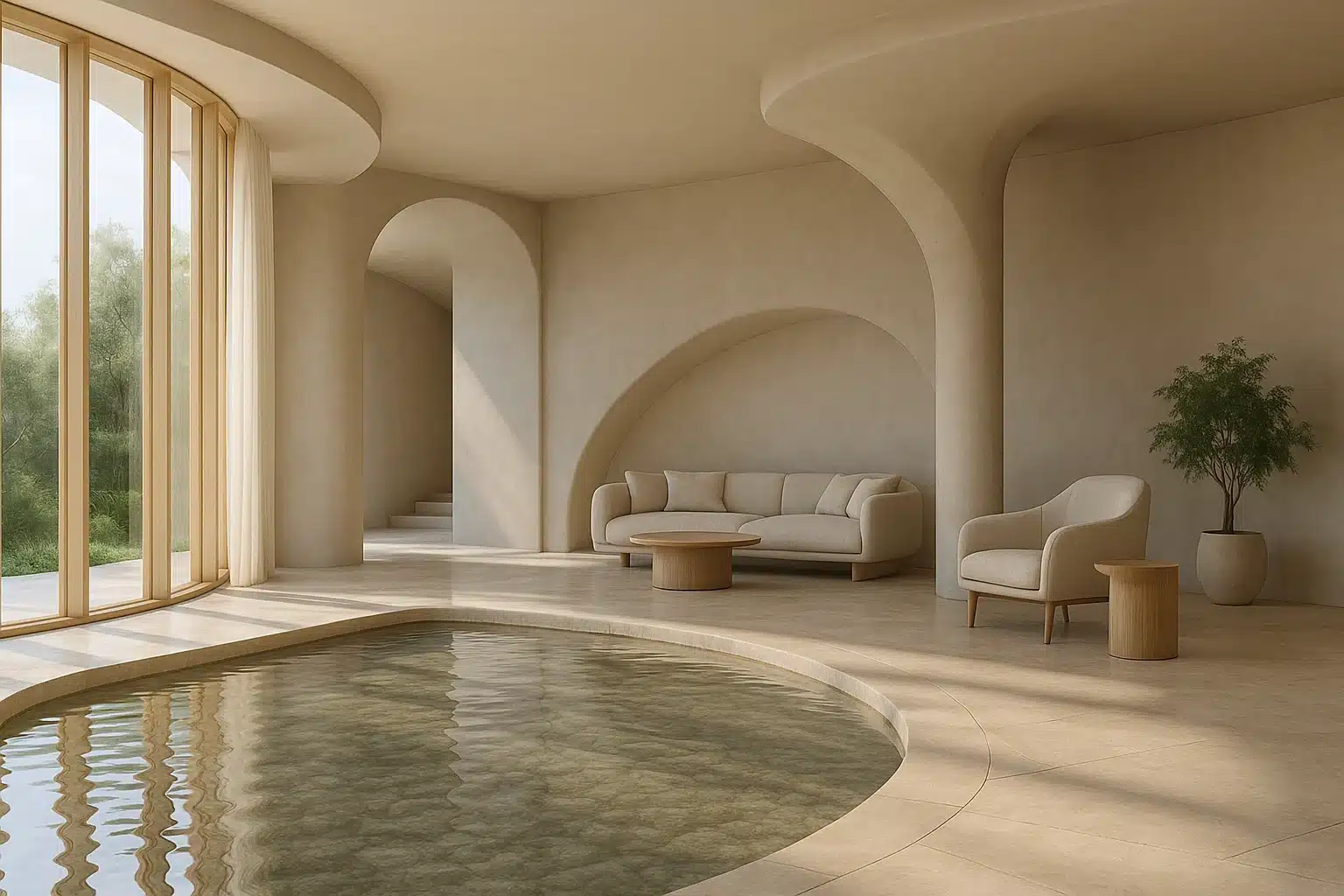
High-end environments are no longer defined by rigid zones. Instead, they embrace transitions that feel natural, soft, and unbroken. Flowing floor plans, subtle shifts in texture, and curved architectural lines allow movement without interruption.

Designers draw from water’s refusal to be contained:

  • Open spaces that encourage exploration
  • Transitional lighting gradients
  • Smooth material continuity (e.g., stone that flows into wood, then into fabric)

Organic pathways that curve instead of intersect

Just as water moves without friction, luxurious interiors now prioritize intuitive navigation, reducing visual noise and embracing rhythm.

Balancing Structure and Softness

Water embodies duality: it can be tranquil or turbulent, passive or powerful. Designers harness both sides:

  • Soft elements: rounded furniture, fluid silhouettes, silk-like textiles
  • Structured surfaces: sculpted stone, angled architecture, bold framing

This interplay reflects water’s own versatility. Luxury is rarely about extremes, it’s about achieving harmony through contrast.

2. The Emotional Intelligence of Water: Designing for Feeling, Not Just Seeing

Water has an innate emotional effect. It calms us, energizes us, centers us. This emotional resonance is shaping luxury design toward deeper human connection.

Creating Spaces That Regulate Emotion

Neuroscience shows that humans respond to natural forms, especially water, with lower stress, improved mood, and clarity. Designers incorporate elements of the “blue mind” experience into spaces via:

Acoustic elements mimicking gentle water movement

Actual water features that introduce natural sound patterns

Luxury isn’t simply visual, it’s sensorial. Water teaches us that tranquility and stimulation can coexist, forming a balanced emotional environment.

Temporal Experiences

Water changes constantly: tides rise, rivers shift, waves crash differently each day. Incorporating this philosophy, designers create spaces that evolve over time:

Dynamic lighting that changes throughout the day

  • Materials that patina elegantly
  • Modularity and reconfiguration possibilities
  • Luxury becomes less about permanence and more about responsive, living design.

3. Adaptability and Resilience: Lessons in Flexibility from Water

The ancient philosopher Lao Tzu wrote: “Nothing is softer or more flexible than water, yet nothing can resist it.” In design, adaptability is now a form of luxury.

Adaptive Spaces with Purpose

Inspired by water’s ability to reshape and redefine itself, designers consider:

  • Multifunctional rooms
  • Movable partitions and modular furnishings
  • Transformative lighting that shifts the space’s mood

Luxury design now demands resilience, spaces that evolve with user needs rather than fight against them.

Material Adaptability

Water’s impact on materials, polishing stone, softening wood, reshaping landscapes—teaches designers to respect and celebrate material evolution. Instead of resisting time, luxury embraces it:

  • Natural finishes that age gracefully
  • Stones with subtle veining resembling water’s pathways
  • Metals that oxidize beautifully
  • Fabrics that drape like liquid
  • Material authenticity echoes water’s honesty.

4. Minimalism Through Nature: Purity as a Form of Opulence

Water is the essence of simplicity, clear, pure, uncluttered. This inspires a form of minimalism that doesn’t feel sparse but deeply intentional.

  • The Luxury of Less
  • High-end designers increasingly adopt
  • the principles of reduction:
  • Removing visual clutter
  • Prioritizing craftsmanship over quantity
  • Creating focal points inspired by natural forms

This is not austere minimalism, it is organic minimalism, rooted in clarity and balance, much like still waters reflecting a cloudless sky.

  • The Flow of Light
  • Water teaches light-play. Designers mimic this through:
  • Reflective surfaces
  • Layered lighting
  • Transparent materials
  • Light wells and reflective pools

Just as water amplifies light without distortion, luxury spaces are using light as a design material.

5. Symbolism and Spirituality: Water as a Guide for Intentional Living

Luxury design increasingly speaks to mindfulness, ritual, and presence. Water, present in nearly every spiritual tradition, symbolizes purification, renewal, and clarity.

Design That Supports Ritual

Luxury is shifting from excess to mindful living. Water inspires:

  • Spa-like environments in private homes
  • Meditation corners with water-inspired textures
  • Bathtubs positioned for sunrise or sunset rituals
  • Natural stone basins that evoke ancient springs

This creates a sense of grounding, luxury as life-enhancement, not material accumulation.

Cultural Symbolism

Across cultures, water embodies:

  • Renewal: Japanese Ofuro-inspired bath rituals
  • Flowing chi: Feng Shui principles
  • Purification: Middle Eastern hammam aesthetics
  • Continuity: Scandinavian design simplicity

Luxury designers borrow from these traditions to create deeper narrative meaning.

6. Sustainability and Ethical Luxury: Water as a Reminder of Responsibility

If water teaches balance, it also teaches responsibility. True luxury design today acknowledges environmental impact.

Water-Inspired Sustainability Practices

Designers integrate water-conscious principles:

  • Use of drought-resistant landscaping
  • Greywater recycling systems
  • Sustainable material sourcing
  • Low-flow fixtures and innovative water-saving technology
  • These choices elevate luxury beyond beauty—they reflect integrity.

Biophilic Design and Living Architecture

The rise of biophilic design reflects water’s role in supporting life. Examples include:

  • Green walls mimicking natural ecosystems
  • Courtyards with water elements
  • Natural ventilation strategies inspired by breezes over lakes
  • Biomorphic forms that echo water’s curves
  • As luxury embraces nature, water becomes both guide and muse.

7. Craftsmanship Inspired by Water’s Organic Geometry

Water’s forms, ripples, waves, eddies, waterfalls, inform a new era of artistic craftsmanship.

Surface Patterns and Forms

Designers collaborate with artisans to create:

  • Rippled glass
  • Sculpted stone shaped like eroded riverbeds
  • Metalwork with wave-like etching
  • Textiles with soft ombré gradients mimicking water depth
  • These pieces feel alive, adding dimension and texture to high-end interiors.

The Power of Imperfection

Water creates irregular, organic shapes, never symmetrical but always harmonious. Designers are embracing wabi-sabi principles:

  • Handcrafted ceramics
  • Uneven natural stone forms
  • Live-edge wood
  • Unique, one-of-a-kind pieces
  • Luxury becomes personal, intuitive, and human, just like nature.

8. The Sensory Experience: Designing for All Five Senses Through Water

Water stimulates all senses, and luxury design now follows suit.

Sight:
Reflections, light movement, and visibility across a space create openness and cohesion.

Sound:
Soft water sounds influence calmness and focus, luxury designers incorporate acoustic elements inspired by water’s rhythm.

Touch:
Materials that emulate water’s softness or smoothness, silk, polished stone, velvety finishes, invite tactile engagement.

Smell:
Aromatics like sea salt, eucalyptus, or mist-inspired scents deepen sensory immersion.

Taste:
Wellness hospitality spaces incorporate teas and mineral waters as part of the holistic luxury experience.
High-end design is shifting from static beauty to multi-sensory storytelling.

9. The Future of Luxury: Living Spaces That Flow Like Water

Water teaches that nothing stays still, and luxury design is evolving in the same direction.

  • Technology as Flow
  • Smart homes now use AI and automation to create seamless living experiences:
  • Adaptive lighting that shifts like sunlight on water
  • Climate control responding to natural rhythms
  • Smart glass that transitions opacity
  • Technology becomes invisible, flowing quietly in the background.
  • Fluid Architecture

Architects design spaces inspired by water’s movement:

  • Curved walls
  • Undulating facades
  • Floating staircases
  • Suspended lighting resembling ripples
  • The future of luxury is organic, intuitive, and emotionally intelligent.

Conclusion:

Water as the Ultimate Designer
Water is more than an element, it is a philosophy. It teaches luxury designers:

  • Balance isn’t static; it’s dynamic.
  • Beauty emerges from movement, emotion, and authenticity.
  • True luxury is harmony, not excess.
  • Nature is the most timeless design teacher.

In embracing the philosophy of flow, designers create spaces that do more than impress, they transform. Like water, these environments adapt, soothe, illuminate, and inspire. They remind us that luxury is not about what we add, but what we refine; not about what we own, but how we feel.

Water flows, and so does the future of luxury design.

FAQs:

Because water embodies movement, balance, emotional resonance, and natural beauty. Its fluid properties translate seamlessly into design principles that feel organic, modern, and timeless.
Simple changes like organic shapes, natural materials, open pathways, water-inspired color palettes, and biophilic elements can bring a sense of flow into everyday living.
Flow refers to the seamless movement through a space—physically, visually, and emotionally. It emphasizes harmony, intuitive navigation, and consistent design language inspired by natural movement.