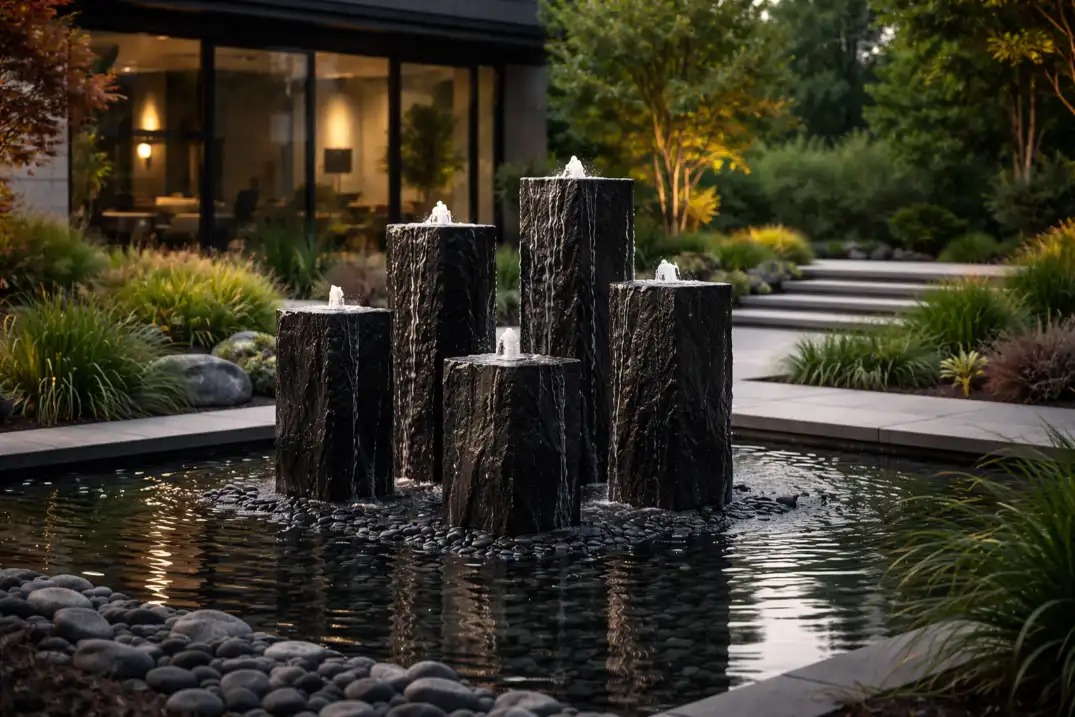
...
472.1.Dark-Basalt-fountain

The Pros and Cons of Dark Basalt in Contemporary Fountains

Contemporary fountains have evolved far beyond traditional stone basins and classical sculptures. Today’s designers focus on minimalist aesthetics, natural materials, and soothing movement. Among the materials gaining attention in modern water fountains is dark basalt—a volcanic stone known for its rich color, durability, and sleek texture.

From dramatic outdoor water fountains in modern landscapes to sophisticated indoor fountains in commercial spaces, dark basalt offers a unique balance of elegance and natural strength. The material appears in a wide range of designs, including wall fountains, floor fountains, rain curtain fountain systems, and sculptural garden fountains.

Yet, like any material used in architectural water features, basalt has both advantages and limitations. Understanding these factors can help designers, homeowners, and architects choose the right material for their outdoor fountains, interior water features, or custom installations.

This guide explores the pros and cons of dark basalt in contemporary fountains, highlighting its aesthetic value, performance, maintenance needs, and ideal applications.

What Is Dark Basalt?

Basalt is an igneous volcanic rock formed when lava cools rapidly on the Earth’s surface. It is one of the most abundant natural stones on the planet and has been used in construction and sculpture for centuries.

Dark basalt typically features deep charcoal or black tones with subtle texture variations. When polished or honed, the stone gains a smooth, reflective quality that complements the movement of water.

In contemporary water fountains, basalt is valued for its ability to combine natural beauty with modern simplicity. Designers often use it in:

  • Sculptural garden fountains
  • Architectural wall fountains
  • Minimalist outdoor water fountains
  • Elegant indoor water fountains
  • Statement floor fountains
  • Contemporary rain curtain water feature installations

Because of its durability and aesthetic appeal, basalt has become a preferred material for modern water features in residential gardens, commercial plazas, hotels, and wellness spaces.

The Advantages of Dark Basalt in Contemporary Fountains

1. Exceptional Durability

One of basalt’s biggest advantages is its strength. Basalt is extremely dense and resistant to weathering, making it an excellent material for outdoor fountains.

Unlike softer stones such as limestone or sandstone, basalt resists:

  • Cracking
  • Erosion
  • Freeze-thaw damage
  • Water absorption

This durability makes basalt ideal for outdoor water fountains, especially in climates with temperature fluctuations.

For landscape designers creating long-lasting garden fountains or public water features, basalt offers a dependable material that can maintain its integrity for decades.

2. Modern Aesthetic Appeal

The deep, dark color of basalt gives contemporary fountains a sophisticated visual impact. Its clean appearance aligns perfectly with modern architectural styles.

Dark basalt pairs beautifully with:

  • Stainless steel
  • Glass panels
  • LED lighting
  • Concrete
  • Minimalist landscaping

Many designers incorporate basalt into sleek wall fountains or geometric floor fountains where the material’s dark tone contrasts elegantly with moving water.

When used in a rain curtain fountain, the dark background enhances the visibility of falling water, creating a striking visual effect.

This ability to highlight water movement makes basalt especially appealing for modern water features.

3. Natural Water Enhancement

Water appears richer and more reflective against dark stone. Basalt’s dark surface enhances the visual depth of flowing water, making it ideal for contemporary water fountains.

In particular, basalt works well for:

  • Rain curtain water feature installations
  • Smooth sheet waterfalls
  • Reflective indoor water fountains
  • Minimalist spillway designs

When water flows across basalt surfaces, it creates a shimmering contrast that amplifies the visual and auditory experience of the fountain.

For designers focused on tranquil indoor fountains, basalt provides a calm, luxurious aesthetic that elevates the overall design.

4. Low Porosity Compared to Other Stones

Although all natural stones absorb some moisture, basalt is relatively dense compared to many other materials used in garden fountains.

Lower porosity means:

  • Less water absorption
  • Reduced staining
  • Greater resistance to mineral deposits

This quality helps basalt perform well in outdoor water fountains where exposure to weather and minerals can affect softer stone surfaces.

For large-scale water features, basalt’s structural density adds an additional layer of reliability.

5. Versatility in Design

Dark basalt adapts easily to many fountain styles. It can be carved, cut, polished, or textured, allowing designers to create a wide variety of water fountains, including:

  • Contemporary wall fountains
  • Sculptural floor fountains
  • Naturalistic garden fountains
  • Compact tabletop fountains
  • Architectural indoor water fountains

Basalt columns and basalt bowls are especially popular in landscape design. Many modern landscapes incorporate basalt column outdoor fountains where water bubbles or cascades from the top, producing a natural yet modern focal point.

6. Timeless Natural Appearance

Basalt carries a raw, organic quality that complements nature.

In garden fountains, this natural appearance helps fountains blend with surrounding plants, stones, and landscape elements.

Unlike synthetic materials, basalt ages gracefully over time, maintaining its aesthetic appeal. For outdoor water features, this timeless look ensures that the fountain continues to feel relevant even as landscape trends evolve.

The Disadvantages of Dark Basalt in Contemporary Fountains

The Pros and Cons of Dark Basalt in Contemporary Fountains

While basalt offers many advantages, it also presents some challenges that designers should consider before selecting it for water fountains.

1. Higher Material Cost

Basalt tends to be more expensive than many other materials used in outdoor fountains, particularly when sourced from high-quality quarries.

The cost increases due to:

  • Quarrying and transportation
  • Heavy weight
  • Specialized cutting and finishing

Large outdoor water fountains made from basalt may require significant investment compared to fiberglass, concrete, or composite materials. However, many designers justify the cost due to basalt’s durability and long-term performance.

2. Weight and Installation Complexity

Basalt is extremely dense and heavy. While this density contributes to durability, it also complicates installation.

Heavy garden fountains or large floor fountains made from basalt may require:

  • Structural support
  • Professional installation
  • Reinforced foundations
  • Specialized lifting equipment

For indoor environments, designers must carefully evaluate floor load limits when installing large indoor fountains. This weight factor can increase installation costs for architectural water features.

3. Potential for Mineral Deposits

Like most natural stone surfaces exposed to water, basalt may develop mineral deposits over time.

In water fountains, especially those with hard water, calcium buildup can appear as white residue. This issue can affect:

  • Wall fountains
  • Rain curtain fountain systems
  • Tabletop fountains
  • Indoor water fountains

Routine cleaning and water treatment can minimize mineral buildup and maintain the fountain’s appearance.

4. Limited Color Variety

Basalt’s beauty comes from its deep charcoal or black tones, yet this also means the material offers limited color variation.

Designers looking for warmer tones or lighter materials may prefer stones like limestone, travertine, or sandstone for their garden fountains. However, for minimalist or contemporary water features, basalt’s consistent dark color often becomes a defining advantage.

5. Surface Scratching

Although basalt is extremely hard, polished basalt surfaces may show scratches or wear over time in high-contact environments.

For example:

  • Commercial indoor fountains
  • Public water features
  • Hotel lobby floor fountains

Choosing a honed or textured finish instead of a highly polished surface can reduce the visibility of scratches.

Where Dark Basalt Works Best in Fountain Design

Despite its limitations, basalt excels in certain fountain applications. Designers frequently choose basalt for:

  • Minimalist Outdoor Water Fountains – Basalt columns or slabs create clean, sculptural outdoor fountains that complement modern landscapes.
  • Architectural Wall Fountains – The dark background enhances the visual effect of flowing water in contemporary wall fountains.
  • Rain Curtain Water Features – A rain curtain water feature uses vertical streams of water falling against a background surface. Basalt’s dark color helps highlight each strand of falling water.
  • Luxury Indoor Water Fountains – High-end commercial spaces often feature basalt indoor water fountains because the stone conveys a refined and calming atmosphere.
  • Sculptural Floor Fountains – In large entryways or courtyards, basalt floor fountains can function as dramatic architectural elements.
  • Natural Garden Fountains – Basalt’s volcanic origins allow it to blend seamlessly with landscaping stones, making it ideal for modern garden fountains.

Maintenance Tips for Basalt Fountains

Proper maintenance ensures basalt water fountains remain beautiful and functional.

Recommended maintenance includes:

  • Regular cleaning – Use mild stone-safe cleaners to remove mineral buildup.
  • Water treatment – Add fountain-safe water treatments to prevent calcium deposits.
  • Routine pump inspection – All outdoor water fountains and indoor fountains require regular pump maintenance.
  • Seasonal protection – In colder climates, winterizing garden fountains helps prevent freeze damage.

With proper care, basalt fountains can maintain their elegance for decades.

Final Thoughts

Dark basalt has become a defining material in contemporary water fountains. Its deep color, natural strength, and modern appearance make it ideal for both outdoor water fountains and architectural indoor fountains.

From elegant wall fountains and dramatic floor fountains to tranquil garden fountains and sophisticated rain curtain water feature installations, basalt continues to inspire designers seeking minimalist beauty.

However, understanding the material’s weight, cost, and maintenance requirements helps ensure the right application.

When used thoughtfully, basalt transforms water features into timeless architectural elements that enhance gardens, interiors, and public spaces alike.

FAQs:

Yes. Basalt is extremely durable and resistant to weathering, making it ideal for outdoor fountains and outdoor water fountains exposed to the elements.

Basalt water fountains benefit from routine cleaning and occasional mineral removal. Using treated water can help prevent buildup in indoor water fountains and wall fountains.
Absolutely. Basalt is commonly used in indoor fountains, including tabletop fountains, floor fountains, and architectural rain curtain fountain designs because its dark surface enhances the appearance of flowing water.
SPRING SALE: 10% OFF ALL PRODUCTS
Use Code: MAY10 | Ends MAY 31