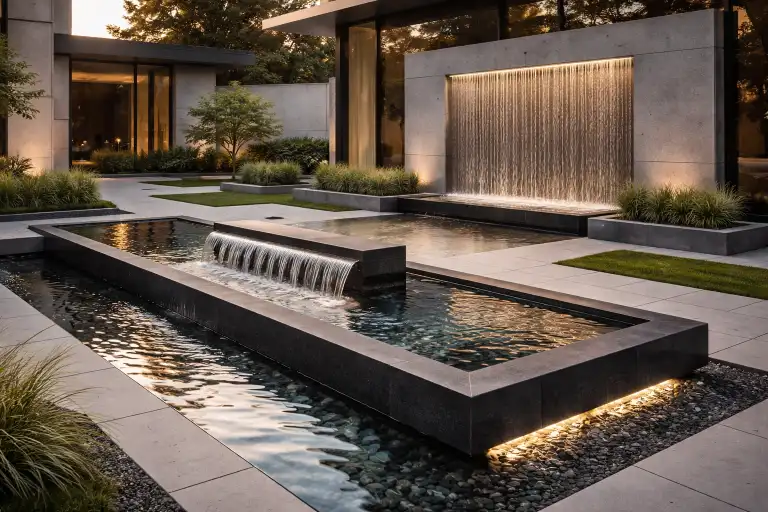
In recent years, landscape architecture and interior design have embraced a noticeable transformation
Curves and ornate ornamentation are giving way to sleek geometry, precise lines, and minimalist aesthetics. At the center of this design movement is the growing popularity of rectilinear water features.
From elegant outdoor fountains in contemporary courtyards to sophisticated indoor water fountains that anchor modern lobbies, straight-lined forms are reshaping the world of water features. Rectilinear fountains blend architectural simplicity with the soothing movement of water, creating a visual statement that feels timeless yet distinctly modern.
Today, homeowners, designers, architects, and developers increasingly select garden fountains, wall fountains, and rain curtain water features built around linear geometry. These designs complement contemporary architecture while maintaining the calming qualities that make water fountains such beloved elements in both indoor and outdoor spaces.
Let’s explore the rise of rectilinear water features and why they have become the defining fountain style of modern design.
The Evolution of Fountain Design
Historically, fountains served as decorative centerpieces in grand gardens, courtyards, and city plazas. Classical European gardens often featured elaborate sculptures, circular basins, and ornate tiers.
Traditional garden fountains emphasized curves, symmetry, and decorative embellishment. These designs celebrated craftsmanship and storytelling through sculptural forms.
As architecture evolved, so did fountain design.
Modern architectural movements such as Bauhaus, International Style, and Minimalism introduced a preference for clean lines, geometric clarity, and functional beauty. Instead of ornate decoration, designers began focusing on proportion, materials, and spatial balance.
Water features gradually followed this direction. Rectangular basins, linear spillways, and architectural water walls started replacing elaborate figurative fountains.
The result: a new generation of outdoor water fountains and indoor fountains that highlight simplicity and precision rather than ornament.
What Defines a Rectilinear Water Feature?
Rectilinear water features rely on straight lines and right angles. Instead of curves or organic shapes, the design focuses on geometric clarity.
Common characteristics include:
- Rectangular basins
- Linear spillways
- Vertical water walls
- Square or rectangular pools
- Sharp edges and minimal ornamentation
These features emphasize the relationship between water and architecture.
Many wall fountains, floor fountains, and rain curtain fountains now adopt rectilinear structures because they align perfectly with contemporary materials like concrete, glass, steel, and stone.
This geometry produces a modern aesthetic that feels calm, intentional, and balanced.
Why Rectilinear Fountains Are Trending
Several design and lifestyle shifts contribute to the popularity of rectilinear water features.
1. Compatibility With Modern Architecture
Modern homes and commercial buildings rely heavily on straight lines and geometric forms. Rectilinear water fountains complement these structures without competing visually.
A rectangular reflecting pool beside a minimalist home feels integrated rather than decorative. Architects often use outdoor fountains to extend the geometry of the building into the landscape.
2. Minimalism and Simplicity
Minimalist design values restraint and clarity. Rectilinear garden fountains support this philosophy by emphasizing water movement rather than decorative sculpture.
Focus shifts to:
- Sound of falling water
- Light reflecting on surfaces
- Material textures
- Spatial balance
This subtle elegance appeals to modern homeowners and designers.
3. Versatility in Indoor Spaces
Rectilinear designs dominate indoor water fountains. Corporate lobbies, hotels, spas, and luxury homes increasingly feature vertical water walls or rain curtain fountains cascading down glass panels or metal surfaces.
These installations often function as both artwork and environmental enhancement. Indoor fountains improve ambiance by introducing calming sound and humidity while enhancing architectural presence.
4. Space Efficiency
Linear wall fountains and floor fountains can fit into narrow corridors, patios, or entryways where round basins might feel bulky. Even compact tabletop fountains often adopt square or rectangular bases to align with desks, shelves, and counters.
5. Seamless Integration With Landscape Design
Rectilinear outdoor water fountains complement:
- Linear walkways
- Geometric garden beds
- Structured patios
- Contemporary pool designs
A rectangular reflecting pool or water channel reinforces patterns and enhances spatial flow.
Popular Types of Rectilinear Water Features
Wall Fountains
Water flows down vertical panels made of:
- Glass
- Stainless steel
- Natural stone
- Acrylic
Modern wall fountains serve as statement pieces in entryways, offices, or garden walls.
Rain Curtain Fountains
Water falls from a horizontal header in evenly spaced streams, forming a curtain-like cascade. Popular in luxury interiors, benefits include:
- Elegant visual rhythm
- Soft, calming water sounds
- Minimal splash
- Strong architectural presence
Many designers incorporate rain curtain fountains into glass partitions or large feature walls.
Floor Fountains
Water rises through embedded jets before flowing back into concealed basins. Rectilinear layouts allow jets to align in symmetrical rows or grids.
Outdoor Water Fountains
Rectilinear outdoor fountains often appear as reflecting pools, spillways, or cascading basins. Materials include:
- Concrete
- Granite
- Corten steel
- Limestone
Indoor Water Fountains
Linear designs suit modern interiors, where curved ornamental pieces might feel out of place. Rectangular water walls or column-style fountains help create calming spaces in:
- Office buildings
- Wellness centers
- Luxury residences
- Hotel reception areas
Tabletop Fountains
Square bases and rectangular reservoirs dominate modern designs. These smaller indoor water fountains bring soothing water sounds to desks, shelves, and meditation spaces, offering an accessible way for homeowners to enjoy water features without major installation.
Materials That Complement Rectilinear Fountains
Material selection plays a major role in the success of modern water fountains. Designers often choose materials that reinforce geometric simplicity.
Popular choices include:
Stainless Steel: Creates a sleek, reflective surface that enhances the movement of water. Many contemporary wall fountains and rain curtain fountains feature brushed or polished steel panels.
Glass: Panels allow water to flow smoothly while maintaining transparency. This material is common in rain curtain water features, where light passing through the falling streams creates dramatic effects.
Concrete: Adds weight, durability, and architectural presence. Rectangular concrete basins frequently appear in modern outdoor water fountains and landscape installations.
Natural Stone: Granite, slate, and limestone provide texture and natural beauty while maintaining clean lines. Stone is particularly popular in garden fountains and outdoor landscapes.
Lighting and Rectilinear Water Features
Lighting enhances the visual impact of modern fountains. Linear LED lighting works especially well with rectilinear designs.
Common techniques include:
- Underwater LED strips
- Backlit water walls
- Integrated spillway lighting
- Edge lighting along basins
At night, illuminated outdoor fountains transform landscapes into elegant environments filled with movement and reflection. For indoor installations, lighting emphasizes the falling water patterns of rain curtain fountains and vertical wall fountains.
The Psychological Benefits of Water Features
Beyond aesthetics, water features contribute to well-being. Studies show that the sound of flowing water helps reduce stress and improve concentration.
Whether it’s a small tabletop fountain or a large garden fountain, the gentle movement of water introduces a sense of calm. Indoor fountains can also improve air quality by increasing humidity levels.
In offices and homes, indoor water fountains create a relaxing atmosphere that promotes focus and relaxation.
Rectilinear Fountains in Residential Design
Modern homeowners increasingly request structured landscapes. Rectilinear garden fountains align perfectly with:
- Modern patios
- Poolside lounges
- Minimalist courtyards
- Zen-inspired gardens
A long rectangular water channel or reflecting pool can anchor an entire outdoor design. These outdoor water fountains act as focal points while maintaining harmony with surrounding architecture.
Commercial Applications of Rectilinear Water Features
Commercial spaces have embraced geometric fountains for their visual impact and calming qualities. Hotels, shopping centers, and corporate headquarters frequently install floor fountains, wall fountains, or rain curtain water features.
Benefits include:
- Elevated brand perception
- Relaxing environments for visitors
- Memorable architectural statements
- Large-scale water walls often become signature features in modern commercial architecture
Sustainability and Water Features
Modern water fountains are also becoming more environmentally responsible. Recirculating pump systems allow fountains to reuse water continuously. Many designs incorporate energy-efficient pumps and LED lighting.
Additionally, rectilinear basins make it easier to integrate filtration systems and water-saving technologies. This balance between aesthetics and sustainability contributes to the growing popularity of modern water features.
The Future of Fountain Design
As architecture continues moving toward minimalism and structured geometry, rectilinear designs will likely dominate future water fountain trends.
Emerging innovations include:
- Interactive floor fountains
- Smart-controlled fountain systems
- Integrated rain curtain technology
- Modular fountain components
Designers are also experimenting with digital lighting and programmable water patterns. These advancements will further expand the creative possibilities of indoor fountains, outdoor fountains, and architectural water features.
Final Thoughts
The rise of rectilinear design reflects a broader shift in architecture and landscape design toward clarity, simplicity, and intentional form. By combining geometric precision with the timeless appeal of moving water, rectilinear fountains create environments that feel both modern and tranquil.
From sleek indoor water fountains to dramatic rain curtain water features, these designs demonstrate how water continues to evolve as a powerful architectural element. Whether incorporated into a minimalist garden, a luxury hotel lobby, or a quiet home office, rectilinear water features offer a sophisticated way to bring the beauty and calming presence of water into everyday spaces.
FAQs:
Popular materials for modern water fountains include stainless steel, glass, concrete, and natural stone. These materials emphasize clean lines while enhancing the visual movement of water.