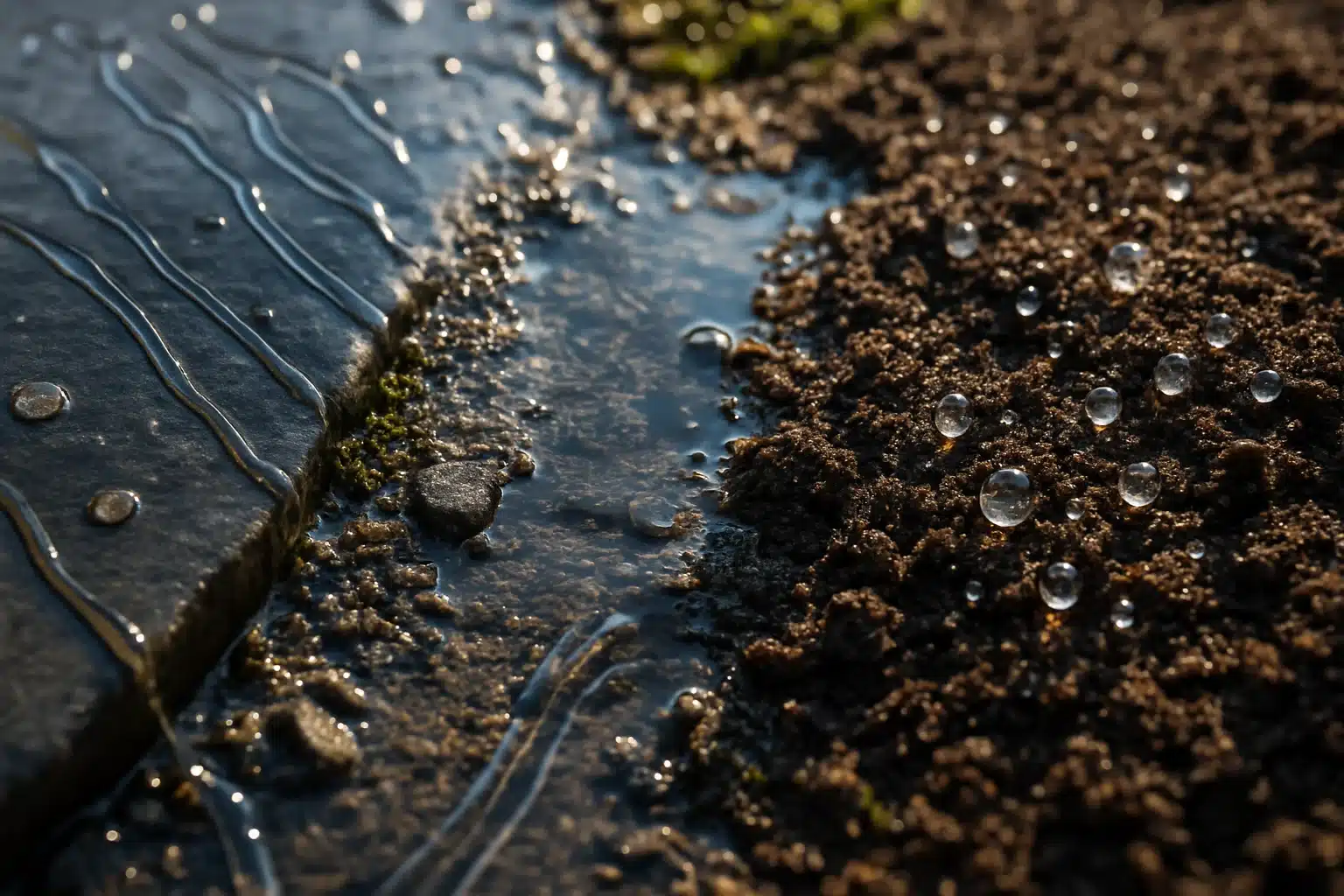
Introduction: Why Texture Matters in Water Movement
Water is one of the most powerful forces on Earth. It nourishes life, carves landscapes, and dictates the rhythm of ecosystems. But the way water behaves in the world around us isn’t solely determined by gravity or volume, it’s also deeply influenced by texture, the surface properties of materials it encounters.
From the polished floors of urban plazas to the rough soil of agricultural fields, textures shape whether water is absorbed, repelled, slowed down, or accelerated. Understanding these dynamics is critical in fields like landscape design, urban planning, architecture, agriculture, and environmental management.
This blog post explores the intricate relationship between surface textures and water movement, breaking down the science, real-world applications, and strategies for making informed texture choices to support sustainability and resilience.
Section 1: The Science of Water and Surface Interaction
1.1 The Physics of Adhesion and Cohesion
Water molecules are strongly cohesive, clinging to each other through hydrogen bonds. They are also adhesive, sticking to surfaces. When water encounters different textures, these two properties determine how it spreads, beads, or infiltrates.
Smooth, non-porous surfaces (e.g., glass, polished stone) minimize adhesion, leading to rapid runoff.
Rough, porous surfaces (e.g., soil, unpolished wood) maximize adhesion and infiltration, allowing water to linger or soak in.
1.2 Permeability and Porosity
Permeability: The ability of a material to allow water to pass through.
Porosity: The amount of void space in a material.
A sandy surface with high porosity and permeability lets water percolate quickly, while clay soils, despite being porous, have low permeability due to tightly packed particles. Texture directly influences both factors, shaping how water behaves once it makes contact.
1.3 Micro vs. Macro Texture
Micro-texture refers to microscopic surface roughness (e.g., the grain of a leaf).
Macro-texture refers to larger-scale roughness (e.g., gravel, cobblestone).
Both scales play roles in whether water infiltrates, flows, or evaporates. A leaf’s micro-texture, for instance, can repel water (lotus effect), while gravel slows down sheet runoff at a macro level.
Section 2: Natural Landscapes and Texture
2.1 Soil Textures and Water Flow
Soil is the foundation of natural hydrology. Its texture—whether sandy, silty, or clayey—dictates how water moves:
- Sandy soils: High infiltration, low water retention.
- Clay soils: Low infiltration, high water retention.
- Loam soils: Balanced properties, making them ideal for agriculture.
Understanding soil textures is crucial for farming, gardening, and watershed management. Poor texture choices in agriculture can lead to waterlogging, erosion, or crop failure.
2.2 Rock and Vegetation Surfaces
Smooth rock faces often funnel water rapidly, creating waterfalls or streams.
Mossy or vegetated surfaces slow water down, promoting absorption and microhabitats.
Plants themselves evolve textures to manage water: waxy leaves repel excess rain, while hairy or ridged leaves channel droplets to roots.
2.3 Ecosystem Services of Natural Textures
Natural textures, such as forest floors layered with leaf litter, act as sponges and filters. They slow down stormwater, prevent erosion, and recharge groundwater. Without these textures, rainfall would create destructive floods instead of nourishing landscapes.
Section 3: Human-Made Surfaces and Water Management
3.1 The Urban Challenge
Cities often replace permeable textures with impermeable ones: asphalt, concrete, and metal. These smooth surfaces accelerate runoff, overwhelm drainage systems, and increase flood risk.
3.2 Green Infrastructure and Texture Innovation
Urban planners now design surfaces to mimic natural textures:
- Permeable pavements allow rain to infiltrate instead of pooling.
- Green roofs use soil-like textures to absorb and store water.
- Bio-swales and rain gardens combine vegetation and rough soil to slow water down.
By reintroducing textured surfaces, cities can reduce stormwater management costs and mitigate climate change impacts.
3.3 Architecture and Water Flow
Architects use texture intentionally:
- Sloped, smooth roofs channel rain quickly into gutters.
- Rough stone courtyards allow puddles to form and infiltrate.
- Facade textures influence whether rain streaks or disperses.
Texture isn’t just aesthetic, it’s functional.
Section 4: Texture in Agriculture
4.1 Soil Preparation and Crop Survival
Farmers manipulate soil texture through tilling, adding organic matter, or amending with sand or clay. Texture determines whether roots receive enough water without being suffocated.
- Fine textures (clay-heavy soils) risk waterlogging.
- Coarse textures (sand-heavy soils) require irrigation to maintain moisture.
4.2 Mulching and Surface Covers
Organic mulches (e.g., straw, bark) create rough, absorbent textures that slow evaporation and reduce runoff. Synthetic mulches (e.g., plastic films) create smooth, impermeable textures that conserve water but increase runoff.
4.3 Irrigation and Texture Synergy
Water delivery systems interact with surface texture:
Drip irrigation works best on rough, absorbent soils.
Flood irrigation is more compatible with smooth, compact soils.
Matching irrigation to texture prevents waste and enhances yield.
Section 5: Water Movement in Design and Aesthetics
5.1 Gardens and Landscapes
Designers use texture to choreograph water movement:
- Pebbled walkways let rain infiltrate.
- Smooth fountains encourage reflective pooling.
- Layered textures (soil, mulch, stone) create visually appealing yet functional drainage patterns.
5.2 Cultural and Historical Uses
Throughout history, civilizations recognized texture’s role:
- Roman aqueducts used smooth stone channels for efficient flow.
- Japanese gardens used gravel textures to suggest rippling water.
- Indigenous terracing systems relied on soil textures to slow and capture rainfall.
5.3 Modern Sustainability Design
Contemporary sustainable design often blends texture science with aesthetics—creating green spaces that are both beautiful and climate-resilient.
Section 6: Texture, Climate Change, and Future Challenges
6.1 Intensified Rainfall and Flooding
Climate change is increasing the frequency of heavy rain events. Smooth, impermeable textures worsen floods, while rough, porous textures provide natural buffers.
6.2 Drought and Water Retention
In drought-prone areas, textured surfaces that retain moisture (e.g., mulched soils, permeable paving) become essential. Choosing the wrong texture could mean losing precious water to evaporation or runoff.
6.3 Designing Resilience Through Texture
Future urban and rural planning must prioritize resilient textures:
- Permeable pavements in flood-prone cities.
- Soil amendments for drought-stricken farmlands.
- Textured green infrastructure to restore natural hydrological cycles.
Section 7: Practical Applications and Best Practices
7.1 For Homeowners
- Use permeable driveways (gravel, pavers with gaps).
- Mulch garden beds to retain moisture.
- Choose plants with textures suited to local rainfall.
7.2 For Urban Planners
- Incorporate bio-swales, rain gardens, and permeable pavements.
- Avoid large expanses of smooth, impermeable surfaces.
- Mix textures in public spaces for aesthetics and function.
7.3 For Farmers
- Analyze soil texture before planting.
- Amend soils with organic matter to balance porosity.
- Match irrigation style to surface texture.
Section 8: Case Studies
8.1 Singapore’s Green Roofs
Singapore integrates rooftop gardens into skyscrapers, transforming smooth concrete into textured, soil-based absorbers. This reduces runoff and mitigates the urban heat island effect.
8.2 The Netherlands’ Permeable Streets
Facing rising seas, Dutch cities pioneered permeable pavements and textured urban landscapes to manage water efficiently.
8.3 Agricultural Terraces in Peru
The Inca developed terraced farming systems with layered textures, stone, soil, organic matter, that controlled water flow across steep slopes, preventing erosion while maximizing yields.
Texture as a Silent Architect of Water Movement
Texture is far more than a tactile or visual element, it is a silent architect shaping how water interacts with the world. From natural ecosystems to human-made cities, texture dictates whether water nourishes, erodes, floods, or evaporates.
By consciously designing and managing textures, we can create sustainable, resilient, and beautiful environments that work in harmony with water features rather than against it.
FAQs:
Texture determines how water interacts with surfaces—whether it infiltrates, runs off, or evaporates. This directly impacts flood risk, drought resilience, and ecosystem health.
Cities can use permeable pavements, green roofs, and textured landscaping like rain gardens to slow water movement and encourage infiltration.
Soil texture influences water retention and drainage. Sandy soils drain quickly but dry out fast, while clay soils retain water but risk waterlogging. Loam, with balanced texture, is ideal for most crops.