
Discover why outdoor fountains, indoor water fountains, and modern water features are becoming calmer and more refined.
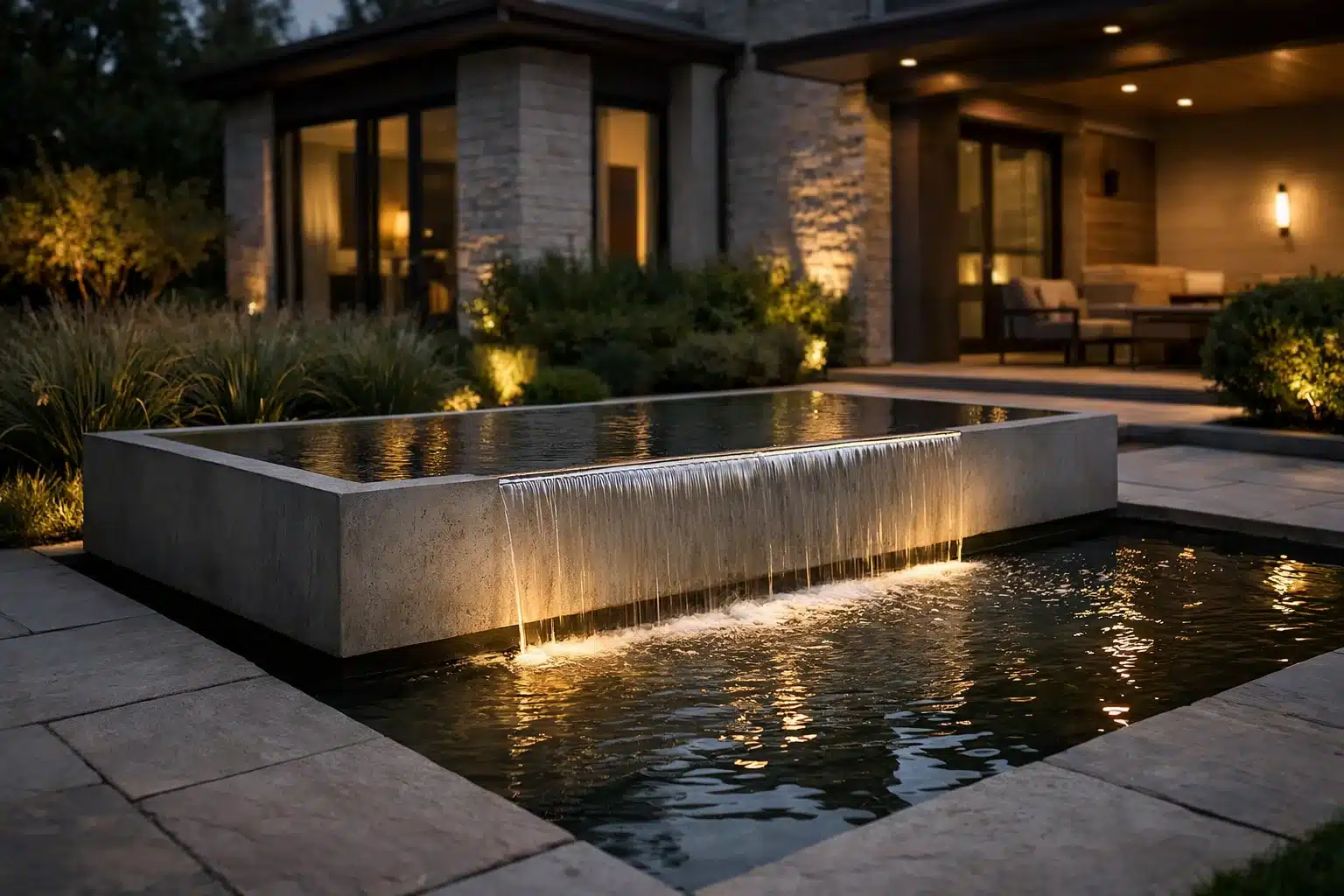
For decades, fountain design was all about statement. Big splashes. Dramatic tiers. High arcs. Bold lighting. If a water feature didn’t announce itself from across the yard, lobby, or courtyard, it was often seen as “not worth it.”
But something has changed, and if you’ve been paying attention to the most modern fountains, you’ve probably noticed it too.
Fountain design is slowing down.
Not in the sense of being less advanced or less beautiful. The opposite, actually. Today’s best water fountains are intentionally calmer, more controlled, and more subtle. They don’t shout. They breathe. They create atmosphere rather than spectacle.
And this shift is happening across nearly every category: outdoor fountains, garden fountains, indoor water fountains, tabletop fountains, wall fountains, and even specialty installations like the rain curtain fountain and rain curtain water feature.
So why is this happening? What’s behind the move toward quieter motion, softer sound, and more minimal visual impact? And what does it mean if you’re choosing or designing a fountain today?
Let’s dive in.
The New Era of Fountains: Calm Is the New Luxury
There’s a reason subtle water features feel so “high-end” right now. In modern design, calmness is increasingly being treated as a premium experience.
Think about it:
- Luxury hotels emphasize tranquility
- Spas are built around softness and flow
- High-end homes are leaning into clean, quiet minimalism
- Even office design is shifting toward wellbeing-focused environments
Water fountains fit perfectly into this new design mindset, but only when they’re not overpowering.
A huge, noisy, high-splash fountain can still be impressive… but it can also feel like an interruption. A calmer fountain becomes part of the space. It supports the mood rather than dominating it.
This is why the most in-demand outdoor water fountains today often feature:
- low-profile basins
- smooth laminar flow
- gentle spillways
- subtle sheet water effects
- “infinite edge” style movement
And for indoor fountains, the trend is even stronger. Indoors, sound and scale matter more—so slower designs feel more intentional and more comfortable.
Why Fountain Design Is Slowing Down: 9 Big Reasons
1) People Are Craving Peace (Like, Desperately)
We’re living in an overstimulated world.
Screens. Notifications. Traffic. Loud architecture. Loud marketing. Loud everything.
So when someone invests in fountains, especially outdoor fountains for a home or indoor water fountains for a personal space, they’re often not looking for drama.
They’re looking for relief.
A subtle water feature creates:
- a soft sound barrier
- a calming rhythm
- a sense of “slow time”
- an emotional reset
That’s why tabletop fountains are booming in popularity too. People want something soothing on a desk, shelf, or bedside table. Not a mini waterfall that sounds like a washing machine.
2) Modern Design Trends Favor Minimalism and Soft Movement
Architectural trends have changed the playing field.
Traditional fountains often matched ornate environments, Mediterranean courtyards, classical gardens, formal estates.
But modern spaces are different:
- clean lines
- neutral palettes
- smooth textures
- simple geometry
In those environments, a loud or overly decorative fountain can feel out of place.
That’s why modern outdoor water fountains tend to be:
- rectangular
- linear
- low to the ground
- made of stone, concrete, or metal
- focused on texture and flow rather than ornament
Wall fountains, for example, have become more minimal: a flat surface, a slim spillway, and a controlled sheet of water that looks like moving glass.
3) Water Conservation Is Becoming Non-Negotiable
Here’s the truth: water aesthetics are evolving alongside water ethics.
Even though most fountains recirculate water, the perception of “wasting water” matters, especially in drought-prone regions.
People are more aware now of:
- evaporation loss
- splash-out
- wind drift
- inefficient pump use
- maintenance runoff
Slower fountain designs reduce those issues dramatically.
A gentle sheet flow or a contained spillway:
- minimizes splash
- reduces evaporation
- keeps water in the basin
- runs efficiently on lower pump power
This is a huge reason why the rain curtain fountain has become so popular. It delivers a high-end look with controlled flow and minimal chaos.
4) Maintenance Preferences Have Changed
A dramatic fountain can be stunning… until you have to maintain it.
High turbulence water movement often leads to:
- algae growth
- mineral buildup
- clogged nozzles
- uneven flow
- more frequent cleaning
Slower fountains are easier to keep clean and balanced.
This is especially important for indoor fountains, where people want:
- low mess
- low humidity impact
- minimal mineral spotting
- consistent sound
Wall fountains and indoor water fountains are increasingly designed with “low-maintenance calmness” as a key feature.
5) The “Instagram Fountain” Era Is Fading
For a while, fountains were being designed like photo backdrops.
Bright LEDs. Color-changing effects. High sprays. Extreme drama.
And yes, those designs still exist. But the broader market is shifting away from that “look at me” energy.
Why?
Because it’s not timeless.
A subtle outdoor fountain is more likely to feel beautiful ten years from now. A flashy fountain might feel dated in two.
In design, subtlety ages better.
6) Sound Design Is Becoming More Intentional
This is one of the biggest reasons fountains are slowing down, and it’s one most people don’t realize until they experience it.
Water sound is not automatically relaxing.
In fact, the wrong fountain sound can be:
- too loud
- too sharp
- too chaotic
- too repetitive
- distracting in conversation
Older fountains often produced aggressive splashing sounds. That worked in large gardens or open courtyards.
But in today’s spaces, especially patios, modern yards, and indoor rooms, people want:
- a soft, even sound
- a consistent flow
- no sudden splashes
- no gurgling
Slower water movement creates a more controlled sound profile.
This is why floor fountains and indoor fountains are now often engineered around acoustic comfort, not just visual appeal.
7) Designers Are Treating Water Like Light
Here’s a fun design shift:
Modern architects and landscape designers increasingly treat water features the way they treat lighting.
Not as “the centerpiece,” but as an atmospheric tool.
Think about the way good lighting works:
- it defines mood
- it creates depth
- it highlights texture
- it supports the architecture
That’s exactly what modern fountains are doing.
A subtle outdoor water fountain might:
- trace the edge of a walkway
- add shimmer to a wall
- create movement near a seating area
- provide quiet sound in the background
In this context, slowing down is a design advantage. Fast water pulls attention. Slow water enhances the environment.
8) Smaller Spaces Are Driving Smarter Designs
Not everyone has a massive yard or a grand lobby.
More people today live in:
- townhomes
- apartments
- compact modern homes
- smaller backyards
- rooftop patios
This has pushed demand for fountains that work in tighter spaces.
And in a small space, a large, loud fountain is… a lot.
That’s why tabletop fountains, wall fountains, and compact garden fountains are seeing more growth.
Slower water movement helps these designs feel:
- elegant
- controlled
- not overwhelming
Even outdoor fountains are being scaled down into more “architectural water features” rather than traditional tiered displays.
9) The Rain Curtain Fountain Is a Symbol of the Shift
If you want the clearest example of modern subtlety, it’s the rain curtain fountain.
A rain curtain water feature typically creates a sheet, or veil, of water that falls in a smooth, consistent pattern.
The result is:
- visually striking
- controlled
- soothing
- modern
- clean
It’s dramatic without being loud.
It’s movement without chaos.
It’s luxury without excess.
And it’s become a popular option for:
- modern outdoor water fountains
- hotel lobbies
- spa entrances
- office courtyards
- upscale residential patios
Rain curtain fountains are basically the “new signature look” of calm modern water design.
What This Means for Outdoor Fountains
Outdoor fountains are no longer expected to be huge and ornate.
Instead, today’s outdoor water fountains often aim to create:
- a subtle focal point
- a gentle soundscape
- a feeling of “natural calm”
- architectural cohesion
The Rise of the Quiet Garden Fountain
Garden fountains are especially influenced by this trend. Many gardens today are designed for:
- meditation
- slow mornings
- evening relaxation
- minimal upkeep
A quiet garden fountain complements that perfectly.
Instead of splashing, the new garden fountain is more likely to:
- bubble softly
- spill gently
- flow across a textured surface
This makes it easier to pair fountains with:
- native plants
- modern hardscapes
- minimalist garden layouts
What This Means for Indoor Water Fountains
Indoor fountains are having a moment, and subtlety is the reason.
A lot of people used to associate indoor water fountains with:
- overly decorative resin designs
- loud waterfall sounds
- awkward LED lighting
- bulky shapes
But modern indoor fountains have evolved.
Today’s indoor water fountains focus on:
- clean materials (stone, slate, glass, metal)
- soft sound
- minimal splashing
- compact footprint
- calm visual rhythm
Wall Fountains: A Perfect Match for Subtle Design
Wall fountains are one of the best examples of this new philosophy.
A modern wall fountain can:
- create a vertical water feature without taking floor space
- produce a smooth sheet of water
- become a living art piece
- add sound without chaos
Wall fountains also feel “built-in,” which makes them ideal for contemporary interiors.
Tabletop Fountains and the Wellness Wave
Tabletop fountains are not just décor anymore, they’re a wellness tool.
People are buying tabletop fountains for:
- stress relief
- sleep support
- meditation
- home office focus
- noise masking
But for that purpose, subtle flow is essential.
A tabletop fountain should feel like:
- soft rain
- gentle stream
- quiet ripple
Not like a miniature waterpark.
This is why tabletop fountains are increasingly designed with:
- controlled spillways
- shallow basins
- smooth stone textures
- low-volume pumps
Floor Fountains: Quiet Presence, Big Impact
Floor fountains occupy a unique space in the fountain world.
They can still be dramatic, but the best ones now lean into “quiet drama.”
A modern floor fountain often features:
- vertical panels
- controlled water sheets
- minimalist framing
- soft lighting (warm and subtle, not neon)
They’re commonly used in:
- lobbies
- waiting rooms
- upscale homes
- galleries
- wellness spaces
And again, the shift toward slower water movement makes them feel more refined.
The Psychology Behind Slow Water

This shift isn’t just design preference. It’s rooted in human psychology.
Slow water does something powerful:
- It creates predictability
Your brain relaxes when the pattern is steady. - It reduces “alert” sound triggers
Sharp splashes can activate attention and stress responses. - It supports mindfulness
Slow movement is easier to visually follow, and that naturally encourages calm focus.
It feels natural
Even though waterfalls exist in nature, the most calming natural water sounds tend to come from streams, rain, and gentle shorelines.
That’s exactly what modern fountains are trying to replicate.
The Materials Driving Subtle Fountain Design
Design trends don’t happen in a vacuum. Materials matter.
Today’s subtle water features often use:
- Slate (for smooth sheet flow in wall fountains)
- Basalt (for minimalist outdoor fountains)
- Concrete (for architectural outdoor water fountains)
- Stainless steel (for rain curtain fountain effects)
- Glass (for sleek indoor fountains)
These materials naturally pair better with slower, controlled flow.
A traditional tiered fountain wants drama. A basalt column fountain wants quiet presence.
Lighting Has Changed Too (And That Slows the Design Down)
Lighting used to be a huge part of fountain drama: bright LEDs, color cycling, theatrical effects.
Now lighting is more often:
- warm white
- hidden
- indirect
- used to highlight texture
This kind of lighting works best with slow movement, because it creates shimmer and reflection rather than sparkle and chaos.
Rain curtain fountains are a perfect example: the lighting turns the water into a glowing veil.
Is “Slower” Always Better?
Not always. And honestly, this is where good design becomes personal.
A high-energy fountain still makes sense if you want:
- strong sound masking near a road
- a bold centerpiece for a large property
- a playful or classical garden look
- a dramatic commercial feature
But for most modern homes and interiors, the demand is shifting toward:
- controlled sound
- low maintenance
- minimal water loss
- timeless style
And that’s why fountain design is slowing down.
How to Choose the Right Fountain Style Today
If you’re shopping or designing, here are a few practical guidelines.
- Choose outdoor fountains for atmosphere, not volume
A fountain doesn’t need to be loud to be impactful. - Look for smooth flow and contained movement
This reduces splash, maintenance, and evaporation. - Consider wall fountains for modern spaces
They add water without taking up the room. - Tabletop fountains should be calming, not chaotic
A small space needs soft flow. - Rain curtain water features are ideal for modern luxury
They’re striking but controlled.
The Future of Fountains: Subtle, Smart, and Sensory
Fountain design is slowing down, but it’s also leveling up.
The next generation of water fountains will likely focus on:
- even more efficient pumps
- quieter operation
- smarter filtration
- modular design
- integration with architecture
- wellness-based sound profiles
The goal isn’t to remove beauty or drama.
It’s to create water features that feel livable.
Fountains that don’t just impress guests for ten minutes, but improve the space every day.
Final Thoughts: Subtlety Isn’t Less, It’s More
The shift toward subtle fountain design is not a downgrade.
It’s a sign of maturity in design.
It’s the difference between:
- decoration and experience
- spectacle and atmosphere
- noise and calm
Whether you’re choosing outdoor water fountains for a backyard retreat, indoor fountains for a peaceful home, tabletop fountains for a desk, or a rain curtain fountain for a statement wall, the trend is clear:
Modern fountains are slowing down, because people are finally learning to value the quiet parts of life.
And honestly?
It’s about time.
FAQs:
Yes, outdoor fountains and outdoor water fountains are still very popular, but the trend is shifting toward minimalist, low-splash designs that feel calm and architectural.
A rain curtain fountain (or rain curtain water feature) creates a controlled sheet or veil of water, while a waterfall fountain tends to have more turbulence, splash, and louder sound.
Most indoor water fountains add only a small amount of humidity, but designs with high splash or exposed surface area can increase it more. Slower, controlled indoor fountains usually minimize that effect.
