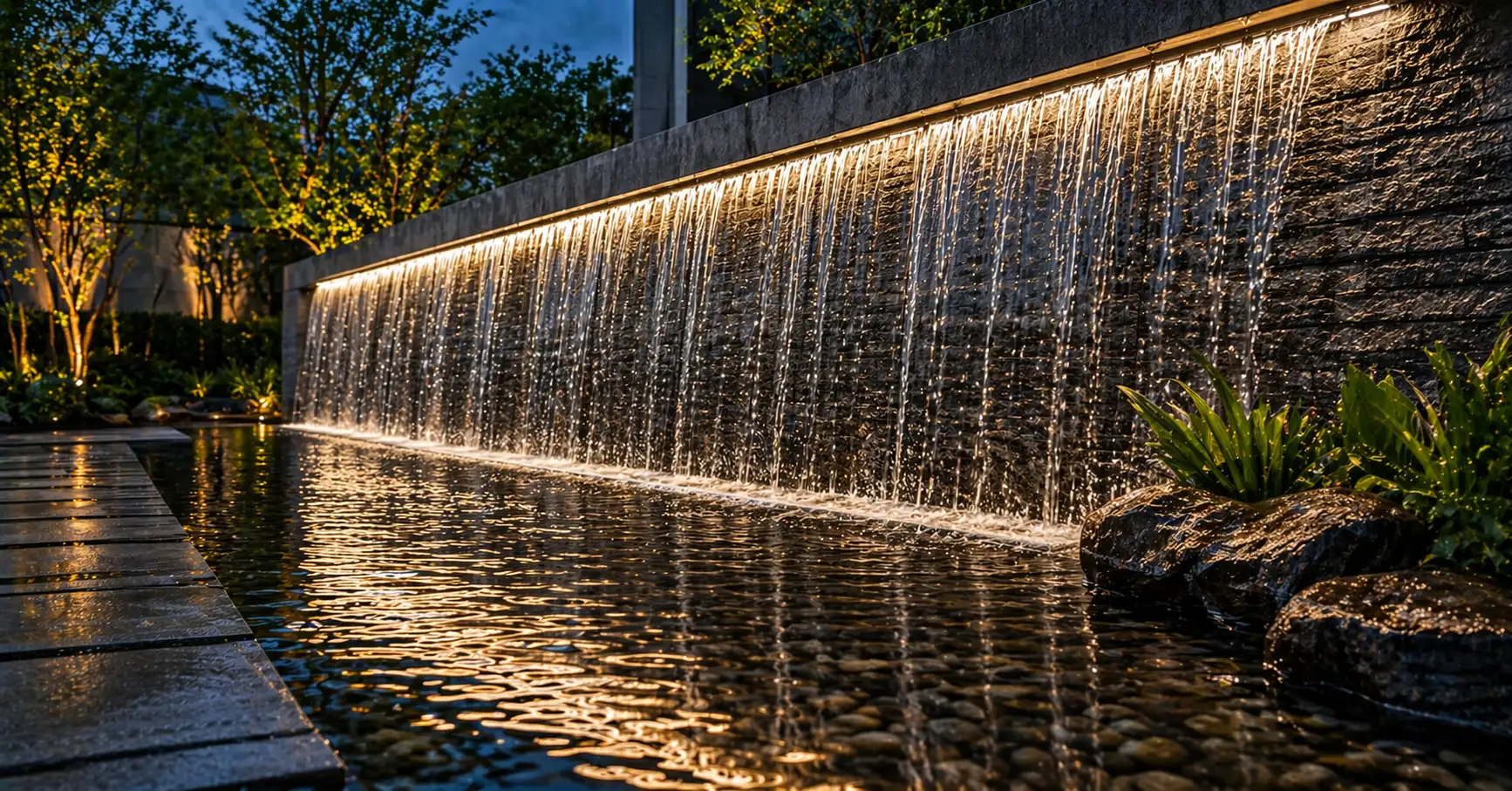
Water has a language of its own. In the world of fountains and water features, that language is expressed through movement, subtle ripples, smooth sheets, energetic cascades, and precise jets. Each type of water motion creates a distinct visual, acoustic, and emotional effect, shaping how we experience a space.
Whether you’re designing elegant garden fountains, installing indoor water fountains in a lobby, or exploring dramatic outdoor water fountains for a commercial setting, understanding these four fundamental water movements, ripple, sheet, cascade, and jet, is essential. They are the building blocks behind every compelling water feature.
This guide breaks down how each movement works, where it shines, and how to choose the right one for your space.
Why Water Movement Matters in Fountain Design
Before diving into each type, it’s important to understand why water movement is more than just aesthetics.
Water motion influences:
- Sound: From calming whispers to energetic splashes
- Visual texture: Smooth vs. dynamic surfaces
- Light interaction: Reflection, refraction, and sparkle
- Mood: Relaxation, drama, focus, or energy
- Functionality: Splash control, aeration, and cooling
A well-designed fountain doesn’t just look good, it feels right. That feeling comes directly from how water moves.
1. Ripple: Subtle Movement with Quiet Impact
What is Ripple Movement?
Ripple is the gentlest form of water motion. It occurs when small disturbances, like a soft flow or light breeze, create concentric waves across a water surface.
Instead of dramatic movement, ripple focuses on surface texture and reflection.
Where You See It
- Reflecting pools
- Minimalist garden fountains
- Indoor fountains in quiet environments
- Zen-inspired water features
Why Designers Use Ripple
Ripple movement is all about calm and contemplation. It’s perfect when you want water to enhance a space without dominating it.
Key benefits:
- Minimal noise (ideal for indoor settings)
- Enhances reflections of architecture and light
- Creates a serene, meditative atmosphere
- Low splash and maintenance
Best Applications
Ripple is especially effective in:
- Indoor water fountains for offices and spas
- Garden fountains focused on tranquility
- Wall fountains where subtle motion complements vertical design
Design Tip
To achieve a clean ripple effect, the water surface must be stable. Even small inconsistencies in flow or basin level can disrupt the pattern.
2. Sheet: Clean Lines and Modern Elegance
What is Sheet Flow?
Sheet flow occurs when water moves in a smooth, continuous layer, like a glass panel of liquid. It typically flows over a weir or edge, forming a thin, uniform curtain.
Think of it as water behaving like fabric: controlled, consistent, and visually striking.
Where You See It
- Modern outdoor water fountains
- Wall fountains
- Rain curtain fountain installations
- Architectural water features
Why Designers Use Sheet Flow
Sheet movement is prized for its precision and elegance.
Key benefits:
- Creates a sleek, contemporary look
- Produces a soft, consistent sound
- Enhances lighting effects (especially LED illumination)
- Works beautifully in vertical designs
Best Applications
Sheet flow shines in:
- Wall fountains for lobbies and entryways
- Rain curtain water features in commercial spaces
- Outdoor fountains with modern architecture
Design Tip
The secret to a perfect sheet is the weir edge. It must be perfectly level and smooth. Even minor imperfections can break the flow into uneven streams.
3. Cascade: Energy, Motion, and Natural Drama
What is Cascade Movement?
Cascade flow mimics nature, water tumbling over rocks, steps, or uneven surfaces. It’s dynamic, textured, and full of life.
Unlike sheet flow, cascade embraces irregularity.
Where You See It
- Natural-style garden fountains
- Rock waterfalls
- Multi-tier outdoor fountains
- Landscape water features
Why Designers Use Cascade
Cascade movement brings energy and sound into a space.
Key benefits:
- Produces a rich, layered sound
- Adds visual depth and movement
- Oxygenates water (great for ponds)
- Feels organic and natural
Best Applications
Cascade is ideal for:
- Garden fountains with a natural theme
- Outdoor water fountains in large landscapes
- Water features designed to mask noise (like traffic)
Design Tip
The character of a cascade depends on surface texture. Smooth stone creates softer flows, while rough surfaces create more splash and sound.
4. Jet: Precision, Power, and Performance
What is Jet Movement?
Jet flow involves water being propelled through nozzles under pressure, creating arcs, streams, or vertical bursts.
This is the most controlled and engineered form of water movement.
Where You See It
- Plaza fountains
- Interactive fountains
- Floor fountains
- High-impact outdoor installations
Why Designers Use Jets
Jets are all about precision and spectacle.
Key benefits:
- Highly customizable shapes and patterns
- Can be synchronized with lighting and music
- Creates dramatic visual impact
- Works in both small and large-scale designs
Types of Jets
- Laminar jets: Smooth, glass-like arcs
- Aerated jets: Textured, bubbly streams
- Vertical jets: Strong upward columns
Best Applications
- Jet movement is perfect for:
- Floor fountains in public spaces
- Outdoor fountains designed for interaction
- Modern water features with programmable displays
Design Tip
Wind and pressure variations can affect jet performance. For outdoor installations, wind-resistant nozzles are essential.
Combining Water Movements for Maximum Impact
The most compelling fountains rarely rely on just one type of movement. Instead, they combine ripple, sheet, cascade, and jet elements to create layered experiences.
Example Combinations
- Ripple + Sheet: Calm base with elegant vertical flow
- Cascade + Jet: Natural energy with structured highlights
- Sheet + Jet: Modern minimalism with dynamic accents
By blending movements, designers create contrast, rhythm, and visual storytelling.
Choosing the Right Water Movement for Your Space
Selecting the right movement depends on several factors:
1. Purpose of the Space
- Relaxation → Ripple
- Modern elegance → Sheet
- Natural ambiance → Cascade
- Visual impact → Jet
2. Location
- Indoor fountains: Favor ripple and sheet for low splash
- Outdoor water fountains: Cascade and jet thrive in open environments
3. Sound Preferences
- Quiet → Ripple
- Gentle → Sheet
- Moderate → Cascade
- Loud/energetic → Jet
4. Maintenance Considerations
- Ripple and sheet are generally lower maintenance
- Cascade and jet may require more cleaning and tuning
Water Movement and Lighting
Lighting transforms water movement into a nighttime experience.
- Ripple: Reflects ambient light softly
- Sheet: Creates glowing, glass-like panels
- Cascade: Produces sparkling highlights
- Jet: Enables dynamic, color-changing displays
In rain curtain fountains, lighting turns falling water into a living digital canvas, especially when synchronized with patterns or motion control.
Indoor vs. Outdoor Applications
Indoor Water Fountains
- Favor controlled, low-splash movements
- Best options: Ripple and sheet
- Ideal for offices, hotels, and homes
Outdoor Water Fountains
- Can handle dynamic, high-energy flows
- Best options: Cascade and jet
- Perfect for gardens, plazas, and large landscapes
The Role of Materials in Water Movement
Material choice directly affects how water behaves:
- Stone: Enhances cascade texture
- Glass/metal: Perfect for sheet flow
- Concrete: Versatile for all types
- Ceramic: Common in tabletop fountains
Material and movement must work together for the best results.
Final Thoughts
Understanding ripple, sheet, cascade, and jet movements unlocks the true potential of fountains and water features. Each type offers a unique sensory experience, from the quiet elegance of ripples to the bold precision of jets.
Whether you’re designing garden fountains, upgrading indoor fountains, or planning a large-scale outdoor water feature, the key lies in choosing the right movement for the right purpose.
Water isn’t just decoration, it’s motion, sound, and atmosphere combined. When designed thoughtfully, it becomes the centerpiece of any space.