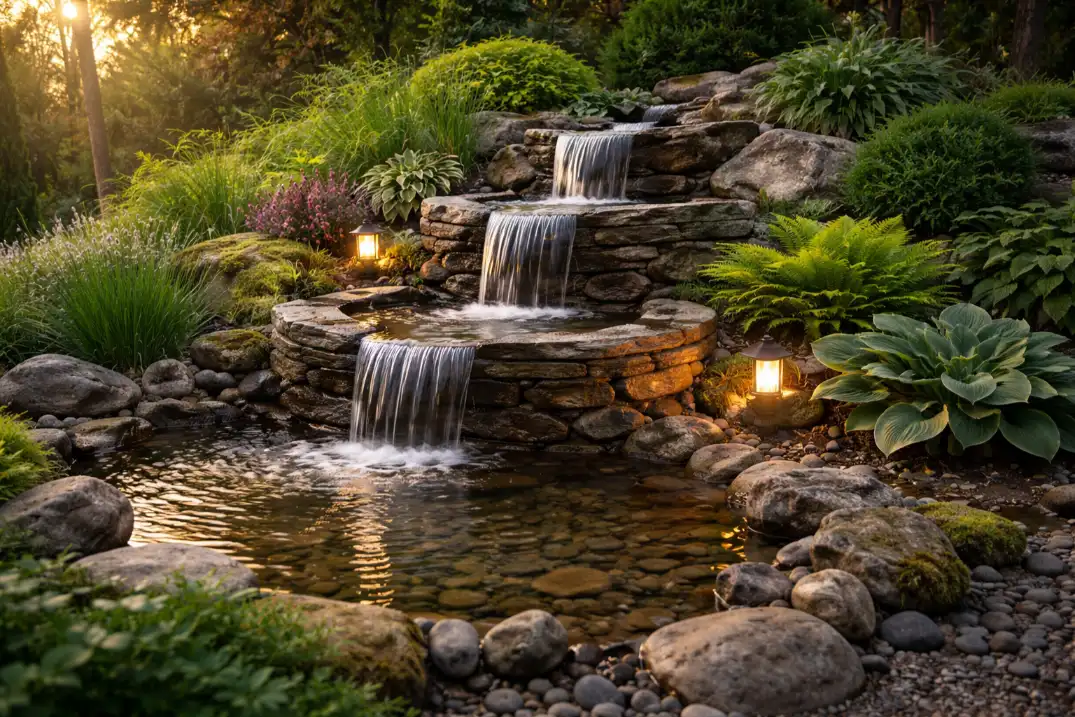
Water has a unique ability to transform a space. Whether it is a quiet courtyard, a backyard garden, or a patio retreat, the gentle sound of flowing water creates movement, calm, and visual interest. While many people believe stunning water fountains require complex construction or expensive installations, the truth is much simpler. By working with natural landscape elevation, even a modest DIY project can become a striking focal point.
Using slopes, raised beds, or tiered terrain allows gravity to help power the movement of water, enhancing both the look and functionality of outdoor fountains. Instead of forcing water into motion purely through mechanical pumps, elevation adds a natural flow that makes garden fountains appear more organic and dynamic.
In this guide, we will explore how to use landscape elevation to enhance a simple DIY fountain. You will learn practical design strategies, placement tips, and creative ideas for building impressive water features that look professionally designed while remaining accessible for DIY enthusiasts.
Why Elevation Matters in Fountain Design
Elevation plays a significant role in how water moves, sounds, and appears within a fountain. When water travels from a higher point to a lower one, gravity creates a natural cascade that enhances visual interest and improves water circulation.
This principle is used in everything from large public outdoor water fountains to elegant indoor installations such as wall fountains or a dramatic rain curtain fountain. In landscape design, even subtle height differences can create a powerful visual effect.
Here are several reasons elevation enhances fountain design:
- Natural Water Movement
Water flowing downward mimics streams and waterfalls found in nature. This creates a more organic aesthetic than a flat fountain basin. - Improved Sound Quality
The sound of water changes depending on height and fall distance. A gentle trickle produces a quiet ambience, while a slightly taller drop generates soothing background noise. - Visual Depth
Height differences allow designers to create multi-level compositions. Instead of a static bowl of water, the fountain becomes a layered experience. - Pump Efficiency
When designed correctly, gravity assists the pump, helping maintain smooth circulation throughout the system.
For DIY builders, elevation becomes a powerful design tool that adds sophistication without increasing complexity.
Identifying Elevation Opportunities in Your Landscape
Before building a fountain, it is important to evaluate the existing terrain. Many landscapes already contain small elevation changes that can support creative water features.
Common opportunities include:
- Natural slopes in a backyard
- Raised garden beds
- Retaining walls
- Terraced landscaping
- Steps or patios
- Elevated decks
- Rock gardens
Even a difference of 12 to 18 inches can dramatically improve the visual flow of garden fountains.
If the landscape is completely flat, elevation can still be introduced through simple design elements such as stacked stone platforms, raised containers, or tiered planters.
Designing a Simple Tiered DIY Fountain
One of the easiest ways to incorporate elevation into outdoor fountains is through a tiered structure.
Tiered fountains guide water through multiple levels before reaching the basin, creating both movement and sound variation.
Basic Materials
- A small submersible pump
- Tubing
- Waterproof basin or container
- Stone or ceramic bowls
- Decorative rocks
- Sealant
Basic Concept
Water travels from the pump at the bottom basin to the highest bowl. From there it flows downward through each level.
This cascading design resembles classic garden fountains seen in courtyards and historic landscapes.
The result is a visually engaging outdoor water fountain that uses both gravity and mechanical circulation.
Using Natural Slopes for Waterfall Style Fountains
If your yard already slopes downward, you can take advantage of that terrain to create waterfall-style water features.
Instead of stacked bowls, water flows through a series of stone channels or shallow basins placed along the slope.
This design works particularly well with:
- Rock gardens
- Woodland landscapes
- Japanese-inspired gardens
- Rustic outdoor spaces
Water appears to travel naturally through the landscape rather than being contained within a traditional fountain structure.
These installations blur the line between garden fountains and small streams.
Elevation Techniques for Small Spaces
Not every property offers dramatic slopes, but elevation can still be introduced through creative design techniques.
Raised Containers
Large pots or urns can serve as elevated starting points for water flow.
Water spills from the container into a lower basin, creating a compact yet elegant outdoor fountain.
Stone Platforms
Stacked stone slabs create subtle height differences that guide water across surfaces. This technique works well with modern water fountains designed for patios and courtyards.
Retaining Wall Integration
Retaining walls provide an excellent opportunity to integrate wall fountains.
Water can emerge from a spout or sculptural feature before falling into a basin below.
Combining Fountains with Vertical Water Features
Elevation becomes even more dramatic when paired with vertical fountain designs.
Wall Fountains
Wall fountains allow water to flow downward across a vertical surface. When installed against raised landscape structures or garden walls, they naturally complement elevation changes.
These fountains often appear in courtyards or patio environments.
Rain Curtain Fountain
A rain curtain fountain creates thin vertical streams of water that fall evenly from a horizontal bar.
This elegant design is popular in modern architecture and commercial spaces, though smaller versions can work beautifully in residential gardens.
When positioned on an elevated structure such as a pergola or raised frame, the falling water creates a striking rain curtain water feature.
Floor Fountains
Some modern floor fountains use elevation beneath the surface to guide water through hidden channels before emerging as bubbling jets.
These are often seen in plazas or contemporary landscapes.
Incorporating Rock and Stone for Natural Elevation
Stone remains one of the most versatile materials for building elevated outdoor water fountains.
Rocks can be arranged to create both structure and natural appearance.
Boulder Cascades
Large stones stacked along a slope create the impression of a mountain stream.
Water moves through the rocks before collecting in a hidden reservoir.
Stone Basins
Hand-carved stone basins stacked at different heights form elegant garden fountains with a timeless aesthetic.
Dry Creek Integration
Some designers combine a flowing fountain with a dry creek bed that channels overflow water through decorative gravel.
This technique enhances the illusion of a natural watercourse.
Elevation Strategies for Indoor Fountains
Elevation is not limited to outdoor environments. Many indoor fountains rely on vertical structure to guide water movement.
Tabletop Fountains
Tabletop fountains often use small rock formations or stacked slate to create miniature waterfalls.
These compact indoor water fountains add soothing sound and visual movement to desks, shelves, or meditation spaces.
Wall Mounted Indoor Fountains
Just like outdoor versions, indoor wall fountains rely on vertical height to create graceful water flow.
Materials such as glass, copper, and slate create dramatic visual effects.
Floor Fountains
Tall floor fountains often incorporate internal elevation structures that guide water across textured panels or cascading surfaces.
These installations work well in entryways or living spaces.
Choosing the Right Pump for Elevated Fountains
Even though gravity assists water movement, pumps remain essential for circulating water back to the top of the fountain.
When choosing a pump, consider:
- Vertical lift capacity
- Flow rate
- Energy efficiency
- Noise level
The pump must be strong enough to push water to the highest point of the fountain while maintaining smooth circulation.
For small tabletop fountains or indoor water fountains, compact pumps with low wattage are typically sufficient.
For larger outdoor water fountains, stronger pumps may be required depending on the height difference.
Enhancing Visual Impact with Lighting
Lighting dramatically enhances elevated water features, especially at night. LED lighting placed beneath falling water highlights the movement and texture of the stream.
Popular lighting techniques include:
- Underwater basin lights
- Backlit rain curtain fountains
- Hidden lights behind wall fountains
- Spotlighting cascading stone surfaces
Lighting adds depth and transforms simple garden fountains into nighttime focal points.
Planting Around Elevated Fountains
Plants play an important role in softening fountain structures and blending them into the landscape.
Moisture-loving plants work particularly well near outdoor fountains.
Examples include:
- Ferns
- Hostas
- Japanese forest grass
- Moss
- Creeping thyme
These plants enhance the natural aesthetic of elevated water features and create a lush garden atmosphere.
Maintenance Tips for Elevated Water Fountains
While fountains are relatively low maintenance, elevation-based designs require a few additional considerations.
- Monitor Water Flow – Ensure water flows evenly through each level. Blockages or debris can disrupt circulation.
- Clean Basins Regularly – Leaves and dirt can accumulate in lower basins, especially in outdoor environments.
- Check Pump Performance – Over time, pumps may lose efficiency due to mineral buildup or debris.
- Inspect Structural Stability – Stacked stones or containers should remain stable and secure.
Routine maintenance helps outdoor water fountains remain attractive and functional throughout the year.
Elevation Turns Simple Fountains into Landscape Features
A simple DIY fountain can become an extraordinary design element when elevation is thoughtfully incorporated.
By guiding water through layered terrain, cascading bowls, stone channels, or vertical surfaces, homeowners can create dynamic water fountains that look both natural and professionally designed.
From modest tabletop fountains to elaborate rain curtain water features, elevation adds movement, sound, and depth that transform ordinary spaces into relaxing environments.
With creativity and careful planning, anyone can design stunning garden fountains that bring life and tranquility to indoor and outdoor spaces alike.