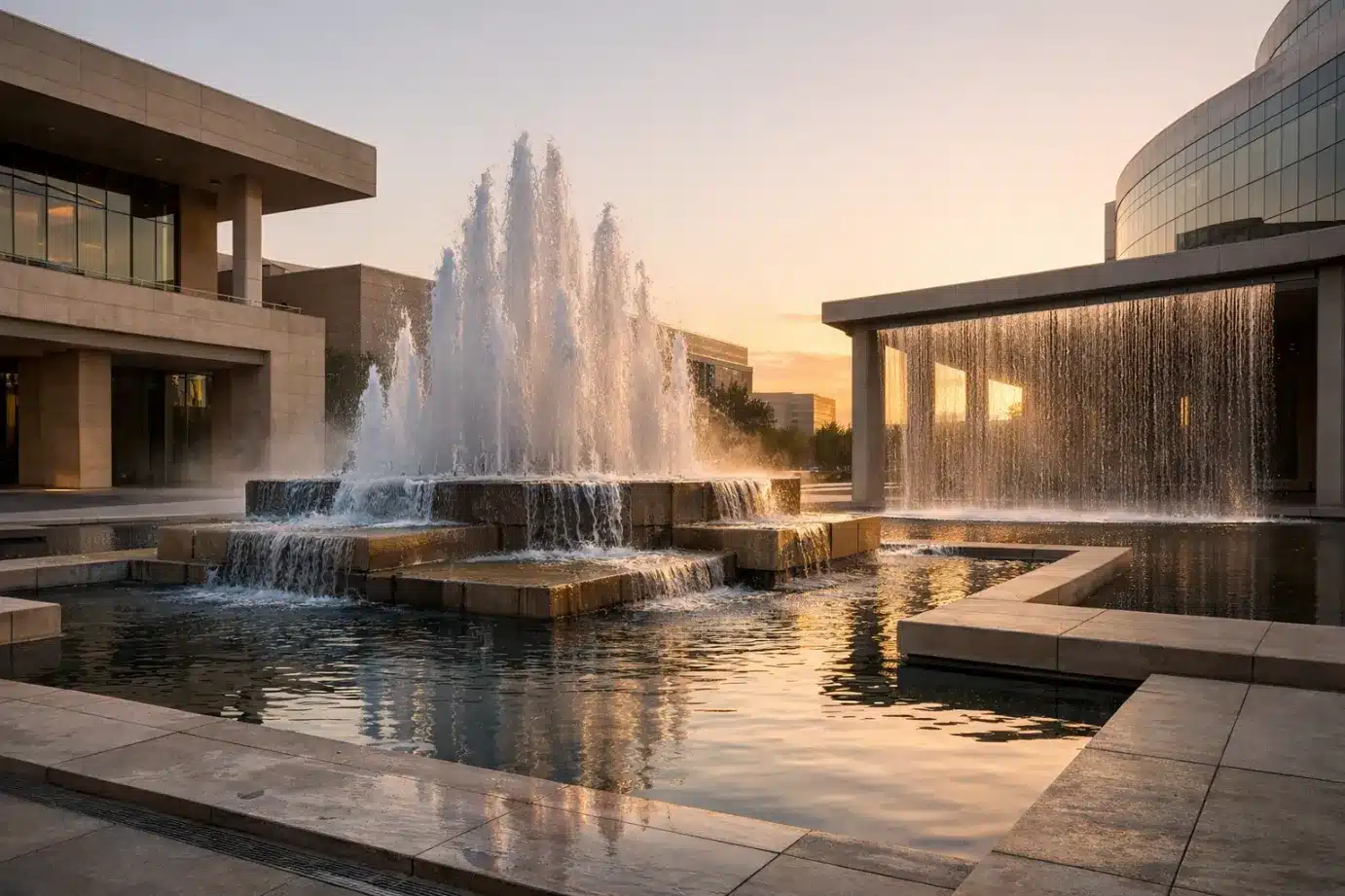
For most of human history, fountains have been far more than decorative objects .They have been symbols of life, power, spirituality, innovation, and community. From ancient aqueduct-fed plazas to modern rain curtain water features in airports and civic centers, fountains have quietly shaped how people gather, cool down, reflect, and identify with place.
Today, as cities rethink public space, sustainability, and well-being, fountains are once again stepping into a larger role. They are no longer “extras” in the landscape budget. Increasingly, water fountains and water features are becoming cultural infrastructure, essential elements that support social life, environmental performance, and shared identity.
This article explores how fountains evolved into cultural infrastructure, why they matter more than ever, and how different types, from outdoor water fountains and garden fountains to indoor water fountains and wall fountains, contribute to modern civic life.
Defining Cultural Infrastructure Through Water
Cultural infrastructure refers to the physical and social systems that support shared cultural life. This includes libraries, museums, plazas, parks, theaters, and increasingly, designed water features.
When a fountain becomes cultural infrastructure, it fulfills several roles at once:
- A functional role (cooling, circulation, humidity, acoustics)
- A social role (gathering, meeting, resting, playing)
- A symbolic role (identity, memory, pride)
- An experiential role (sensory engagement, emotional impact)
Unlike static monuments, fountains are dynamic. Moving water creates sound, motion, reflection, and microclimate. This makes fountains uniquely powerful as infrastructure that people feel, not just see.
A Brief History: Fountains as the Backbone of Civilization
Ancient Water Fountains as Survival Systems
The earliest water fountains were acts of survival. In Mesopotamia, Persia, Rome, and the Indus Valley, fountains were endpoints of aqueduct systems, distributing fresh water to the public.
In Ancient Rome, public fountains were so vital that damaging one was considered a crime against the state. These were not luxury items; they were essential infrastructure that ensured health, sanitation, and social stability.
Even then, design mattered. Roman fountains incorporated sculpture, inscriptions, and sound to elevate daily necessity into civic pride.
Islamic Gardens and Spiritual Water Features
In Islamic architecture, garden fountains and water channels symbolized paradise. Courtyards featured symmetrical pools, wall fountains, and flowing water meant to calm the spirit and reflect divine order.
Here, water features became spiritual infrastructure, shaping how people prayed, rested, and contemplated.
Renaissance and Baroque Power Displays
By the Renaissance, fountains transformed into statements of political and cultural dominance. Think of Rome’s Trevi Fountain or Versailles’ elaborate outdoor fountains. These massive hydraulic achievements showcased engineering prowess while reinforcing authority and identity.
This period cemented the idea that outdoor fountains communicate cultural values—a concept that still holds true today.
Modern Cities and the Return of the Fountain
Urban Density and the Need for Sensory Relief
Modern cities are louder, hotter, and denser than ever. Concrete amplifies heat and noise, while digital life reduces moments of pause. In this context, outdoor water fountains act as urban counterbalances.
The sound of moving water masks traffic noise. Evaporation cools surrounding air. Visual motion softens rigid architectural lines. As a result, water features are increasingly used in:
- City plazas
- Transit hubs
- University campuses
- Mixed-use developments
These fountains function as environmental infrastructure, improving comfort without relying solely on mechanical systems.
Fountains as Public Living Rooms
Great public fountains don’t just decorate space, they activate it.
People sit beside them. Children play near them. Performers use them as backdrops. Protesters gather around them. Photographers frame them.
When thoughtfully designed, outdoor water fountains create what urbanists call “sticky places”, areas people want to stay in. This social magnetism is a key marker of cultural infrastructure.
Types of Fountains as Cultural Infrastructure
Outdoor Fountains and Outdoor Water Fountains
Large-scale outdoor fountains anchor public spaces. They often become landmarks, helping people orient themselves within a city.
Key characteristics:
- High visibility
- Durable materials
- Strong visual identity
Outdoor water fountains frequently serve ceremonial and communal functions, such as seasonal celebrations, festivals, or memorials.
Garden Fountains as Neighborhood Infrastructure
While smaller in scale, garden fountains play an important cultural role in residential and semi-public environments.
In courtyards, botanical gardens, and hospitality settings, they:
- Encourage lingering
- Promote relaxation
- Create intimate gathering zones
Garden fountains blur the line between private comfort and shared experience, making them essential micro-infrastructure.
Indoor Fountains and Indoor Water Fountains
As wellness becomes a design priority, indoor fountains are emerging as cultural infrastructure inside buildings.
Found in:
- Hospitals
- Corporate headquarters
- Museums
- Hotels
Indoor water fountains improve acoustics, reduce stress, and humanize large interior spaces. They signal care, intentionality, and calm.
Tabletop Fountains and Personal Ritual
Though small, tabletop fountains reflect a cultural shift toward mindfulness and personal well-being.
In homes and offices, they:
- Introduce biophilic design
- Support focus and relaxation
- Create daily rituals
These micro water features show how infrastructure doesn’t need to be massive to be meaningful.
Wall Fountains and Vertical Storytelling
Wall fountains are especially powerful in dense environments where floor space is limited.
They function as:
- Architectural art
- Acoustic softeners
- Visual narratives
From carved stone to sleek glass, wall fountains integrate storytelling directly into the built environment.
Floor Fountains and Interactive Design
Floor fountains, often flush with paving, represent a shift toward playful, interactive infrastructure.
Common in plazas and parks, they:
- Encourage physical interaction
- Adapt to events and seasons
- Increase accessibility
Children running through floor fountains aren’t just playing, they’re engaging with civic space in a memorable way.
Rain Curtain Fountain and Rain Curtain Water Feature
Perhaps the most theatrical modern option, the rain curtain fountain transforms falling water into an architectural medium.
Used in:
- Airports
- Museums
- Luxury lobbies
- Civic buildings
Rain curtain water features often incorporate text, logos, or lighting, turning water into storytelling infrastructure that communicates identity and innovation.
Fountains and Cultural Identity
Water as a Shared Symbol
Across cultures, water symbolizes life, renewal, and continuity. When fountains are embedded into daily life, they reinforce shared values without words.
A city’s fountains often reveal what it prioritizes:
- Sustainability
- Art
- Play
- Memory
This is why many cities fiercely protect historic water fountains, they are repositories of collective identity.
Memorial and Commemorative Fountains
Fountains are increasingly used as memorials because water embodies remembrance and flow.
Unlike static statues, fountains:
- Change with light and weather
- Invite quiet reflection
- Feel alive
This emotional resonance makes them powerful cultural infrastructure for collective memory.
Sustainability and the Future of Water Features
Closed-Loop Systems and Smart Technology
Modern fountains are not the water-wasters of the past. Advances in filtration, recirculation, and monitoring have transformed fountains into efficient systems.
Sustainable outdoor water fountains now feature:
- Closed-loop circulation
- Rainwater harvesting
- Smart sensors
- Low-energy pumps
These innovations allow fountains to exist responsibly, even in water-conscious regions.
Climate Adaptation and Cooling
As cities face rising temperatures, fountains are being reconsidered as passive cooling infrastructure.
Strategically placed water features can:
- Lower perceived temperatures
- Improve pedestrian comfort
- Reduce reliance on air conditioning
In this sense, fountains are not decorative, they are climate tools.
Fountains in the Age of Experience Design
Instagram, Placemaking, and Visibility
In the digital era, fountains play a surprising role in branding and tourism. Iconic water features become visual shorthand for a place.
Cities and developers now design fountains with:
- Photogenic angles
- Night lighting
- Interactive elements
This doesn’t diminish their cultural value, it expands it into digital storytelling.
Emotional Design and Well-Being
Experience-driven design focuses on how spaces make people feel. Few elements influence emotion as effectively as moving water.
From indoor water fountains that reduce anxiety to outdoor fountains that spark joy, water features support emotional infrastructure as much as physical space.
When a Fountain Truly Becomes Infrastructure
A fountain crosses the line from decoration to cultural infrastructure when:
- People use it instinctively
- It shapes daily routines
- It becomes a reference point
- It supports environmental comfort
- It carries symbolic meaning
At that moment, removing it would feel like removing a library, a park, or a square.
Conclusion: Designing with Cultural Responsibility
Fountains are no longer optional flourishes. In an era defined by climate challenges, urban stress, and cultural fragmentation, water features reconnect us, to nature, to each other, and to place.
Whether it’s a monumental outdoor water fountain in a city square, a contemplative wall fountain in a hospital, or a rain curtain fountain welcoming travelers, these systems quietly support culture every day.
When we design fountains with intention, sustainability, and empathy, we are not just adding water, we are building cultural infrastructure that flows through generations.