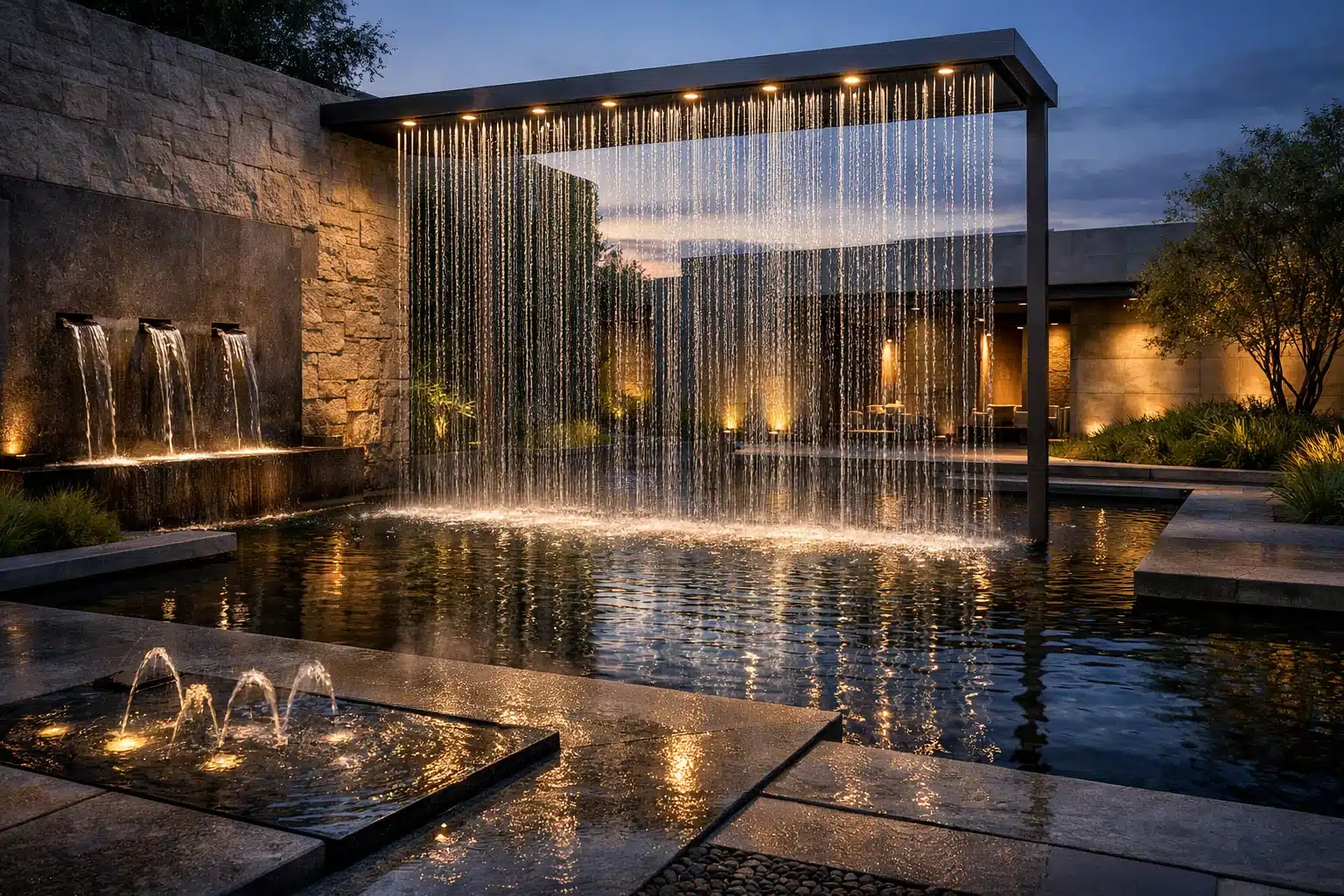
Responsive-fountains

When Water Listens: Designing Fountains That Respond to Presence

Introduction: When Water Becomes Aware

For centuries, fountains have symbolized life, luxury, and calm. From ancient Roman baths to Mughal gardens and modern urban plazas, water fountains have always been about movement, yet traditionally, that movement has been fixed, predictable, and passive. You approach, and the water flows exactly as it always has.

But what if water could listen?

What if outdoor fountains, indoor water fountains, or even tabletop fountains could sense your presence, react to your movement, and subtly shift their behavior in response? Today, advances in sensor technology, digital control systems, and architectural design are making this possible. The result is a new generation of water features that feel alive—responsive, adaptive, and deeply human.

This article explores the emerging world of responsive fountain design: how presence-aware fountains work, why they matter, and how designers are reimagining garden fountains, wall fountains, floor fountains, and dramatic installations like the rain curtain fountain. Along the way, we’ll look at both indoor and outdoor applications, aesthetic principles, and practical considerations for designing fountains that truly listen.

The Evolution of Fountains: From Ornament to Interaction

A Brief History of Static Beauty

Historically, fountains were feats of engineering and symbols of power. Gravity-fed systems delivered water to palace courtyards, while ornate carvings and basins reflected cultural ideals of beauty and control over nature. Even today, many outdoor water fountains remain static displays, beautiful, but unchanging.

In homes, indoor fountains and garden fountains became associated with wellness and Feng Shui, offering soothing sounds and visual rhythm. Yet interaction remained minimal: water on, water off.

Enter Responsive Design

The last two decades have seen a shift across architecture and product design toward interactivity. Buildings respond to climate, lighting responds to motion, and digital interfaces respond to touch. It was only a matter of time before water features joined this movement.

Modern fountains can now:

  • Activate when someone approaches
  • Change flow patterns based on movement
  • Adjust sound levels dynamically
  • Synchronize water with light and music
  • Respond differently to children, crowds, or stillness

This transition transforms fountains from background decoration into immersive experiences.

What Does It Mean for Water to “Listen”?

Presence vs. Participation

When we say water “listens,” we don’t mean literal sound recognition alone. Responsive fountains interpret presence in multiple ways:

  • Proximity: detecting how close someone is
  • Motion: tracking speed, direction, or gestures
  • Density: sensing how many people are nearby
  • Duration: responding differently to brief vs. sustained presence

For example, a floor fountain in a public plaza may lie dormant until footsteps approach. As people walk across it, jets rise and fall in playful patterns. Meanwhile, a serene wall fountain in a hotel lobby might increase flow slightly when guests enter, signaling welcome without spectacle.

Emotional Feedback Through Water

Water is uniquely suited to emotional response. Subtle changes in flow, rhythm, or sound can communicate calm, excitement, or curiosity. Responsive fountains don’t just react, they converse.

Core Technologies Behind Responsive Fountains

Motion and Presence Sensors

At the heart of responsive fountains are sensors, including:

  • Infrared (IR) sensors: detect body heat and movement
  • Ultrasonic sensors: measure distance and proximity
  • Pressure sensors: embedded in flooring near floor fountains
  • Camera-based systems: track motion and gestures

These technologies allow fountains to respond without physical contact, preserving elegance and hygiene.

Programmable Water Control

Traditional fountains rely on fixed pumps and valves. Responsive water fountains use digitally controlled pumps that can:

  • Modulate pressure in real time
  • Activate specific jets independently
  • Create dynamic sequences and patterns

This is particularly effective in rain curtain water features, where individual streams can be turned on or off to create shapes, words, or movement-based effects.

Lighting and Sound Integration

While water alone can respond beautifully, combining it with light and sound enhances immersion:

  • LED lighting synchronized with water motion
  • Soundscapes that evolve with flow intensity
  • Quiet modes for contemplative indoor spaces

Together, these elements elevate fountains into full sensory installations.

Designing Responsive Outdoor Fountains

Outdoor Fountains as Social Infrastructure

In urban environments, outdoor fountains often function as landmarks, meeting points, or play spaces. Making them responsive encourages engagement and shared experience.

Imagine a city square where:

  • Jets rise higher as more people gather
  • Children trigger playful sprays by running
  • Water softens when crowds thin, restoring calm

These outdoor water fountains adapt to the social rhythms of the space.

Weather-Aware Responsiveness

Responsive design doesn’t stop with people. Smart outdoor fountains can also respond to:

  • Wind speed (reducing spray drift)
  • Temperature (adjusting flow in cold weather)
  • Time of day (calmer evenings, playful afternoons)

This adaptability improves sustainability and longevity while enhancing user comfort.

Garden Fountains That React to Stillness

Presence Through Calm, Not Motion

Not all responsive fountains are dramatic. In private landscapes, garden fountains often aim for tranquility. Here, responsiveness can be subtle:

  • Increased flow when someone sits nearby
  • Gentle ripples activated by proximity
  • Sound levels that adapt to ambient noise

These designs reward stillness rather than movement, making the garden feel attentive and alive.

Nature-Inspired Interaction

Many designers take cues from natural water behaviors, streams that swell after footsteps on a bridge or ripples caused by nearby movement. Responsive water features blur the line between designed and organic systems.

Indoor Water Fountains: Listening in Quiet Spaces

Water Listens

The Psychology of Indoor Responsiveness

Indoor water fountains operate in more intimate environments, homes, offices, spas, and galleries. Here, responsiveness must be refined and unobtrusive.

Examples include:

  • A wall fountain that gently activates as someone enters a lobby
  • A tabletop fountain that shifts rhythm when hands approach
  • An indoor fountain that quiets during meetings or meditation

These systems enhance well-being without demanding attention.

Adaptive Sound Design

Sound is often the primary reason people choose indoor fountains. Responsive sound control ensures:

  • No overpowering noise in quiet moments
  • Enhanced masking of background noise when needed
  • Personalized acoustic experiences in shared spaces

Tabletop and Small-Scale Interactive Fountains

Personal Water Features

Not all responsive fountains are architectural. Tabletop fountains can also respond to presence using simple technologies:

  • Touch-sensitive bases
  • Proximity-triggered flow changes
  • Light shifts based on hand movement

These features bring interactivity into personal environments, making water a companion rather than a backdrop.

Wellness and Mindfulness Applications

Small responsive fountains are increasingly used in wellness settings, helping users:

  • Practice mindful interaction
  • Engage with calming feedback loops
  • Reduce stress through gentle cause-and-effect

Rain Curtain Fountains: Water That Writes and Remembers

What Is a Rain Curtain Fountain?

A rain curtain fountain (or rain curtain water feature) consists of vertical streams of water falling in parallel lines, often from a ceiling or frame. By controlling each stream independently, designers can create:

  • Words and symbols
  • Animated patterns
  • Motion-responsive effects

Presence-Based Rain Curtains

In responsive installations, rain curtain fountains can:

  • Part as people walk through
  • Display changing patterns based on movement
  • Shift density as crowds gather

These fountains feel almost magical, water that recognizes and respects human presence.

Floor Fountains and Playful Interaction

Walking on Water

Floor fountains invite direct interaction. Jets embedded in the ground respond to footsteps, turning movement into play.

Key design considerations include:

  • Safety and slip resistance
  • Predictable yet surprising responses
  • Accessibility for all ages

When designed well, floor fountains become democratic spaces of joy, especially in public settings.

Balancing Play and Control

Responsive doesn’t mean chaotic. Designers must carefully calibrate how fountains react to avoid overstimulation or water waste.

Sustainability and Smart Water Management

Responsive Design as Conservation

Ironically, fountains that respond to presence can be more sustainable than static ones. Why?

  • Water flows only when needed
  • Pumps operate at variable speeds
  • Systems shut down automatically during low use

Smart outdoor water fountains can significantly reduce water and energy consumption.

Closed-Loop Systems and Filtration

Modern responsive fountains typically use closed-loop circulation, ensuring that responsiveness doesn’t come at an environmental cost.

Design Principles for Presence-Aware Fountains

To create fountains that truly “listen,” designers should focus on:

  • Intentional Interaction: Decide what kind of behavior you want to encourage
  • Subtle Feedback: Avoid overwhelming users
  • Context Sensitivity: Match responsiveness to environment
  • Reliability: Interactions should feel natural, not gimmicky
  • Maintenance Planning: Sensors and controls must be durable

Whether designing indoor fountains, garden fountains, or large-scale outdoor fountains, these principles ensure meaningful engagement.

The Emotional Future of Water Features

As cities become smarter and homes more connected, water features will continue to evolve. The future isn’t about spectacle alone, it’s about empathy in design.

Fountains that listen:

  • Make spaces feel welcoming
  • Encourage play, rest, or reflection
  • Create memorable emotional connections

From humble tabletop fountains to monumental rain curtain water features, responsive water design represents a shift toward environments that acknowledge our presence and respond with grace.

Conclusion: Listening as a Design Philosophy

When water listens, design becomes dialogue. Responsive fountains transform water from a passive element into an active participant in our environments. They invite us to move, pause, and engage, sometimes playfully, sometimes quietly.

As technology and creativity continue to merge, fountains, indoor water fountains, outdoor fountains, and every form in between will increasingly reflect not just aesthetic intention, but human presence itself.

Water has always shaped our spaces. Now, it’s learning to listen.

FAQs:

A responsive fountain is a water feature that changes its behavior, such as flow, pattern, or sound, based on human presence, movement, or environmental conditions.
Yes, when designed properly. Many floor fountains and interactive outdoor water fountains are specifically engineered with safety, slip resistance, and gentle water pressure in mind.
Absolutely. Indoor fountains often use subtle presence detection to adjust flow and sound gently, maintaining calm while still offering interactive feedback.