
Powder-coated steel is most effective for above-water architectural elements that require color customization, fabrication flexibility, and durable surface protection.
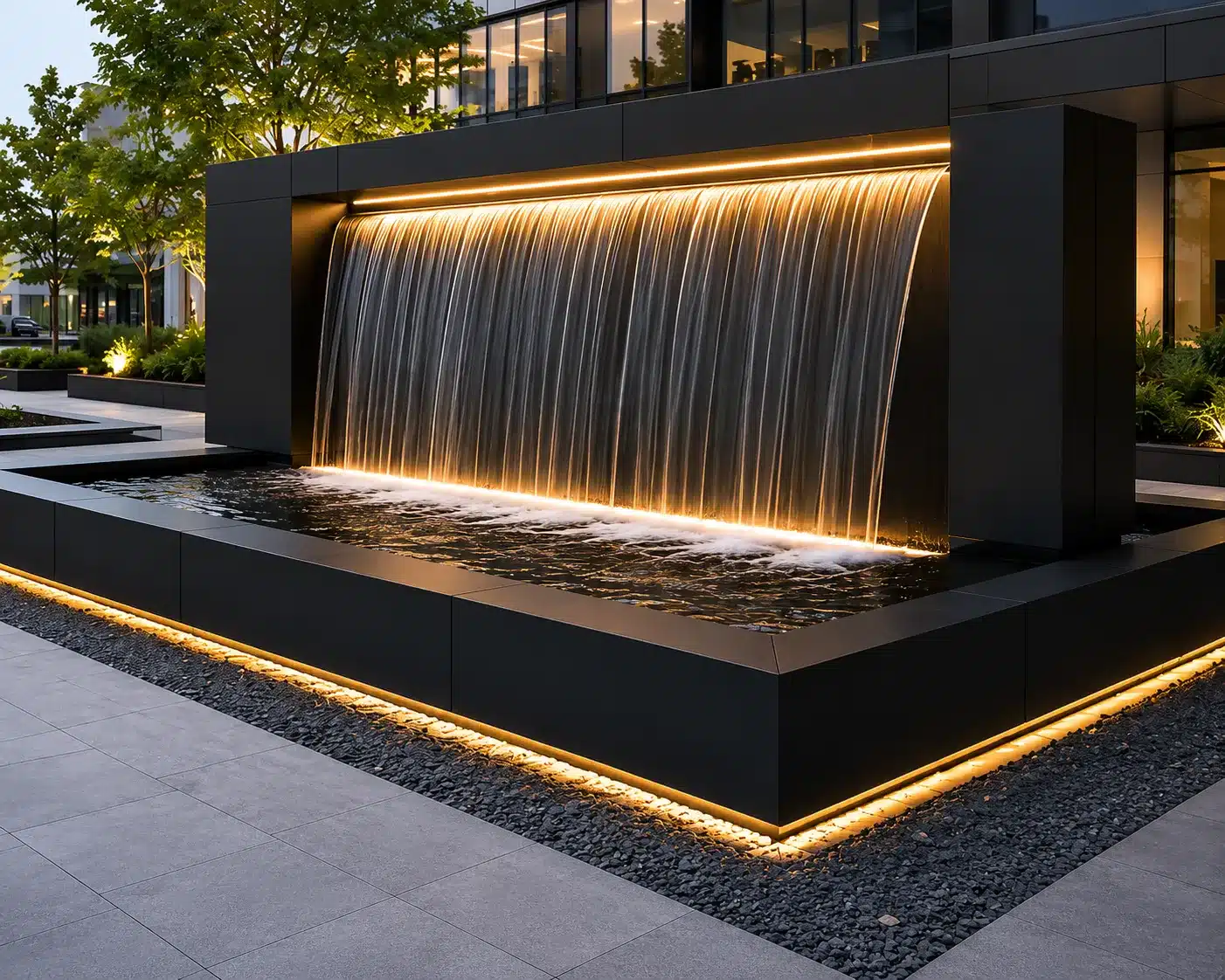
Common applications include:
- Decorative cladding panels
- Structural frames
- Architectural feature walls
- Equipment enclosures
- Mechanical equipment screens
- Custom fountain surrounds
- Signage integration
- Decorative architectural accents
Because powder-coated steel can be fabricated into complex forms and finishes, its fabrication versatility and wide color range enable architects to coordinate fountain designs with overall project aesthetics.
This flexibility is one reason many metal fountains incorporate powder-coated steel elements alongside stainless steel, stone, or concrete.
Common Commercial Fountain Applications for Powder-Coated Steel
Powder-coated steel is often specified for commercial fountain projects that require architectural appearance, branding, and custom color matching.
Typical applications include:
- Corporate campus fountains
- Hospitality and resort water features
- Mixed-use developments
- Civic plazas
- University campuses
- Rooftop amenity decks
- Retail destinations
- Entertainment venues
In many cases, powder-coated steel creates visually striking architectural features, while stainless steel is reserved for submerged or water-contact components. Often, powder-coated steel helps balance aesthetics, durability, and project budget.
Finish Options for Commercial Fountain Applications
A key advantage of powder-coated steel is its wide range of available finish options.
Matte Finishes
Matte finishes are popular in contemporary commercial settings for their sophisticated appearance and ability to minimize fingerprints, glare, and surface wear.
Satin Finishes
Satin finishes balance matte and gloss qualities, making them a common choice for modern architectural fountains.
Textured Finishes
Textured coatings can replicate natural materials and help conceal minor fabrication marks and surface imperfections.
Metallic Finishes
Metallic powder coatings can replicate bronze, pewter, titanium, and other specialty finishes without the cost of solid-metal construction.
Custom Color Matching
A major advantage of powder-coated steel is its ability to match nearly any project color palette.
Architects often specify custom RAL colors to coordinate fountain components with building facades, landscape elements, brand standards, and surrounding features.
This customization makes powder-coated steel one of the most adaptable materials for commercial fountain design.
Performance in Commercial Fountain Environments
Long-term performance of powder-coated steel depends on proper material selection, surface preparation, coating quality, environmental exposure, and maintenance.
When these factors are properly addressed, powder-coated steel can deliver years of reliable service in demanding commercial environments.
Corrosion Resistance
Powder coating acts as a protective barrier, isolating the underlying steel from moisture, airborne contaminants, and environmental exposure.
This protection is effective for above-water architectural components. However, any coating damage should be repaired promptly, as exposed steel is susceptible to corrosion.
Therefore, powder-coated steel is best suited for architectural elements with occasional moisture exposure, not continuous water immersion.
UV Stability
Modern architectural-grade powder coatings offer strong UV resistance and color retention.
High-quality polyester coating systems help resist:
- Fading
- Chalking
- Surface degradation
- Color shift
- Weather-related deterioration
This makes powder-coated steel especially attractive for outdoor fountains where appearance is a key design priority.
Impact Resistance
Commercial fountains in public areas often experience incidental contact from maintenance equipment, landscaping, or pedestrian traffic.
Powder-coated steel typically provides:
- Better impact resistance than many liquid paint systems
- Improved scratch resistance
- Enhanced chip resistance
- Better long-term finish retention
These characteristics help maintain the appearance of visible fountain components over time.
Repairability
Unlike some specialty finishes, powder-coated steel can often be repaired or refinished if damaged.
Minor damage can be repaired with touch-up procedures, while larger areas may require stripping and recoating. This repairability contributes to favorable lifecycle economics and supports long-term asset management strategies.
Real-World Material Selection Considerations
A common mistake in commercial fountain design is evaluating materials solely based on appearance.
Successful projects consider:
- Water exposure
- Maintenance access
- Environmental conditions
- Expected service life
- Fabrication requirements
- Budget constraints
In many projects, powder-coated steel is most effective when used as part of a broader material strategy.
For example, architects frequently specify:
- Stainless steel basin liners
- Stainless steel nozzles
- Stainless steel hydraulic components
- Powder-coated steel cladding
- Powder-coated architectural screens
- Powder-coated decorative feature elements
This approach allows each material to be used where it performs best.
Many successful commercial fountain projects use this strategy to balance durability, maintenance requirements, and budget constraints.
Real-World Specification Example
Consider a mixed-use development featuring a signature plaza fountain that serves as a visual landmark and gathering space.
The design team may specify:
- Stainless steel basin liner
- Stainless steel hydraulic manifolds
- Stainless steel nozzle assemblies
- Powder-coated steel architectural cladding
- Powder-coated steel equipment screens
- Custom RAL finish matching adjacent building elements
In this scenario, stainless steel provides long-term durability in water-contact areas, while powder-coated steel supports the design vision and reduces fabrication costs.
This type of hybrid specification strategy is common in custom fountain projects because it combines performance-driven engineering with architectural flexibility.
When Powder-Coated Steel May Not Be the Best Choice
Despite its advantages, powder-coated steel is not the ideal material for every fountain application.
Architects should carefully evaluate environmental exposure and operating conditions before finalizing material selections.
Permanently Submerged Components
Powder coating should not be considered a substitute for corrosion-resistant materials for submerged applications.
For basin liners and continuously submerged components, stainless steel generally provides superior long-term performance.
Aggressive Chemical Environments
Fountains utilizing intensive chemical treatment programs may place additional stress on coating systems over time.
These conditions may justify the use of alternative materials for certain components.
Constantly Saturated Conditions
Locations where structural components remain continuously wet require careful evaluation because prolonged moisture exposure increases corrosion risk.
Severe Marine Exposure
Coastal projects present unique challenges due to airborne chlorides and salt-laden moisture.
In many coastal installations, stainless steel 316 remains the preferred material for critical fountain components.
Coastal Environment Considerations
Commercial fountains located near oceans, bays, or other marine environments experience significantly greater corrosion exposure than those in inland locations.
Salt deposits can accelerate corrosion and shorten coating lifespan if appropriate protective measures are not incorporated.
For coastal projects, design teams should consider:
- Enhanced surface preparation
- High-performance coating systems
- Zinc-rich primers
- Increased coating thickness
- More frequent inspection intervals
- Expanded maintenance programs
In some cases, the additional investment in stainless steel 316 may provide better long-term value than powder-coated steel for heavily exposed components.
Material selection should always be evaluated within the context of the project’s environmental conditions.
Lifecycle Cost Considerations
Initial material cost represents only one portion of a fountain’s total ownership cost.
Architects, developers, and facility managers should also evaluate:
- Maintenance requirements
- Repair costs
- Recoating frequency
- Expected service life
- Environmental exposure
- Replacement costs
Although powder-coated steel often has a lower initial cost than stainless steel, long-term maintenance requirements may vary depending on environmental conditions.
A proactive fountain maintenance program can significantly extend coating life, reduce repair costs, and improve long-term performance.
Many successful commercial fountain installations achieve the best value through a hybrid material strategy that combines powder-coated steel and stainless steel.
Work With Fountains.com
Material selection decisions made during design development can significantly affect long-term maintenance costs, project budgets, fabrication complexity, and fountain performance.
Fountains.com works with architects, landscape architects, developers, contractors, and property owners to design and fabricate commercial fountains that balance aesthetics, durability, maintenance requirements, and lifecycle value.
Whether your project requires powder-coated steel, stainless steel, stone, copper, or a hybrid material strategy, we can help identify the most effective solution for your design goals and environmental conditions.
We also design and fabricate:
- Custom Fountains
- Metal Fountains
- Outdoor Fountains
- Large-scale architectural water features
Frequently Asked Questions
Yes. Powder-coated steel can be an excellent choice for commercial fountain applications when used appropriately. It offers exceptional finish flexibility, strong durability, and cost efficiency for architectural elements above the waterline.
Generally, no. Permanently submerged basin liners are typically constructed from stainless steel because it provides superior long-term corrosion resistance in continuous water-contact environments.
Yes. Powder-coated steel is frequently used in custom fountain projects because it offers excellent fabrication flexibility and finish customization.
Powder-coated steel fountain components should be cleaned regularly and inspected annually. Damaged coating areas should be repaired promptly to prevent corrosion from reaching the underlying steel. A proactive fountain maintenance program helps maximize coating lifespan and preserve appearance.
Key Takeaway
Powder-coated steel plays an important role in the commercial fountain material palette because it offers an effective balance of architectural flexibility, durability, customization, and value.
Its ability to accommodate virtually unlimited color options, complex fabrication requirements, and contemporary architectural aesthetics makes it a practical choice for many commercial fountain applications.
For architects, developers, and landscape architects, the strongest commercial fountain designs often result from matching each material to its intended function rather than relying on a single material throughout the system.
When properly specified, fabricated, maintained, and integrated into the overall fountain design, powder-coated steel can provide years of reliable performance while helping create visually distinctive and architecturally compelling water features.
