...
440.1.Tiered-Fountain

Why Humans Are Hardwired to Gather Around Fountains

There’s something timeless about the sound of water in motion.

In a crowded city plaza, people instinctively drift toward fountains. In a quiet garden, guests pause beside garden fountains as if pulled by something deeper than decoration. Inside homes, the soft rhythm of indoor water fountains creates a calm center in an otherwise busy space.

This isn’t accidental. It isn’t trend-driven. And it certainly isn’t new.

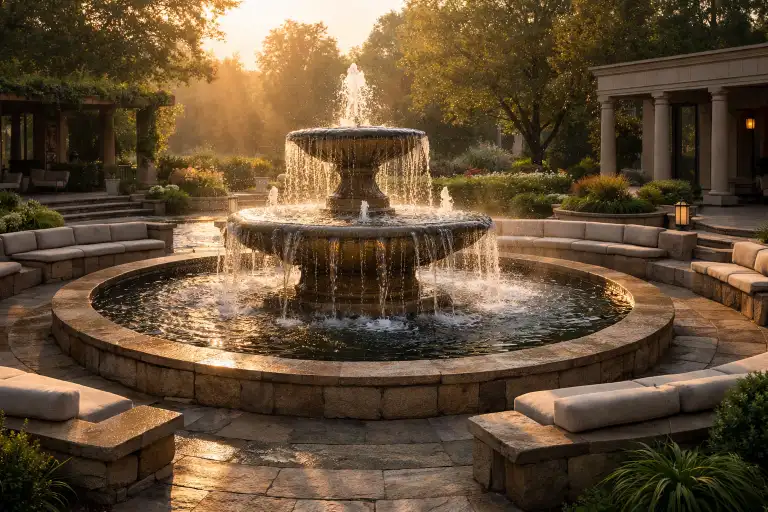
Humans are hardwired to gather around fountains.

From ancient civilizations to modern architecture, from grand outdoor water fountains in public squares to delicate tabletop fountains in private offices, moving water has always drawn us together. The pull is psychological. Biological. Cultural. Even spiritual.

Let’s explore why.

1. Water Is Survival — and Our Brains Know It

Long before cities, before language, before architecture, water meant life.

Early human settlements formed around rivers, lakes, and springs. Access to fresh water determined safety, food supply, agriculture, and survival. Those who stayed close to water lived. Those who didn’t, didn’t.

Our brains evolved with that reality.

Today, even in climate-controlled buildings with bottled water and plumbing, we still respond to moving water as if it signals security. The sight and sound of fountains and water features tap into something ancient in us.

Environmental psychologists call this biophilia, the innate human tendency to seek connection with nature. Flowing water is one of the strongest biophilic triggers.

That’s why:

  • Public squares anchor themselves with outdoor fountains
  • Resorts feature large outdoor water fountains near entrances
  • Luxury homes integrate garden fountains as focal points
  • Offices install indoor fountains to reduce stress

Water communicates safety at a subconscious level. It tells the nervous system: You’re somewhere stable. You’re somewhere abundant.

And when humans feel safe, they gather.

2. The Sound of Water Calms the Nervous System

Close your eyes and imagine the sound of a rain curtain fountain cascading gently down glass.

Now imagine the hum of traffic.

Your body reacts differently to each, instantly.

Flowing water produces what researchers call “pink noise”, a balanced, consistent sound frequency that masks sharp or sudden noises. This steady acoustic environment reduces stress hormones and encourages parasympathetic nervous system activation, the “rest and restore” state.

That’s why:

  • Indoor water fountains are popular in wellness clinics
  • Tabletop fountains sit in meditation rooms
  • Wall fountains are used in corporate lobbies
  • Rain curtain water features create tranquil hotel entrances

The effect isn’t just aesthetic. It’s physiological.

Heart rates slow. Breathing deepens. Muscles relax.

When a fountain becomes the sonic anchor of a space, it transforms the emotional experience of that space. People linger longer. Conversations deepen. Interactions feel calmer.

We gather around fountains because they quiet the chaos inside us.

3. Moving Water Captures Attention Without Demanding It

Fire demands attention. Screens demand attention. Traffic demands attention.

Water doesn’t.

Flowing water moves continuously, yet gently. It creates visual interest without cognitive overload. Whether it’s floor fountains in a modern atrium or garden fountains tucked among greenery, the motion is rhythmic and predictable.

Our brains love predictable motion.

It creates a state psychologists call “soft fascination.” This is the kind of attention that restores mental energy rather than draining it.

That’s why people sit beside outdoor water fountains in plazas rather than staring at buildings. It’s why indoor fountains often become the focal point in spa design. And it’s why even small tabletop fountains can transform a desk from sterile to soothing.

Water moves, but it doesn’t compete.

It invites.

4. Fountains Create Natural Social Anchors

Watch what happens in a public square.

Without planning it, people position themselves around the fountain. Children circle it. Couples sit near it. Tourists photograph it. Strangers share its perimeter.

Architecturally, fountains function as social magnets.

Throughout history:

  • Roman cities centered forums around fountains
  • Islamic courtyards placed water features in the middle
  • European towns built ornate outdoor fountains as gathering points
  • Modern urban planners use outdoor water fountains to activate public spaces

Why does this work?

Because a fountain defines a center without walls.

It offers a shared point of focus. It creates a reason to pause. It softens awkward silence with sound.

Even indoors, the principle holds. Indoor fountains in lobbies or corporate offices subtly encourage people to gather without feeling confined. A rain curtain fountain near a reception desk creates an immediate emotional tone: calm, refined, welcoming.

Water brings people together without forcing them together.

5. The Symbolism of Flow

Beyond biology and psychology lies symbolism.

Across cultures, fountains represent:

  • Renewal
  • Purity
  • Abundance
  • Prosperity
  • Life

Garden fountains in classical estates symbolized wealth and cultivation. Wall fountains in Mediterranean architecture symbolized cool refuge from heat. Indoor water fountains in Feng Shui represent prosperity and positive energy flow.

A rain curtain water feature often symbolizes transparency and modern elegance. Floor fountains can symbolize movement and innovation.

Water doesn’t just move physically. It represents movement in life.

That symbolism makes fountains more than décor. They become statements.

And humans are drawn to spaces that tell a story.

6. Fountains Transform Space Through Sensory Design

The best designers understand something simple: people don’t remember rooms, they remember experiences.

Water features transform experience by engaging multiple senses at once:

  • Sight: Reflective surfaces, shimmering motion, light dancing across droplets.
  • Sound: Gentle cascading that masks noise and anchors the atmosphere.
  • Touch: Cooler air near outdoor fountains in hot climates.
  • Emotion: Calm, clarity, presence.

Outdoor water fountains cool plazas naturally. Garden fountains create microclimates that attract birds and wildlife. Indoor fountains improve perceived air freshness and ambiance.

Even small tabletop fountains can shift the mood of an entire room.

Water engages humans holistically. And when environments engage the whole body, people feel connected to them.

7. Why Modern Spaces Still Rely on Fountains

Despite technology and digital environments, architects continue to specify fountains and water features in major projects.

Why?

Because screens fatigue us.
Glass towers feel sterile without contrast.
Concrete plazas feel harsh without organic elements.

Outdoor fountains soften architecture. Wall fountains add vertical interest to blank surfaces. Floor fountains create immersive installations in corporate headquarters. Rain curtain fountains introduce movement into minimalist spaces.

In luxury homes, indoor water fountains signal tranquility and refinement. In restaurants, outdoor water fountains enhance the dining atmosphere. In wellness centers, tabletop fountains support meditation and stress relief.

Fountains are not outdated relics. They are design tools rooted in human psychology.

8. The Micro-Scale Power of Tabletop Fountains

You don’t need a grand plaza to experience this effect.

A small tabletop fountain on a desk can:

  • Reduce perceived stress
  • Improve focus
  • Mask distracting background noise
  • Add a sense of calm authority to an office

Indoor fountains at small scale still activate our biophilic instincts. They provide the same sensory benefits in miniature.

For apartments, offices, and compact spaces, indoor water fountains offer a practical way to introduce the calming power of water without structural renovation.

Scale changes, impact remains.

9. Garden Fountains and the Human Need for Refuge

Step into a garden with a fountain at its center.
Notice what happens.
Your pace slows.

Garden fountains create psychological refuge. Surrounded by plants, anchored by water, the space feels enclosed yet open. Safe yet expansive.

In landscape architecture, water features define zones of rest. Outdoor fountains in gardens give people a place to sit, reflect, and detach from urgency.

Humans crave refuge just as much as they crave connection. Garden fountains provide both.

10. The Hypnotic Beauty of Rain Curtain Water Features

Modern design has introduced striking interpretations of traditional fountains, including the rain curtain fountain.

A rain curtain water feature allows water to fall in a continuous sheet, often along glass or metal. The effect is elegant, architectural, and immersive.

Why is it so captivating?

Because it combines:

  • Linear precision
  • Transparent motion
  • Gentle sound
  • Reflective light

Rain curtain fountains feel contemporary yet primal. They mimic rainfall, one of the most fundamental natural experiences, but frame it in a controlled, artistic form.

In hotel lobbies, corporate entrances, and high-end residences, rain curtain water features signal sophistication while delivering emotional calm.

They are modern proof that our attraction to flowing water hasn’t faded, it has evolved.

11. Indoor Fountains and Mental Restoration

Why Humans Are Hardwired to Gather Around Fountains

In a world of constant digital stimulation, mental restoration has become essential.

Indoor fountains offer micro-restoration moments throughout the day.

Studies in environmental psychology suggest that exposure to natural elements, even simulated ones, improves cognitive recovery after mental fatigue. The gentle sound and motion of indoor water fountains offer that restorative pause.

Wall fountains in waiting rooms reduce anxiety. Floor fountains in office atriums break up monotony. Tabletop fountains help create mindful workspaces.

We may not live beside rivers anymore, but we still need the mental rhythm of water.

12. Outdoor Water Fountains and Community Identity

Cities often define themselves by their fountains.

Think of iconic outdoor fountains around the world, they become landmarks, meeting points, symbols of pride.

Outdoor water fountains give communities a shared identity. They create tradition. They mark celebrations. They serve as backdrops for weddings, performances, and daily life.

A well-designed fountain becomes more than infrastructure. It becomes memory.

And humans are deeply tied to places where memories form.

13. Why This Instinct Will Never Disappear

Technology evolves. Architecture changes. Styles shift.

But the human nervous system hasn’t changed nearly as fast.

We still respond to:

  • Movement in nature
  • Rhythmic sound
  • Access to water
  • Shared gathering spaces

Fountains satisfy all four.

Whether it’s grand outdoor fountains in civic centers, elegant wall fountains in luxury interiors, tranquil garden fountains in private landscapes, or minimalist tabletop fountains in modern apartments, the effect is consistent.

We gather around fountains because they reflect who we are, beings shaped by water, sustained by water, and calmed by water.

They remind us of rivers, rain, and renewal.

And in a world that often feels fragmented, fountains offer something simple and universal:

  • A place to pause.
  • A place to breathe.
  • A place to connect.

FAQs:

Humans are biologically wired to seek water because it historically meant survival. The sight and sound of fountains trigger feelings of safety, calm, and restoration rooted in our evolutionary past.
Yes. Indoor water fountains create soothing sound frequencies that reduce stress, mask background noise, and promote relaxation, making them ideal for homes, offices, and wellness spaces.
A fountain typically circulates and projects water visibly (like outdoor fountains or wall fountains), while water features is a broader term that includes fountains, rain curtain water features, ponds, and decorative water installations.
SPRING SALE: 10% OFF ALL PRODUCTS
Use Code: SPRING10 | Ends April 30