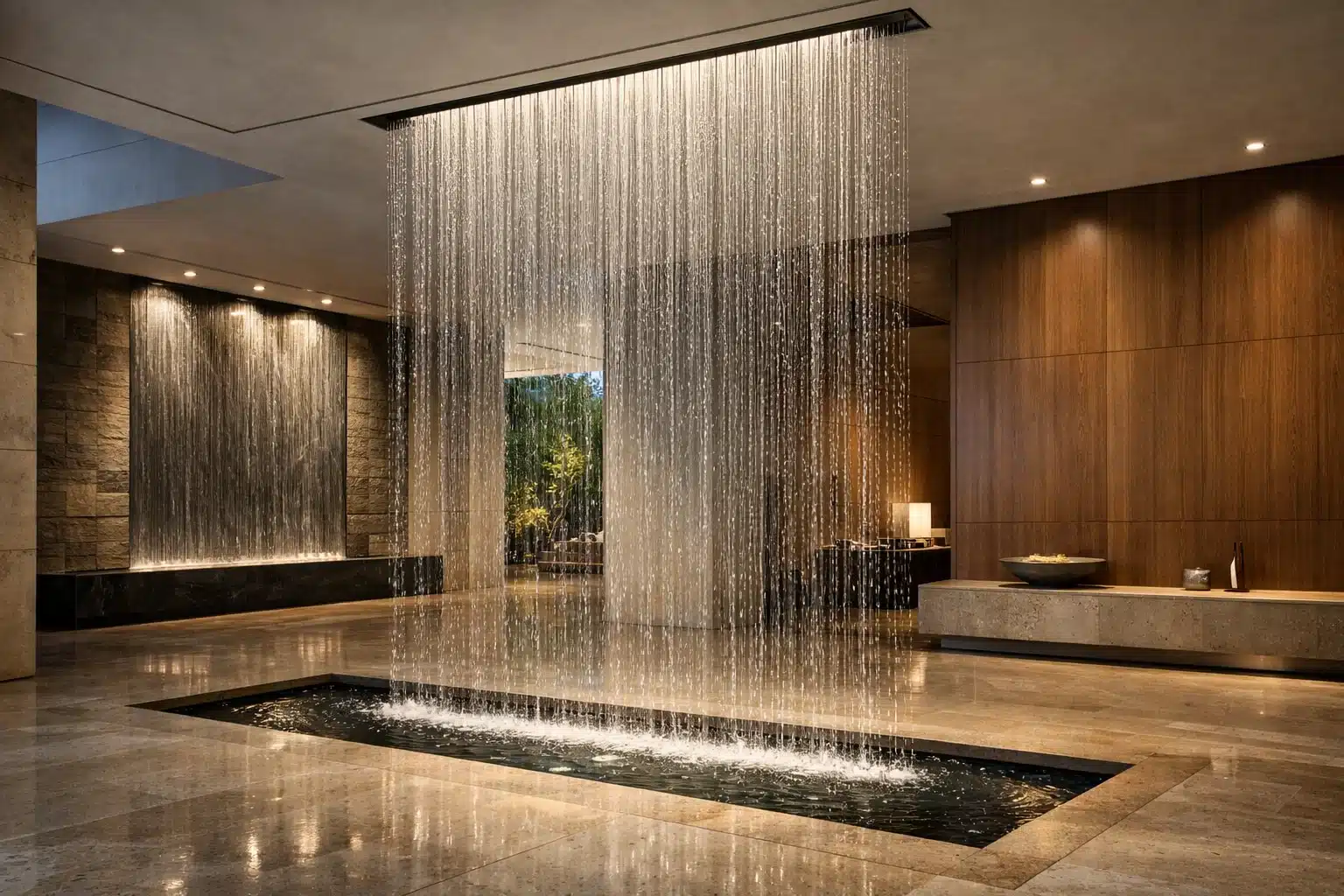
Architectural-fountains

Architectural Fountains as Mood Regulators in Luxury Spaces

Introduction: The Emotional Architecture of Water

Luxury design has always extended beyond aesthetics into the realm of experience. Today’s high-end residences, hotels, resorts, corporate headquarters, and wellness retreats are no longer judged solely by materials or square footage, but by how they make people feel. Among the most powerful, and timeless, tools for shaping emotional experience are architectural fountains.

From tranquil indoor water fountains in hotel lobbies to dramatic rain curtain water features in grand atriums, fountains play a unique role as mood regulators. Their movement, sound, reflection, and rhythm engage the senses on a subconscious level, influencing calmness, focus, social interaction, and even perceived luxury.

This article explores how fountains, water features, and both indoor and outdoor fountains shape emotional environments in luxury spaces, bridging architecture, psychology, wellness, and modern design.

Why Water Has a Psychological Impact

Water has been linked to human well-being since ancient civilizations. Roman bathhouses, Islamic gardens, and Japanese Zen landscapes all used water deliberately to calm the mind and elevate the spirit.

Modern neuroscience supports this tradition. Studies show that flowing water:

  • Lowers cortisol levels (stress hormone)
  • Encourages meditative brainwave patterns
  • Improves mood and mental clarity
  • Enhances perceived comfort and safety

In luxury architecture, water fountains transform these psychological benefits into tangible spatial experiences.

Architectural Fountains as Mood Regulators

Unlike decorative art, fountains are dynamic. They introduce motion, sound, and reflection, elements that continuously interact with occupants.

How Fountains Regulate Mood:

  • Sound masking: Flowing water softens urban noise and echoes.
  • Visual rhythm: Repetition and movement create mental grounding.
  • Biophilic connection: Water reconnects occupants to nature.
  • Microclimate enhancement: Increased humidity improves comfort indoors.
  • Symbolic luxury: Water conveys abundance, care, and refinement.

This combination makes indoor fountains, wall fountains, and floor fountains powerful emotional tools in high-end design.

Indoor Fountains: Elevating Interior Luxury

1. Indoor Water Fountains in Hospitality Spaces

Luxury hotels and resorts rely heavily on first impressions. A sculptural indoor fountain in a lobby instantly signals calm and sophistication. The sound of flowing water slows guests’ breathing and creates a welcoming emotional reset after travel stress.

Popular formats include:

  • Wall fountains behind reception desks
  • Rain curtain fountains in atriums
  • Reflective floor fountains integrated into marble or stone

These installations guide guest movement, soften acoustics, and establish a sense of sanctuary.

2. Indoor Fountains in Residential Design

High-end homes increasingly feature indoor water fountains as wellness-driven design elements.

Common placements:

  • Entry foyers
  • Staircase voids
  • Meditation rooms
  • Indoor courtyards

Smaller-scale options such as tabletop fountains are also gaining popularity, especially in luxury apartments and penthouses where space is limited but sensory experience is paramount.

3. Rain Curtain Fountain as Emotional Drama

A rain curtain fountain offers a vertical veil of falling water, creating a sense of enclosure without physical barriers. These installations:

  • Encourage introspection
  • Create visual separation in open-plan interiors
  • Enhance natural and artificial lighting effects

Used in spas, galleries, and corporate lobbies, rain curtain water features balance drama with tranquility.

Outdoor Fountains: Mood Regulation Through Landscape Design

1. Outdoor Water Fountains in Luxury Estates

In outdoor settings, fountains become anchors of emotional and spatial balance. Outdoor fountains and outdoor water fountains guide movement through gardens, courtyards, and terraces while reinforcing symmetry and harmony.

Classic examples include:

  • Central courtyard fountains
  • Reflecting pools with subtle jets
  • Tiered stone fountains

These installations create rhythm and order, essential emotional cues in luxury landscapes.

2. Garden Fountains and Emotional Restoration

Garden fountains are particularly effective mood regulators because they merge greenery with sound and movement.

Benefits include:

  • Reduced mental fatigue
  • Increased relaxation during outdoor social gatherings
  • Enhanced privacy through sound masking

Luxury gardens often combine water features, sculptural fountains, and landscape lighting to create layered sensory experiences.

3. Outdoor Fountains in Hospitality and Retail

Luxury resorts, shopping destinations, and cultural venues rely on large-scale outdoor water fountains to:

  • Attract attention
  • Extend dwell time
  • Encourage social interaction

Dancing fountains, linear water rills, and interactive jets create excitement while maintaining emotional comfort through rhythm and repetition.

Wall Fountains: Vertical Calm in Modern Design

Wall fountains are ideal for contemporary luxury spaces where minimalism and wellness intersect. Mounted water features provide:

  • Continuous visual movement
  • Gentle ambient sound
  • Space efficiency

They are commonly used in:

  • Corporate offices
  • Medical spas
  • Private residences

Luxury corridors and lounges

Wall-mounted indoor fountains are especially effective in urban environments, where access to natural landscapes is limited.

Floor Fountains: Subtle Luxury Underfoot

Floor fountains integrate water flush with walking surfaces, glass panels, or stone grids. These designs:

  • Blur boundaries between architecture and nature
  • Create a sense of discovery
  • Encourage slow, mindful movement

Often used in museums, galleries, and ultra-luxury villas, floor fountains transform circulation areas into experiential zones.

Tabletop Fountains: Micro-Mood Regulators

While often overlooked, tabletop fountains play a crucial role in personal luxury and wellness.

Ideal for:

  • Executive desks
  • Hotel suites
  • Bedrooms
  • Meditation corners

Their gentle sound promotes focus, reduces anxiety, and introduces water’s calming influence without major installation.

Water Features as Acoustic Design Tools

One of the most practical benefits of fountains is sound control. In luxury architecture, silence can feel sterile, while noise feels chaotic.

Water fountains offer a balanced acoustic environment by:

  • Masking HVAC noise
  • Reducing echo in large spaces
  • Creating consistent background sound

This is especially valuable in:

  • Open-plan offices
  • Hotel lobbies
  • Restaurants and lounges

Luxury, Sustainability, and Modern Fountain Design

Modern architectural fountains are no longer wasteful. Advanced systems now include:

  • Closed-loop water circulation
  • Energy-efficient pumps
  • Smart automation
  • Rainwater harvesting

Sustainable water features align luxury with responsibility, an increasingly important emotional value for high-end clients.

Cultural Symbolism of Fountains in Luxury Spaces

Beyond function, fountains carry symbolic meaning:

  • Flow: Continuity and prosperity
  • Reflection: Self-awareness and clarity
  • Movement: Vitality and life

Luxury spaces leverage this symbolism to communicate care, balance, and intentional living.

Corporate Luxury: Fountains in Work Environments

High-end corporate offices are embracing indoor fountains as productivity tools. Water features:

  • Reduce workplace stress
  • Encourage creativity
  • Signal employee well-being investment

From sleek wall fountains to sculptural rain curtain installations, water is becoming a core element of executive-level design.

Technology Meets Art: Custom Fountain Design

Luxury fountains are increasingly custom-designed, integrating:

  • LED lighting
  • Digital controls
  • Sculptural materials
  • Interactive elements

This fusion transforms water fountains into living art pieces that adapt to time of day, mood, and occupancy.

The Future of Architectural Fountains

As wellness-driven design continues to dominate luxury architecture, fountains will evolve as:

  • Sensory wellness tools
  • Interactive emotional environments
  • Sustainable design statements

Whether through grand outdoor water fountains, serene indoor fountains, or minimalist tabletop fountains, water will remain central to how luxury spaces regulate mood.

Conclusion: Designing Emotion Through Water

Architectural fountains are no longer decorative afterthoughts. They are intentional, scientific, and emotional design tools that regulate mood, define luxury, and elevate human experience.

By integrating fountains, water features, and thoughtfully designed indoor and outdoor fountains, luxury spaces achieve something timeless: environments that feel as good as they look.

FAQs:

Architectural fountains influence mood through sound, movement, and visual rhythm. Flowing water reduces stress, improves focus, and creates a calming atmosphere, making them powerful emotional regulators in luxury environments.
Yes. Modern indoor water fountains use efficient circulation systems, minimal maintenance designs, and sustainable technology, making them both practical and beneficial for wellness-focused luxury interiors.
A rain curtain fountain creates a vertical sheet of falling water, offering dramatic visual impact and spatial separation, while standard water features may focus more on horizontal flow or sculptural elements.