


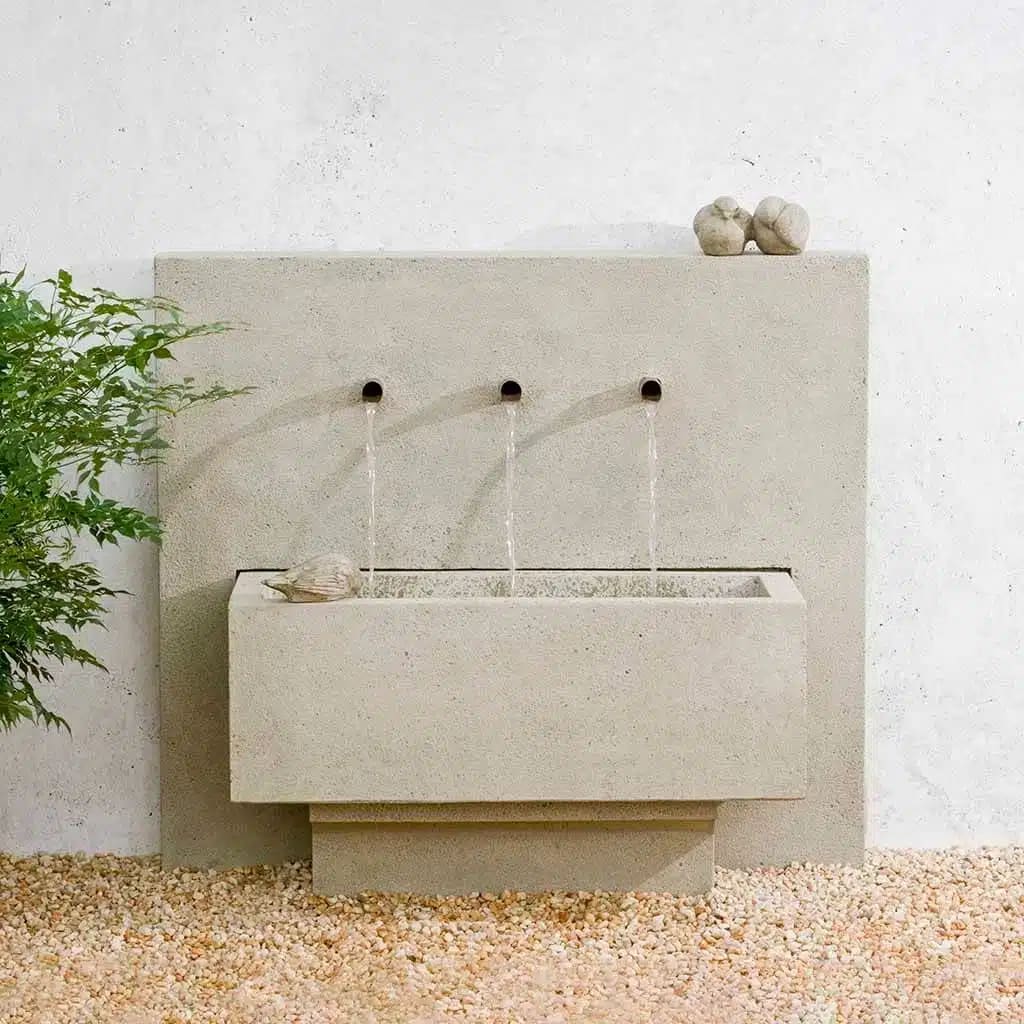
Floor Fountains vs. Wall Fountains: Which One Fits Your Space?
Choosing between floor and wall water fountains depends on your floor space, wall integrity, and desired visual impact. We break down the key differences to help you decide.
Choosing between floor and wall fountains comes down to where you have space and how you want the water feature to interact with your home or garden. Floor fountains provide a freestanding, sculptural presence that works well in open areas or corners. Wall fountains utilize vertical space, making them ideal for narrow walkways, hallways, or smaller rooms where floor area is at a premium. Both types of water fountains recirculate water, meaning no plumbing is required, but they differ significantly in weight distribution and mounting needs.
How Floor Fountains Create a Grounded Focal Point
Floor fountains stand on their own base, so you'll need a flat, stable surface for support. These pieces naturally draw the eye toward the center of a room or a specific outdoor landscape zone. Large statement pieces like the Savannah Cast Stone Tiered Fountain reach heights up to 68 inches, effectively commanding attention in wide entryways.
Smaller floor units provide a focused water sound without requiring much footprint at all. Because these pieces move a higher volume of water than tabletop options, they generate a more audible, consistent splash that helps mask ambient traffic noise.
Placement requires careful planning regarding the weight and proximity to power. You'll need to find a local installer if you choose a large-scale piece that requires a reinforced floor or specialized handling to ensure it remains level. A level base is non-negotiable, as even a slight tilt causes water to pool on one side of the basin and run dry on the other.
When selecting a floor piece, you must account for the total weight including the water capacity. Many large cast stone models weigh over 500 lbs when filled. If you have a unique vision, we also offer custom-fountains to fit specific dimensions.
Most units vary in price, typically ranging from under $300 for small units to $20,000 for massive statement pieces. Check the Floor Fountains category for current availability and design options.
- Weight Considerations: Always confirm your flooring or deck can support the combined weight of the fountain, stone or metal material, and the water reservoir.
- Electrical Needs: Most floor models use a standard 120V pump; ensure your outlet is grounded and ideally GFCI-protected to meet general safety recommendations.
- Water Maintenance: Because floor fountains often hold 10 to 50 gallons of water, you'll need to monitor levels weekly to compensate for natural evaporation.
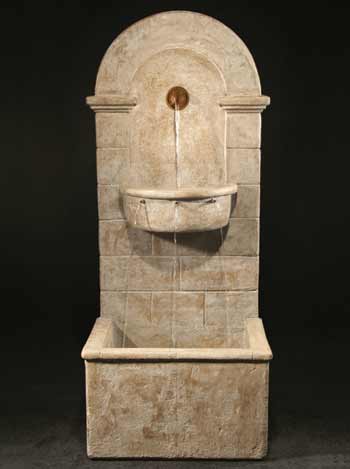
The Practical Benefits of Wall Fountains
Wall fountains are engineered to attach to vertical surfaces, which leaves your floor clear for foot traffic or furniture. By using wall space, these pieces add movement and sound to narrow hallways or small patios where a bulky base would cause an obstruction. Prices run from about $450 for smaller models to $14,000 for large premium installations; see our Wall Fountains for the full range.
Mounting to drywall or masonry requires you to verify that the structure can handle the load, especially when it's filled with water. A wall feature weighing 150 lbs requires more than simple screws; you need wall anchors rated for the total weight plus water displacement. For professional help with heavy mounting, find a local installer to securely attach your feature. It's smart to check for a grounded, weather-resistant outlet nearby before you choose your location, as the pump will need to plug in to run.
Think about the reach of the power cord when selecting your spot. Most pumps come with a standard 6- to 10-foot cord, so placing the fountain within that distance of an outlet is essential to avoid using extension cords. If you plan to install a fountain on an exterior masonry wall, ensure the outlet is GFCI-protected to meet safety recommendations. We suggest mocking up the dimensions on your wall with painter's tape to confirm it won't impede movement or look cramped. A fountain at eye level creates a strong focal point, but consider if the height of the basin will make daily water top-offs difficult to manage. Indoor wall units generally hold between 1 and 5 gallons of water, meaning you'll need to monitor evaporation and top off the reservoir regularly to keep the pump submerged.
Comparing Specifications: Floor vs. Wall Features
When selecting between these styles, consider how each design interacts with your available floor or wall space. Floor units prioritize a wide base for stability and water volume, making them a natural choice for expansive rooms or garden corners. Wall units, by contrast, prioritize lightweight materials or reinforced hanging systems to reduce wall stress, allowing you to incorporate water elements into tighter corridors or smaller patios without sacrificing floor square footage.
- Size: Floor units often exceed 30 inches in width, taking up a significant footprint, while wall units are tailored to vertical dimensions, keeping the floor clear.
- Weight: Floor units distribute weight over a large area, making them stable even as they hold heavy water volumes, whereas wall units exert point loads on specific mounting points, requiring careful assessment of your backing material.
- Water Capacity: Floor fountains often hold more gallons than their wall-mounted counterparts, meaning they generally require less frequent topping off as there's more room for the water reservoir to remain submerged and protected from evaporation.
If you have questions about which type fits your specific room, you can always consult our Fountain Assistant for personalized guidance.
Weight, Structural Support, and Placement
You must place floor fountains on a level, solid surface that supports both the dry weight and the added weight of the water. Even a modest garden fountain adds substantial pounds once filled, and an uneven surface leads to lopsided water flow or material stress. Before choosing a location, calculate the total weight including the water capacity, as a single gallon of water weighs about 8.3 pounds. If your floor fountain holds 20 gallons, that's an additional 166 pounds pushing down on your deck, patio, or floorboards.
Wall fountains need robust backing, such as structural studs or masonry. Before mounting a heavy piece, verify that your wall can bear the total weight. For these larger, complex projects, we suggest you find a local installer to handle the heavy lifting and secure mounting. If you're attaching a feature to a hollow drywall interior, toggle bolts or heavy-duty anchors are usually necessary, though masonry walls require specialized sleeve anchors or expansion bolts to prevent pulling away from the surface.
Placement logic for any fountain should prioritize proximity to your power source. Standard pumps generally utilize 15-foot cords, which limits how far you can stray from the wall. We recommend using a GFCI-protected outlet nearby so the power source remains safe and easy to reach when you need to adjust the pump flow. Indoor units rarely require structural reinforcements, but we advise placing them on a water-resistant mat or tray to protect flooring from incidental splashes or condensation. Outdoor units, particularly those made of cast stone or natural rock, need a gravel base or a concrete pad to prevent the material from settling unevenly over time as the ground shifts through changing seasons.
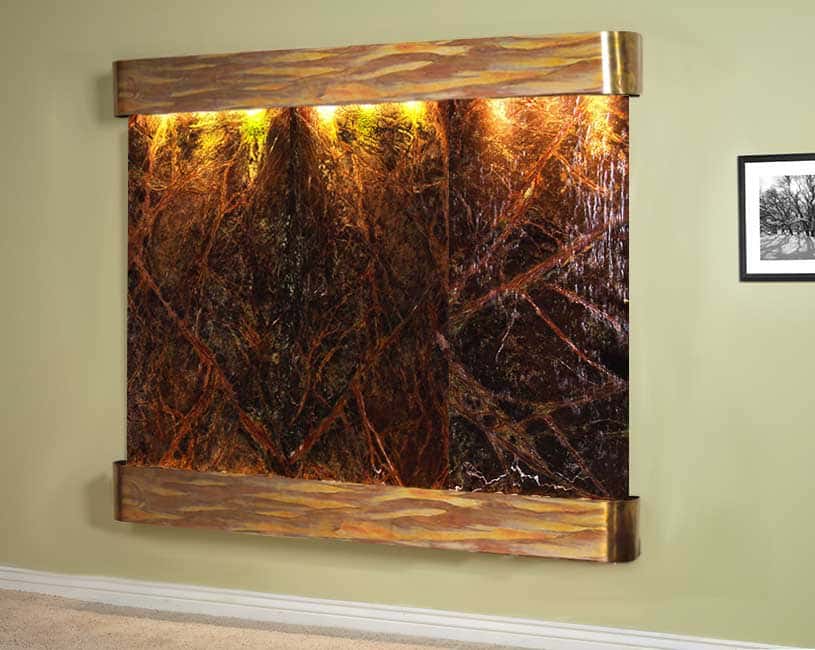
 Tropical Sunrise Wall Fountain
What We'd Tell a Friend: Common Mistakes
Avoid placing a heavy stone fountain on a deck or balcony without confirming the structural load capacity first. Residential decks are often designed for light traffic, not for a feature that could weigh hundreds of pounds when fully hydrated. We see many customers overlook this, and a quick check with a contractor or reviewing your home blueprints is much easier than moving a fountain after it's been delivered.
Another common issue is improper winter care. If you live in an area prone to hard freezes, avoid using water features unless the material is specifically rated for winter conditions. Water expands when it turns to ice, and even high-quality cast stone pieces can crack if water is allowed to freeze inside the basin or pump housing. We suggest draining and covering your fountain before the first frost.
Don't ignore the noise level when choosing your location. Larger cascades provide a significant volume of sound, which is excellent for drowning out city traffic in outdoor garden fountains, but that same cascading water may be overwhelming in a small, quiet indoor office space. Consider the specific decibel output of the pump and the fall distance of the water before committing to a final spot.
Frequently Asked Questions
What size fountain should I get for my room or yard?
Choose a fountain that respects the scale of your surrounding furniture or landscape elements rather than one that dominates the entire area. For indoor spaces, tabletop units work best on surfaces where they won't feel crowded, while larger floor fountains require a clear footprint to avoid looking cramped. In a garden, consider the height of your existing plants and fences; a massive tiered fountain might look stunning in an open lawn but feel overwhelming on a small patio.
How heavy is a floor or garden fountain, and does it need a base or pad?
Weight varies significantly based on material, ranging from lightweight fiberglass or fiber cement options to heavy cast stone pieces that can weigh hundreds of pounds. Large garden fountains often require a level, compacted surface such as a concrete pad or a bed of packed gravel to prevent settling or leaning over time. Before you order, check the specific product weight on the site to determine if your deck or patio surface can safely support the load.
Can a wall fountain be mounted on drywall?
Most wall fountains are too heavy for standard drywall and require direct mounting to structural studs or masonry surfaces. You must verify the total weight of the fountain, including the water capacity, and use appropriate hardware that secures into the wall framing. If you're uncertain about the structural capacity of your wall, you should find a local installer to evaluate your mounting surface and ensure the fountain is anchored safely.
How loud is a water fountain, and can the sound be adjusted?
The sound level is primarily determined by the vertical distance the water falls and the volume of water moving through the system. A deeper pool or a stone surface that breaks up the flow typically creates a softer, gentler sound, while a direct drop into a basin increases volume. Many pumps include an adjustable flow control, allowing you to regulate the pump speed and effectively fine-tune the noise to match your environment.
Does a fountain need an outlet nearby?
Yes, almost all electric water fountains require access to a grounded power source to run the pump. We recommend using a GFCI-protected outlet for both indoor and outdoor locations to ensure safety in the event of a power surge or water contact. If you don't have an outdoor-rated outlet in the right spot, a licensed electrician can add one to your home's exterior to accommodate your feature.
Finding Your Perfect Water Feature
Choosing the right water feature is about balancing your aesthetic preferences with the realities of your space. Browse our full selection of premium options at Indoor Fountains or Outdoor Fountains to visualize what fits your environment best.
These pages allow you to compare styles, materials, and sizes so you can make an informed decision based on your specific requirements.
If our standard items don't meet your vision, we can help you create something unique through our custom fountain service. This is ideal if you have a specific architectural vision or a space that requires precise dimensions that off-the-shelf products can't satisfy. We'll walk you through the possibilities and help you define the scope of your project.
Contact us if you need help deciding on materials like copper, cast stone, or lightweight fiberglass for your specific environment. Each material behaves differently in various climates and indoor conditions, and we'll provide the trade-offs regarding weight, maintenance, and durability to ensure your choice provides years of enjoyment. Explore our range at Floor Fountains to see current options.