Introduction
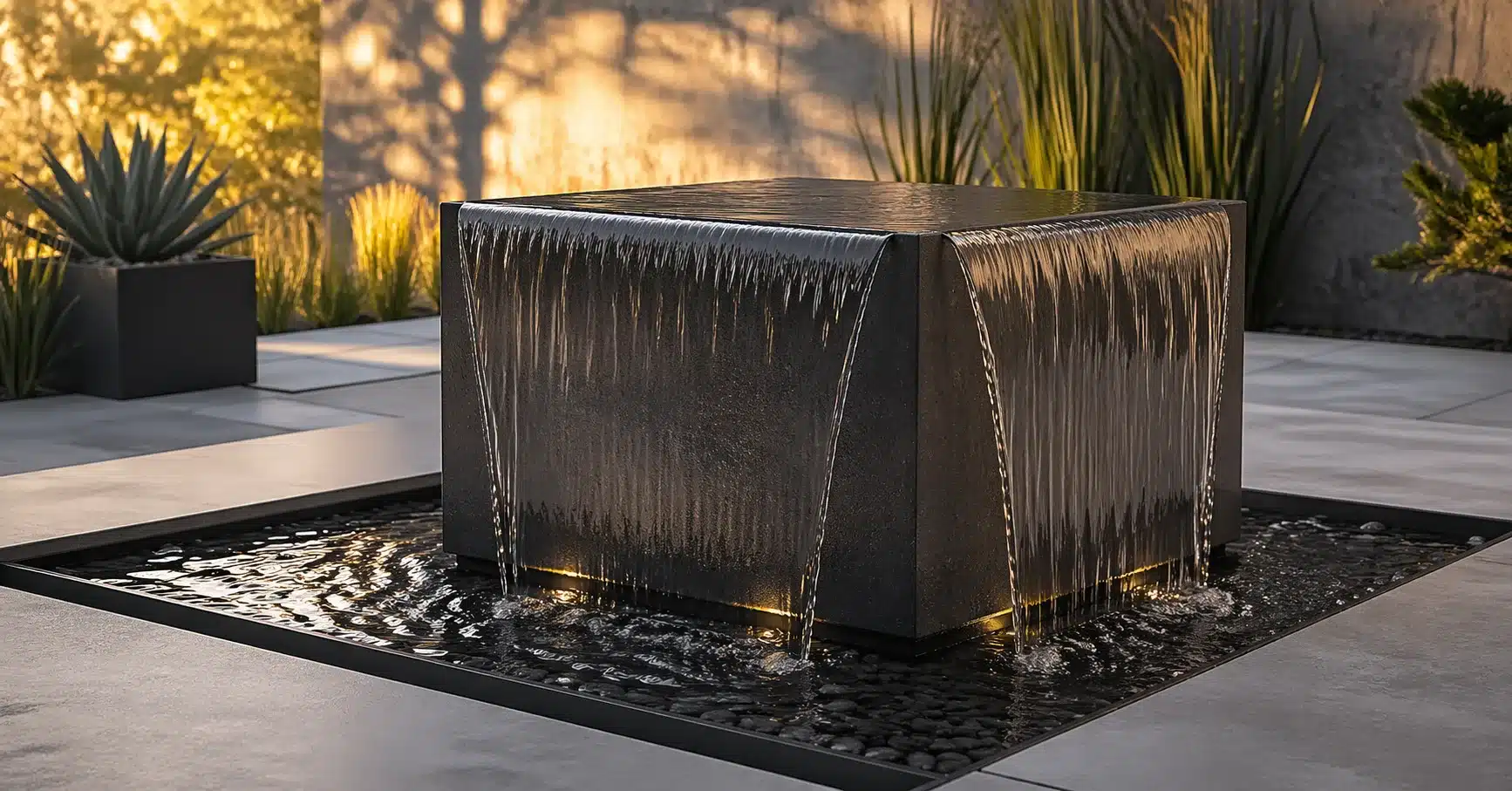
There’s something quietly powerful about water in motion. Whether it’s a subtle ripple or a steady cascade, water transforms a space from static to alive. In recent years, modern design has leaned toward clean geometry, minimalism, and strong architectural lines, making the cube fountain one of the most appealing styles in contemporary water features.
Designing a modern cube fountain doesn’t require expensive materials or advanced engineering. With thoughtful planning and a few basic components, you can create a striking centerpiece that fits beautifully into gardens, patios, or even indoor environments.
This guide walks you through the design principles, material choices, construction approach, and finishing touches needed to build a modern cube fountain that feels both intentional and refined.
Why Choose a Cube Fountain?
Cube fountains stand out because of their simplicity. Unlike ornate garden fountains, a cube structure relies on proportion, texture, and water flow to create visual interest.
Here’s why they work so well:
- Timeless geometry: Squares and cubes never go out of style
- Versatility: Works as outdoor fountains or indoor water fountains
- Compact footprint: Ideal for patios, balconies, and small gardens
- Modern appeal: Clean lines complement contemporary architecture
They can also be scaled easily, from small tabletop fountains to larger outdoor water fountains that anchor a landscape design.
Core Design Principles
Before gathering materials, it’s important to understand what makes a cube fountain visually successful.
1. Proportion and Balance
A cube fountain should feel balanced from every angle. Equal dimensions create harmony, but slight variations in height or base width can add sophistication.
2. Material Contrast
Modern fountains often rely on contrast rather than decoration. Think:
- Smooth concrete with rough stone
- Matte finishes with reflective water
- Dark tones with light surroundings
3. Water Flow Style
The way water moves defines the fountain’s personality:
- Sheet flow: Water spills evenly over edges
- Bubble top: Water rises and gently spills
- Hidden reservoir: Water disappears into gravel or a basin
For a cube fountain, a clean sheet flow or subtle overflow works best.
Materials You’ll Need
One of the advantages of this project is that it uses accessible materials. You don’t need specialty fabrication tools, just careful assembly.
Structural Materials
- Concrete blocks or poured concrete mold
- Exterior-grade plywood (for molds)
- Waterproof sealant
- PVC liner or pond liner
- Water System Components
- Submersible pump
- Tubing (vinyl or PVC)
- Water reservoir (hidden basin or container)
- Finishing Materials
- Polished concrete skim coat or microcement
- Natural stone veneer (optional)
- Paint or mineral stain
- River rocks or decorative gravel
Step-by-Step Design and Build Process
Step 1: Plan Your Dimensions
Start by choosing the size of your cube. A common dimension is 18–24 inches per side for a medium-sized fountain.
Consider where it will live:
- Patio corner
- Garden focal point
- Entryway accent
Make sure there’s access to power for the pump.
Step 2: Create the Cube Structure
There are two main approaches:
Option A: Cast Concrete Cube
Build a mold using plywood and pour concrete into it. This gives you a seamless, monolithic look, perfect for modern outdoor water fountains.
Option B: Assemble with Blocks
Stack and bond concrete blocks, then coat them with a smooth finish. This is easier and more beginner-friendly.
Step 3: Waterproof the Interior
Apply a waterproof sealant or liner inside the cube. This ensures durability and prevents leaks over time.
Step 4: Install the Water System
Place the pump inside the reservoir (which can be hidden beneath or inside the cube). Run tubing up through the center to the top.
At the top, create a distribution point where water can spill evenly over the edges.
Step 5: Test Water Flow
Before sealing everything permanently, test the system:
- Check for even flow on all sides
- Adjust pump strength
- Ensure water returns cleanly to the basin
Step 6: Apply the Finish
This is where the fountain becomes visually striking.
Popular finishes include:
- Smooth charcoal concrete
- White minimalist plaster
- Stone-clad surfaces for texture
Step 7: Add Surrounding Elements
Enhance the design with:
- Gravel beds
- LED lighting
- Minimalist planters
These elements elevate the fountain from a simple structure to a complete water feature.
Indoor vs Outdoor Placement
Cube fountains adapt beautifully to both environments.
Outdoor Water Fountains
Perfect for gardens, patios, and courtyards. They pair well with modern landscaping and architectural homes.
Indoor Water Fountains
Smaller versions can be used indoors as statement pieces. They function similarly to tabletop fountains but with a stronger design presence.
Make sure to:
- Use splash-resistant designs
- Place on waterproof surfaces
- Consider noise levels
Design Variations to Explore
Once you understand the basic cube fountain, you can experiment with variations.
1. Stacked Cube Fountain
Multiple cubes at different heights create dynamic movement.
2. Floating Cube Illusion
Hide the base to make the cube appear suspended.
3. Integrated Wall Fountain
Embed the cube into a wall for a hybrid wall fountain design.
4. Rain Curtain Variation
Incorporate thin vertical streams to mimic a subtle rain curtain fountain effect—ideal for modern architectural spaces.
Maintenance Tips
A well-designed fountain should be easy to maintain.
- Clean the pump monthly
- Refill water as needed
- Use algae control solutions
- Inspect seals annually
Keeping your fountain clean ensures long-lasting performance and visual clarity.
Common Mistakes to Avoid
Even simple designs can go wrong without attention to detail.
- Uneven edges: Leads to inconsistent water flow
- Poor sealing: Causes leaks
- Oversized pump: Creates splashing instead of smooth flow
- Ignoring drainage: Results in water loss
Precision matters in modern design.
Styling your Fountain for Maximum Impact
A cube fountain becomes more powerful when integrated into its environment.
Minimalist Garden
Pair with clean pathways, neutral tones, and sparse planting.
Contemporary Patio
Combine with modern furniture and lighting.
Indoor Statement
Use as a focal point in entryways or living rooms.
The key is restraint, let the fountain speak.
Conclusion
Designing a modern cube fountain with basic materials is both achievable and rewarding. It combines craftsmanship with design thinking, resulting in a piece that enhances any space.
Whether you’re creating outdoor fountains for a garden or exploring indoor fountains for a modern home design, the cube form offers a timeless and versatile solution.
With careful planning, thoughtful material selection, and attention to water flow, your fountain can become more than a decorative element, it becomes a living, moving centerpiece.