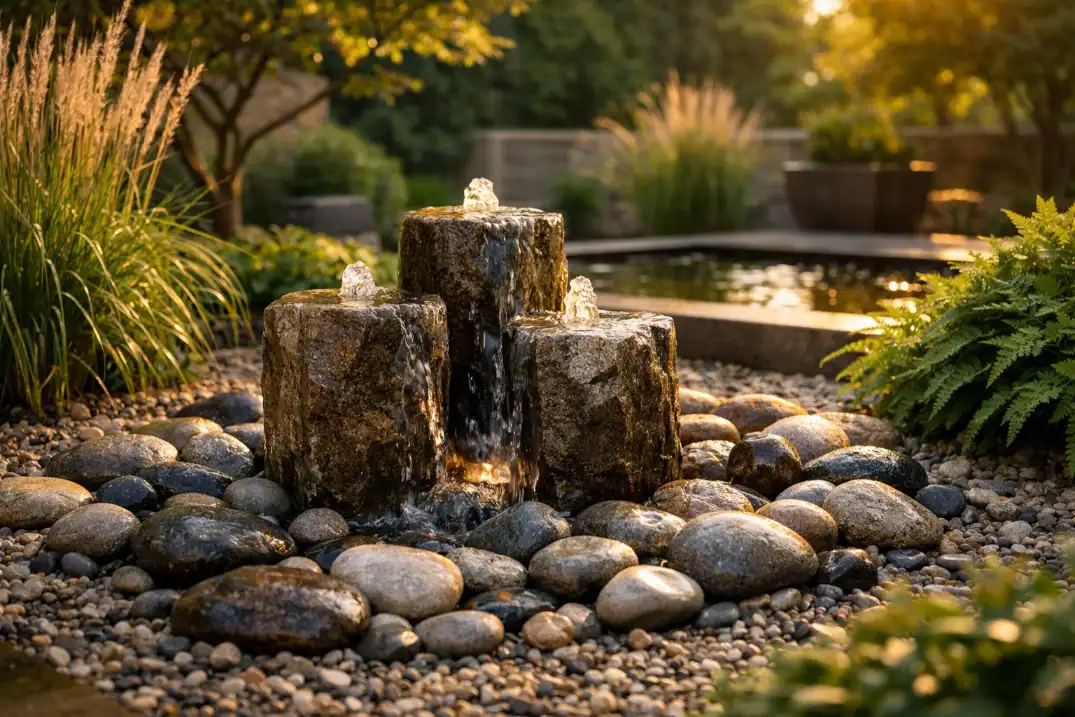
Water has always been one of the most captivating design elements in architecture and landscape design. From tranquil garden fountains to dramatic rain curtain fountains, the gentle sound and motion of flowing water creates a sense of peace and elegance that few other features can match.
But many homeowners hesitate to install water fountains because they assume the project requires complicated plumbing, expensive installations, or bulky visible basins.
The truth is that you can build beautiful DIY fountains with hidden reservoir systems that look professional, cost far less than store-bought options, and integrate seamlessly into your space. Hidden reservoirs allow the water to circulate through the fountain while the storage tank remains concealed underground, behind a wall, or inside a structure.
This approach works for many styles of water features, including:
- Outdoor water fountains
- Indoor fountains
- Wall fountains
- Rain curtain water features
- Tabletop fountains
- Floor fountains
In this guide, you will learn how hidden reservoir fountain systems work, why they are ideal for DIY projects, and how to build several types of indoor and outdoor fountains step by step.
Why Hidden Reservoir Systems Are Ideal for DIY Fountains
Traditional fountains often rely on large visible basins that hold water and house the pump. While functional, these basins can take up space and limit the visual design of the fountain.
A hidden reservoir system solves that problem.
Instead of storing water in a visible bowl or pool, the water collects in a concealed container and recirculates through a pump.
Advantages of Hidden Reservoir Fountains
1. Clean, modern design
Hidden reservoirs allow the fountain itself to become the visual centerpiece. The mechanics remain completely invisible.
This approach is especially popular in modern wall fountains, floor fountains, and architectural rain curtain fountains.
2. More design flexibility
You can build fountains that appear to emerge from stone, gravel, or decorative panels.
This opens creative possibilities for:
- contemporary garden fountains
- minimalist indoor water fountains
- sculptural outdoor fountains
3. Safer installations
Without open standing water, hidden reservoirs reduce the risk of accidental spills or debris entering the system.
4. Easier maintenance
Many hidden reservoirs are accessible through removable panels or underground containers, making pump cleaning simple.
How Hidden Fountain Reservoirs Work
Every fountain system operates on the same basic principle: water recirculates through a pump.
Here is the simplified process:
- Water collects in a reservoir container.
- A submersible pump pushes the water upward.
- The water flows through tubing to the fountain outlet.
- Gravity returns the water to the reservoir.
In hidden systems, the reservoir sits:
- beneath gravel
- inside a decorative structure
- behind a wall
- underground
The fountain appears to flow endlessly without a visible basin.
This concept powers many commercial water features, including architectural rain curtain water features and high-end outdoor water fountains.
Materials Needed for DIY Fountain Projects
Most DIY fountains share similar core components.
Basic materials:
- Submersible fountain pump
- Waterproof reservoir container
- Flexible tubing
- Fountain outlet (spout, copper pipe, waterfall blade, etc.)
- Decorative materials (stone, glass, metal, ceramic)
- Waterproof sealant
- Gravel or decorative rock
Optional upgrades
- LED lighting
- Adjustable flow pump
- filtration sponge
- water treatment tablets
These components can be used to build everything from tabletop fountains to large garden fountains.
DIY Outdoor Fountains with Hidden Reservoirs
Outdoor installations are the most common type of DIY fountain.
A hidden reservoir allows the fountain to blend into the landscape naturally.
Step-by-Step Garden Fountain Build
1. Choose the location
Select a level area in your garden or patio. Ensure access to power for the pump.
This works well for:
- patios
- courtyards
- entryways
- landscaped garden beds
2. Dig the reservoir hole
Excavate a hole slightly larger than the container you will use as the water reservoir.
Most DIY outdoor water fountains use:
- plastic storage bins
- pre-made fountain basins
- pond liners
3. Install the reservoir
Place the container in the hole and ensure it sits level. Fill the surrounding area with compacted soil or sand for stability.
4. Install the pump
Place the pump inside the reservoir and connect the tubing that will feed water to the fountain.
5. Add a support grid
Many hidden garden fountains use a metal or plastic grate over the reservoir. This allows water to pass through while supporting decorative stone.
6. Build the fountain structure
Place your decorative element above the reservoir:
- stacked stone column
- ceramic urn
- sculptural metal piece
- drilled boulder
Water will flow through the structure and fall back through the gravel into the hidden basin.
7. Cover with decorative stone
Fill the surface area with gravel or river rock to conceal the reservoir. Now you have a professional-looking outdoor fountain without a visible basin.
DIY Indoor Water Fountains with Hidden Reservoirs
Hidden reservoirs also work beautifully indoors.
Many designers build indoor fountains into furniture, walls, or sculptures.
Popular indoor styles include:
- wall fountains
- tabletop fountains
- floor fountains
Indoor systems typically use smaller pumps and sealed containers.
DIY Wall Fountains with Hidden Water Reservoirs
Wall fountains create an elegant vertical water display and are surprisingly DIY-friendly.
Basic design concept
Water flows from the top of a wall panel and trickles down the surface before returning to a concealed basin.
Materials
- Waterproof backing panel (stone, slate, glass, metal)
- Water distribution tray
- pump and tubing
- hidden reservoir box
- decorative frame
Installation outline
- Build or mount the wall panel.
- Install a hidden basin at the bottom.
- Pump water to the top tray.
- Allow water to cascade down the surface.
This design works for both indoor fountains and outdoor water fountains.
DIY Rain Curtain Fountain Projects
A rain curtain fountain is one of the most visually striking types of modern water features. Instead of flowing along a surface, water falls in vertical lines like rainfall. These fountains are common in hotels and luxury buildings, but DIY versions are possible.
How rain curtain fountains work
- Water is pumped to a distribution bar at the top.
- Small precision holes create evenly spaced streams that fall like a curtain.
- The water collects in a hidden basin below.
Materials for a DIY rain curtain water feature
- distribution bar or drilled pipe
- submersible pump
- hidden reservoir
- stainless steel frame or wall support
- lighting (optional)
Ideal placements
- patios
- entryways
- modern gardens
- interior feature walls
A well-designed rain curtain fountain instantly becomes a focal point.
DIY Tabletop Fountains with Hidden Reservoirs
Not all water fountains need to be large installations.
Tabletop fountains are compact decorative pieces perfect for desks, shelves, or meditation spaces.
Simple tabletop design
- Choose a decorative container.
- Hide the pump beneath decorative stones.
- Add a small fountain element such as stacked stones or bamboo.
- The water cycles quietly within the container.
These miniature indoor water fountains bring the relaxing sound of water to small spaces.
Floor Fountains for Contemporary Spaces
Floor fountains are increasingly popular in modern interior design. These fountains sit directly on the floor and often feature tall panels or sculptural designs. Hidden reservoirs inside the base allow for sleek, minimalist construction.
Common floor fountain styles
- glass water panels
- slate cascade walls
- illuminated metal panels
Many high-end indoor fountains use this concept.
Design Ideas for Unique Garden Water Features
When building DIY garden fountains, creativity matters as much as engineering.
Here are some inspiring ideas:
- Stone pillar fountains – Drill through natural stone columns so water bubbles from the top.
- Modern steel fountains – Use corten steel panels with a waterfall edge.
- Ceramic urn fountains – Water spills gently from a large decorative urn.
- Gravel bubbling fountains – Water rises through decorative pebbles, creating a subtle bubbling effect.
All of these designs use hidden reservoir systems.
Tips for Maintaining DIY Water Fountains
To keep outdoor fountains and indoor water fountains running smoothly, regular maintenance is essential.
1. Clean the pump regularly
Debris can clog the pump intake. Clean it every few weeks.
2. Maintain proper water levels
Low water can damage the pump.
3. Prevent algae growth
Use fountain-safe treatments to keep water clear.
4. Protect outdoor fountains in winter
Drain systems in freezing climates.
With simple care, your water features can last for years.
Why Water Fountains Improve Outdoor Spaces
Beyond aesthetics, garden fountains provide several benefits.
- Relaxation – The sound of flowing water masks noise and creates a calming environment.
- Property value – Professionally designed outdoor water fountains enhance landscaping and curb appeal.
- Wildlife attraction – Birds and butterflies often gather around water features.
- Cooling effect – Evaporating water can slightly reduce ambient temperature.
This makes outdoor fountains both beautiful and functional.
Final Thoughts
DIY fountains with hidden reservoir systems allow homeowners to create elegant water features without expensive installations or visible tanks.
From dramatic rain curtain fountains to tranquil tabletop fountains, hidden reservoirs unlock nearly endless design possibilities.
Whether you want a modern wall fountain, a relaxing indoor water fountain, or a striking centerpiece for your landscape, the same simple recirculating principle makes it all possible.
With the right materials, creativity, and a weekend of work, you can transform your home or garden with the soothing sound and beauty of flowing water.