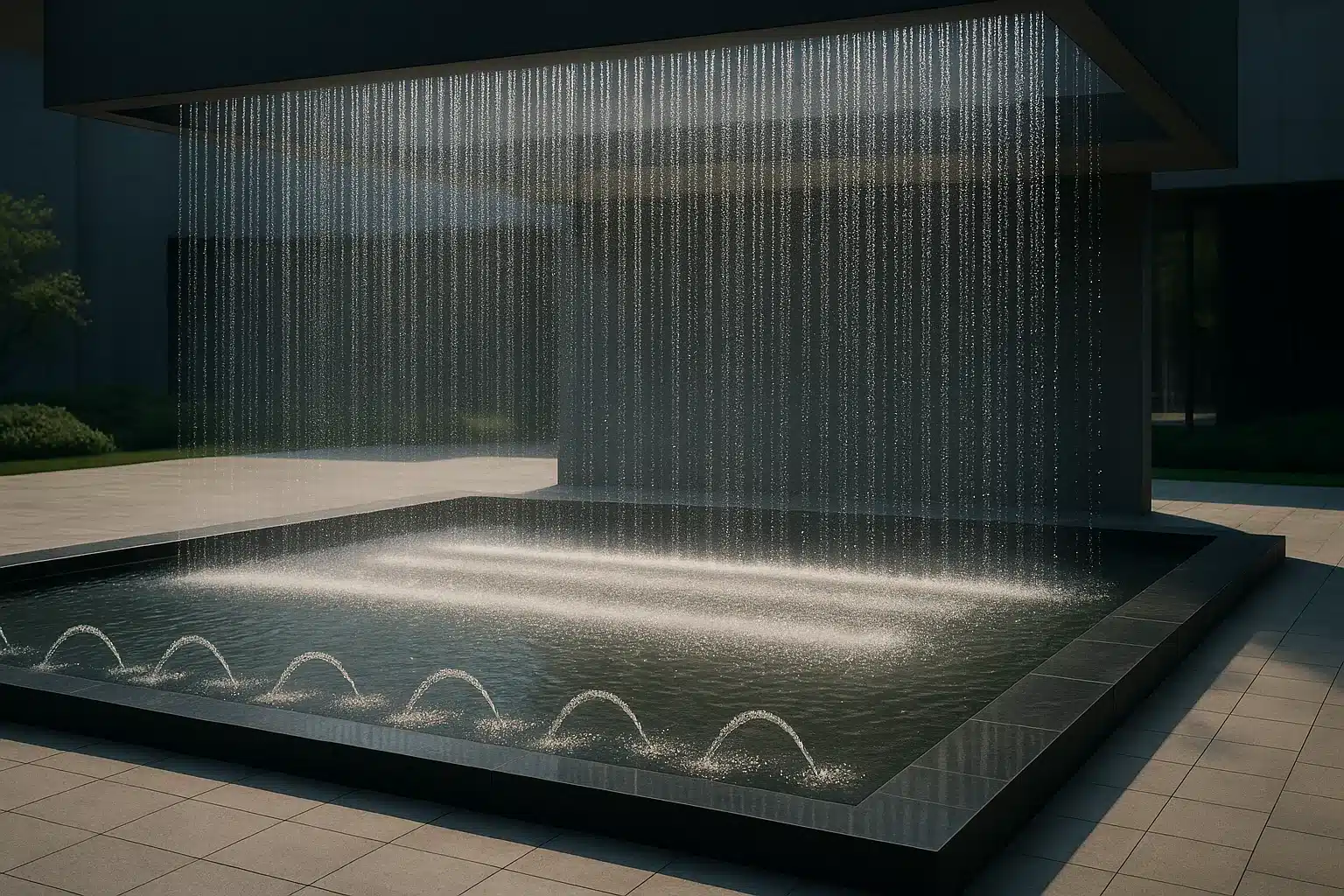
Introduction: Where Art Meets Living Water
Across history, artists and designers have been fascinated with water’s dual nature, soft yet powerful, calming yet dynamic, predictable yet endlessly expressive. In recent decades, this fascination has evolved into a global movement that blurs the boundaries between art installation, experiential design, and fountain engineering. Today’s fountains are no longer simply decorative water features placed in plazas or parks; they are fully realized dreamscapes in motion.
From large outdoor water fountains that anchor public spaces to ethereal rain curtain water features shimmering in museums, water has become both medium and message. These installations invite viewers to step inside the artwork, interact with it, and reconsider how water shapes emotion, space, sound, and memory.
In this article, we explore how art installation and fountain design intersect to create powerful immersive environments. You’ll discover the artistic principles behind modern water features, learn how fountains, from garden fountains to indoor water fountains and wall fountains—are evolving, and understand why the combination of water and art continues to transform both private and public spaces.
The Evolution of Fountains into Artistic Experiences
From Function to Expression
Historically, fountains were utilitarian: a method to distribute clean water for communities. Over time, they became symbolic and aesthetic, transforming into focal points that demonstrated technological innovation, wealth, or spiritual symbolism.
But the 21st century has pushed fountain design even further. Advancements in engineering, materials, lighting, and digital control systems now allow fountains to behave like kinetic sculptures, responsive, interactive, and expressive.
Today, water fountains are:
- Choreographed to music and light
- Integrated into multimedia art installations
- Designed with sustainability in mind
- Personalized for interior spaces as indoor fountains
- Scaled for tabletop fountains and miniature indoor water features
The result is an entirely new genre of art: the living water installation.
Water as an Artistic Medium
Motion and Fluidity
Artists have always sought ways to represent motion—paint, sculpture, even digital mediums strive to capture the passing moment. But water itself is motion. Its fluidity becomes the ultimate expression of impermanence, change, and sensory experience.
Modern fountain installations use:
- Laminar flow technology for crystal-clear arcs
- Mist and fog systems to create dreamlike atmospheres
- Rain curtains that fall like shimmering sheets
- Programmable jets that “dance” with precision
Because water can refract light, absorb sound, and reshape itself instantly, it becomes a multisensory canvas unlike any other.
Sound as a Sculptural Element
One of the most overlooked aspects of fountain design is sound.
- A rain curtain fountain whispers.
- Garden fountains may bubble softly.
- Wall fountains create rhythmic trickling.
- Outdoor fountains may roar or pulse depending on jet force.
Artists use these sound qualities to sculpt emotional responses, calm, energy, focus, or playfulness. In many modern installations, sound is as important as the visual experience.
The Rise of Immersive Water Installations
Public Dreamscapes
Cities worldwide are investing in immersive water features that transform urban environments into sensory experiences. These outdoor fountains turn plazas into gathering places, create opportunities for play, and invite viewers to interact with art.
Examples include:
- Interactive splash fountains that respond to movement
- Projection-mapped water screens used in performance art
- Rain curtain water features that people walk through
- Floor fountains that bubble up from beneath the surface
These installations redefine public art by fostering participation and emotional connection.
Museum and Gallery Installations
Inside museums, artists use indoor water fountains and refined water technologies to create controlled, intimate environments. These installations often explore themes such as:
- The passage of time
- Reflection and perception
- Environmental awareness
- The contrast between natural and artificial
Water becomes narrative, inviting viewers to pause and engage deeply.
Types of Fountains in Modern Artistic Design
To understand how fountains merge with art installation, it helps to explore the different styles and forms shaping contemporary experiences.
1. Rain Curtain Fountains: Water as Architecture
Rain curtain fountains, also called rain curtain water features, have become a staple of modern art installations. These vertical sheets of falling water create translucent walls that shift with light and motion.
They’re especially popular because they offer:
- Minimalist aesthetics
- Soothing soundscapes
- Opportunities for projection and lighting
- Indoor and outdoor adaptability
In galleries, rain curtains serve as dynamic partitions. In outdoor spaces, they create shimmering boundaries that transform sun and shadow into a living light show.
2. Floor Fountains: Subtle, Engaging Minimalism
Floor fountains emerge directly from the ground, creating bubbling pools or streams at floor level. They’re popular in:
- Contemporary public spaces
- Art museum atriums
- Hotels and commercial buildings
Floor fountains often use understated design to create calming experiences. The viewer’s attention is drawn to texture, movement, and sound rather than large structures. When paired with sculptural elements, these fountains enhance storytelling and spatial flow.
3. Wall Fountains: Vertical Expression
Wall fountains make water flow downward across stone, metal, glass, or acrylic surfaces. They merge architecture and sculpture, transforming static walls into dynamic canvases.
In art installations, wall fountains can be used to explore themes of:
- Gravity
- Continuity
- Reflection
- Urban nature
Their popularity also extends to private interior design, where indoor wall fountains create meditative atmospheres in homes and offices.
4. Garden Fountains: Outdoor Sculptural Landscapes
Garden fountains anchor outdoor spaces with elegance and personality. Modern garden fountains often combine sculptural creativity with natural landscaping, making them ideal for:
- Botanical gardens
- Sculpture parks
- Private estates
- Zen gardens
Designers integrate organic materials such as stone, wood, and greenery with artistic elements to create harmonious environments. Water features in gardens help create balance, movement, and natural ambiance.
5. Tabletop Fountains and Indoor Water Features: Art for Small Spaces
Artists are increasingly exploring the small-scale fountain as a personal, intimate form of installation art.
Tabletop fountains and indoor water features allow individuals to bring artistic water experiences into their home or workspace. These miniature installations may be inspired by larger artworks, functioning as portable micro-dreamscapes that promote:
- Relaxation
- Creativity
- Mindfulness
Even small indoor water fountains can showcase artistic craftsmanship and modern design innovation.
6. Grand Outdoor Water Fountains: Theatrical Performance
Outdoor fountains in public spaces have evolved into full-scale performance art. Think of large, choreographed fountains with advanced lighting and musical synchronization. These installations combine engineering, art, and technology, resulting in:
- Interactive water shows
- Immersive public experiences
- Tourist attractions
- Nighttime spectacles
In the hands of an artist, these fountains become monumental kinetic sculptures, changing hourly, seasonally, and through programmed sequences.
Artistic Principles Behind Water Installation Design
1. Sensory Immersion
Successful water installations activate multiple senses:
- Sight: Light, motion, and reflection
- Sound: Rhythm, volume, tone
- Touch: Cool mist or gentle spray
- Emotion: Calm, nostalgia, wonder
The goal is holistic engagement.
2. Spatial Transformation
Water alters how we perceive space. It can:
- Expand environments through reflection
- Soften hard edges
- Create dynamic boundaries
- Draw the eye upward, downward, or around
3. Temporal Fluidity
Water is always moving, and artists harness this to explore time:
- Slow trickles suggest contemplation
- Fast jets convey excitement
- Cycles or sequences represent progression
This ever-changing quality turns every moment into a new artwork.
4. Symbolism and Narrative
Water is rich with symbolic meaning, life, renewal, fluidity, purity, transformation. Artists integrate these themes to deepen narrative impact.
Technology’s Role in Modern Fountain Art
Smart Pumps and Flow Control
Modern systems allow designers to modulate pressure, timing, and sequencing with precision.
LED and Laser Integration
Lighting transforms nighttime water features into glowing sculptures. Projection mapping adds layers of meaning, motion, and storytelling.
Sustainability Systems
Eco-focused installations include:
- Water recycling
- Rainwater harvesting
- Solar-powered pumps
- Low-evaporation designs
These approaches ensure elegance without environmental compromise.
Digital Interaction
Motion sensors, AI controls, and sound-reactive systems allow fountains to respond to viewers, bridging art and technology.
Fountains as Wellness Installations
Water-based art is increasingly recognized for its therapeutic qualities. Indoor water fountains, wall fountains, and tabletop fountains are used in:
- Meditation rooms
- Spas
- Wellness centers
- Hospital waiting areas
- Workplaces
The calming sounds and natural movement support mental clarity, stress reduction, and emotional balance.
Bringing Artistic Water Installations Into Private Spaces
Homeowners and designers are adopting artistic fountain principles to create personal water features. Popular choices include:
- Indoor water fountains designed as sculptural art
- Wall fountains in entryways or living rooms
- Small garden fountains integrated with landscaping
- Tabletop fountains offering ambient tranquility
These elements transform everyday living spaces into experiences that uplift mood and inspire imagination.
The Future of Art and Fountain Design
Hybrid Media Installations
Future artists will blend water with:
- Digital holograms
- Soundscapes
- Interactive projection
- Sustainable materials
Climate-Responsive Fountains
Some installations may adapt to local weather, adjusting flow to temperature, humidity, or season.
Biophilic Integration
Expect deeper integration of plants, natural stone, and organic forms to enhance nature-centric environments.
Smaller-Scale Personal Art
As urban living grows more compact, portable indoor fountains and compact water features will expand in variety and artistic sophistication.
Conclusion: A Symphony of Water and Imagination
Fountains have evolved far beyond their origins as simple water displays. Today, they serve as dynamic works of art, shifting, shimmering, and reshaping our experiences of space and emotion. Whether it’s a monumental outdoor fountain in a city plaza, a tranquil rain curtain water feature in a gallery, or a tabletop fountain gently bubbling on a desk, these installations create dreamscapes that move us.
At the intersection of engineering and creative vision, fountains become more than structures. They become stories in motion, fluid sculptures that invite us to pause, reflect, and immerse ourselves in the beauty of the moment.