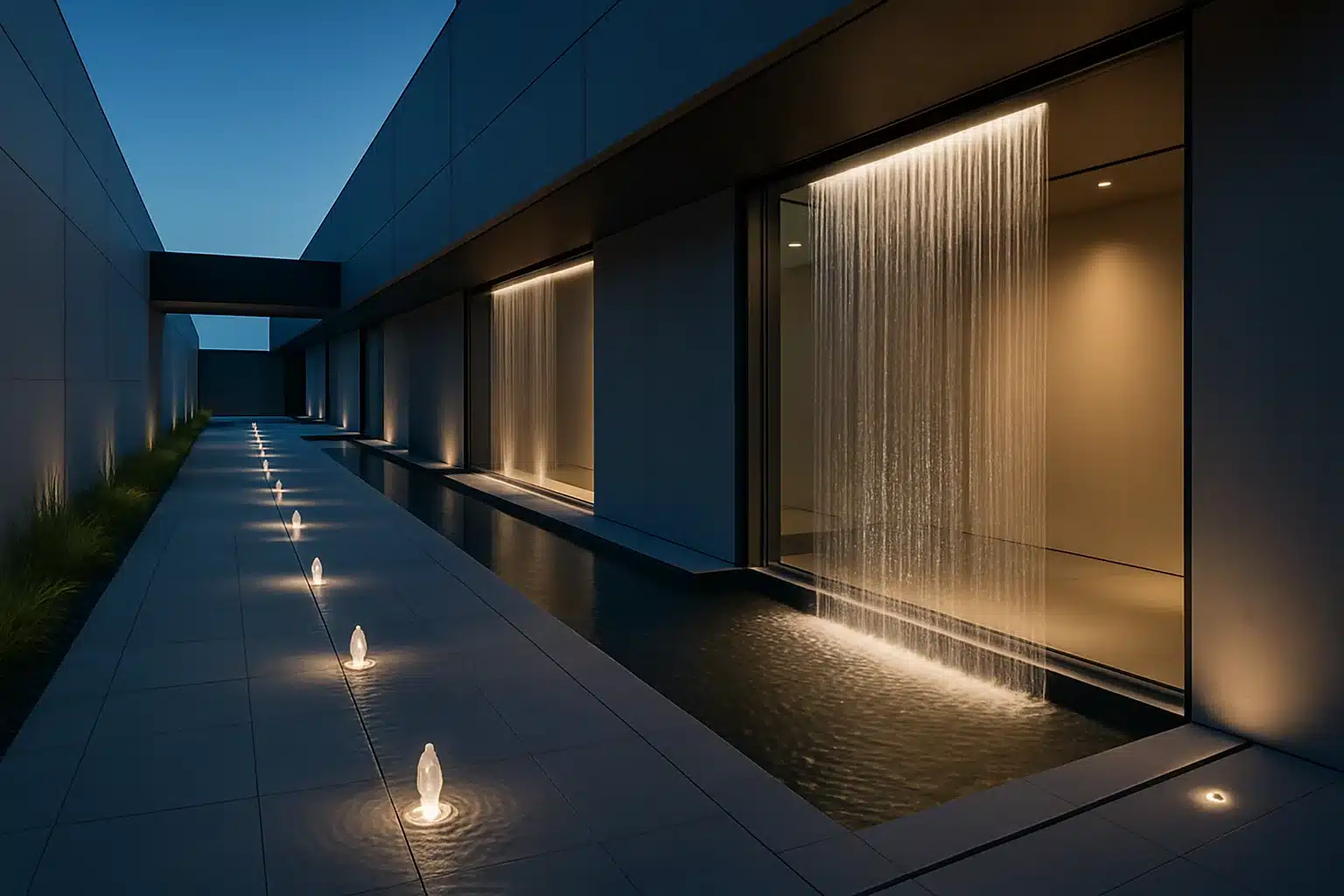
360.1.Fountain-pathways

Fountain Pathways: Creating Walkways with Integrated Water Features

Introduction

Imagine strolling through a lush garden where every step is accompanied by the soft murmur of flowing water. The pathway beneath your feet not only guides your journey but also integrates gracefully with fountains and water features. This is the magic of fountain pathways, walkways that harmoniously combine structure, movement, and water to transform a space into a sensory retreat.

In today’s landscape design, water isn’t just an accessory; it’s a central design element. From outdoor water fountains and garden fountains to sleek rain curtain water features and even indoor fountains, these additions redefine how we experience both private and public spaces. This blog will explore how to design, plan, and build walkways with integrated water features, ensuring they’re functional, visually stunning, and deeply relaxing.

Why Integrate Fountains into Pathways?

1. Aesthetic Appeal

Fountains introduce elegance and sophistication to otherwise plain walkways. The visual movement of water enhances the natural surroundings while reflecting sunlight during the day and soft lighting at night.

2. Sensory Experience

Water sounds are known to soothe the mind. A garden fountain or rain curtain fountain along a walkway creates a calming ambiance that transforms a simple stroll into a mindful journey.

3. Functional Landscaping

Walkways with fountains double as both design features and natural cooling systems. In hot climates, the evaporation from water features slightly lowers the surrounding temperature, making the walkway more pleasant.

4. Property Value

A well-designed landscape with outdoor fountains or wall fountains significantly boosts property appeal and value. Prospective buyers are drawn to homes that balance luxury with functionality.

Types of Fountains for Pathway Integration

1. Garden Fountains

Garden fountains are versatile outdoor features that can range from classical tiered fountains to modern sculptural designs. Placing them along a garden walkway creates focal points that anchor the landscape.

2. Wall Fountains

Perfect for narrow pathways or courtyards, wall fountains save space while adding elegance. Water cascades down vertical surfaces, blending beautifully with stone, brick, or glass walls.

3. Rain Curtain Water Features

A rain curtain fountain provides a stunning effect where water falls like delicate raindrops from a horizontal spout. Installed along a pathway, it creates a curtain-like effect you can walk beside, or even through.

4. Floor Fountains

These fountains sit at ground level and are often integrated directly into walkways. Floor fountains work well in modern spaces, where sleek, minimalistic designs are preferred.

5. Tabletop Fountains

While typically used indoors, tabletop fountains can also enhance patios or outdoor seating areas adjacent to walkways. They are small, portable, and easy to maintain.

6. Indoor Water Fountains

For homes with enclosed walkways, indoor fountains add tranquility. A wall fountain or floor fountain along an indoor corridor creates a spa-like environment.

Design Principles for Fountain Pathways

1. Balance and Symmetry

Fountains can be placed symmetrically along a path for a formal look or asymmetrically for a more organic feel. Consider how the water features align with trees, lighting, and seating areas.

2. Scale and Proportion

The size of your water feature should match the width of your walkway. For example, a narrow path might work best with wall fountains, while a broad avenue could handle larger outdoor fountains.

3. Material Harmony

Match the materials of your walkway with the fountain. A stone pathway pairs beautifully with a rustic garden fountain, while sleek pavers align well with modern rain curtain water features.

4. Lighting Integration

LED lighting beneath or around fountains enhances nighttime beauty. Illuminated indoor fountains or rain curtain fountains can transform a walkway into a glowing passageway.

5. Sustainability

Incorporating recirculating pumps and solar-powered systems makes your fountain pathways eco-friendly and cost-efficient.

Planning Your Fountain Walkway

Step 1: Site Assessment

Evaluate the natural layout of your property. Look at slope, drainage, and existing landscaping to determine where fountains will function and look best.

Step 2: Choose Your Fountain Type

Step 2 Choose Your Fountain Type

Select between garden fountains, wall fountains, or floor fountains based on available space and desired impact.

Step 3: Consider Utility Requirements

Ensure access to water and electricity. Solar fountains are an excellent choice for areas without easy utility connections.

Step 4: Incorporate Landscaping

Plant greenery around fountains to soften edges. Consider moisture-loving plants like ferns near outdoor water fountains.

Step 5: Pathway Design

Decide on pathway materials—stone, gravel, wood, or tile. The texture should complement both the fountain and the garden style.

Step 6: Install Lighting

Strategically placed lights highlight water movement, especially for rain curtain water features and indoor water fountains.

Creative Fountain Pathway Ideas

1. Mediterranean Garden Path

Line a stone walkway with terracotta pots and integrate a central garden fountain as a focal point.

2. Modern Minimalist Walkway

Use sleek concrete tiles with embedded floor fountains and linear rain curtain fountains for a cutting-edge design.

3. Courtyard Oasis

Install wall fountains on either side of a narrow walkway, combined with climbing vines for a private, intimate setting.

4. Indoor Spa Corridor

Enhance indoor walkways with indoor water fountains and tabletop fountains, creating a Zen-inspired retreat.

5. Garden Maze Walkway

At the center of each turn, place a garden fountain or small outdoor fountain, guiding visitors with sound and sight.

Maintenance Tips for Fountain Pathways

  • Regular Cleaning: Prevent algae buildup by cleaning the basins and pumps of your outdoor fountains.
  • Water Quality: Use distilled water in indoor fountains to avoid mineral deposits.
  • Winterization: In colder climates, drain and cover garden fountains and wall fountains to prevent freezing damage.
  • Pump Care: Check pumps monthly to ensure smooth water circulation.
  • Lighting Maintenance: Replace or upgrade LEDs as needed to keep the ambiance fresh.

Benefits of Fountain Pathways

  • Calming Effect: The trickling sound from water fountains reduces stress.
  • Cooling Microclimate: Outdoor rain curtain fountains lower temperatures in surrounding areas.
  • Biodiversity: Birds and pollinators are attracted to garden fountains, enhancing ecological balance.
  • Indoor Serenity: Indoor water fountains create spa-like environments, improving mental well-being.
  • Luxury Appeal: Pathways with integrated fountains reflect sophistication and elevate property value.

Conclusion

Fountain pathways are more than just functional walkways they’re immersive experiences that combine art, architecture, and nature. Whether you’re enhancing a garden with outdoor fountains, designing an indoor retreat with tabletop fountains, or adding modern flair with a rain curtain water feature, these installations elevate both aesthetics and ambiance.

By carefully planning design, materials, and maintenance, you can transform simple pathways into flowing masterpieces that soothe the senses and enrich the landscape.

FAQs:

For compact spaces, wall fountains or tabletop fountains are ideal. They require minimal space while still providing the soothing benefits of flowing water.
Not at all. Rain curtain water features use simple recirculating pumps. Regular cleaning and occasional water treatment keep them running smoothly.
Yes. Indoor water fountains add humidity, reduce dust, and create a fresher indoor environment, especially in dry climates.