...
467.1.Fountains-as-transitions

Fountains as Transitional Elements Between Indoor and Outdoor Zones

Modern architecture increasingly blurs the boundary between interior and exterior spaces. Large glass doors, open patios, and indoor gardens invite nature inside the home. One design element that plays a powerful role in connecting these areas is fountains.

From elegant indoor water fountains to dramatic outdoor water fountains, these installations help create a sensory bridge between living spaces and the surrounding landscape. Water introduces sound, movement, reflection, and a calming atmosphere that visually and emotionally links interior environments with outdoor areas.

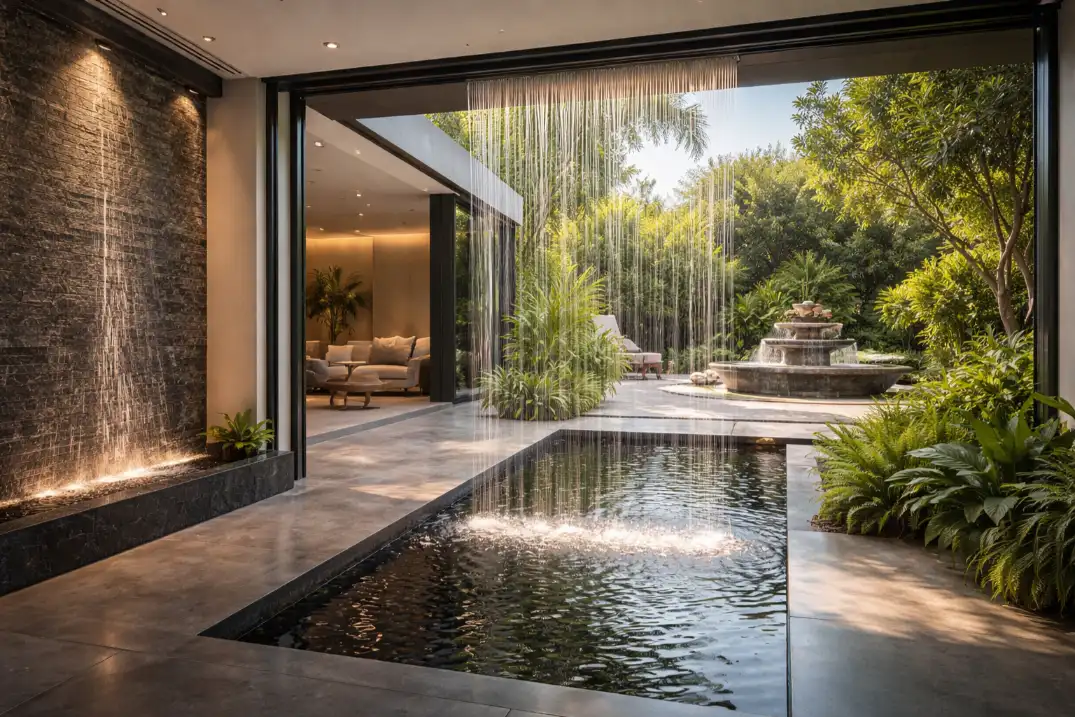
Whether through wall fountains, garden fountains, or a stunning rain curtain fountain, water features can transform the transition between indoors and outdoors into an immersive experience. In this guide, we explore how fountains serve as architectural connectors and how to choose the right style for your space.

The Role of Water in Transitional Design

Water has long been used in architecture to unify spaces. Historically, courtyards, atriums, and central pools served as gathering points that connected indoor rooms with outdoor gardens. Today, water fountains fulfill a similar role with modern materials and design approaches.

Creating Flow Between Spaces

One of the primary functions of fountains in transitional areas is establishing continuity. When water appears both inside and outside a home, the entire environment feels unified.

For example:

  • A wall fountain inside a living room may align with a matching outdoor fountain on a patio.
  • A rain curtain water feature can divide two zones while maintaining visual openness.
  • A floor fountain placed near sliding doors visually extends the outdoor landscape indoors.

This continuity reduces the psychological barrier between interior and exterior environments.

Sensory Experience

Water features engage multiple senses simultaneously:

  • Sound: Gentle flowing water reduces noise pollution and creates tranquility.
  • Movement: Flowing water introduces dynamic visual interest.
  • Reflection: Water surfaces reflect natural light, enhancing brightness indoors.
  • Temperature: Evaporation can slightly cool surrounding areas.

Because of these sensory qualities, indoor fountains often become focal points that encourage relaxation while complementing outdoor scenery.

Types of Fountains Ideal for Indoor–Outdoor Transitions

Different types of fountains work better depending on the architectural style, available space, and desired atmosphere. Below are some of the most effective options.

Wall Fountains: Vertical Elegance

Wall fountains are among the most versatile water features for transitional areas. Their vertical orientation makes them ideal for narrow spaces such as entryways, hallways, and patios.

Why Wall Fountains Work Well

Wall fountains offer several advantages:

  • Space-efficient design
  • Strong visual impact
  • Continuous water flow for soothing sound
  • Easy placement along interior or exterior walls

When positioned near glass doors or windows, a wall fountain inside can visually connect with a similar installation outside.

Indoor–Outdoor Pairing

Many designers mirror indoor water fountains with matching outdoor water fountains to create symmetry. For example:

  • A slate indoor wall fountain inside a foyer
  • A matching stone fountain outside in the entry garden

This pairing establishes a clear architectural dialogue between spaces.

Rain Curtain Fountains: A Dramatic Divider

A rain curtain fountain is one of the most striking transitional water features available. Water falls in a thin sheet or droplets from above, forming a transparent curtain of flowing water.

Architectural Impact

A rain curtain water feature can function as:

  • A divider between indoor and outdoor seating areas
  • A decorative backdrop for a patio or terrace
  • A visual barrier that maintains openness and light

Because the water flows vertically through the air, these installations create a sense of movement without blocking views.

Ideal Locations

Rain curtain fountains are especially effective in:

  • Covered patios
  • Atriums
  • Glass-walled living rooms
  • Luxury hotel lobbies
  • Indoor gardens

The effect is both modern and tranquil, combining architecture with natural movement.

Floor Fountains: Ground-Level Connection

Floor fountains create a seamless visual connection between indoor flooring and outdoor landscapes.

Unlike traditional fountains with visible basins, floor fountains often appear flush with the ground, allowing water to bubble up through stone, tile, or decorative grates.

Benefits of Floor Fountains

  • Minimal visual obstruction
  • Elegant integration with flooring materials
  • Safe and modern appearance
  • Subtle sound and movement

These fountains are particularly effective near large sliding doors that open to patios or gardens.

Transitional Placement Ideas

  • Entry halls that lead directly to outdoor courtyards
  • Sunrooms with garden views
  • Covered outdoor lounges
  • Indoor atriums

The fountain appears as a natural extension of the landscape.

Garden Fountains as Outdoor Anchors

While indoor features create interior ambiance, garden fountains act as visual anchors that draw attention outward.

When visible from inside the home, outdoor fountains enhance the perception of depth and connection with nature.

Framing Outdoor Views

Large outdoor water fountains can be strategically placed where they remain visible through windows or glass walls.

For example:

  • A tiered stone fountain centered in a courtyard
  • A sculptural modern fountain in a minimalist garden
  • A reflecting pool with subtle bubbling water

These installations transform outdoor spaces into living art pieces.

Indoor Water Fountains for Transitional Interiors

Inside the home, indoor fountains create atmosphere and act as gentle reminders of the natural environment beyond the walls.

Placement Ideas

  • Entry foyers
  • Living rooms
  • Indoor gardens
  • Staircase landings
  • Sunrooms

When positioned near windows or glass doors, indoor water fountains amplify the connection with the outdoor environment.

Acoustic Benefits

The sound of flowing water offers several psychological benefits:

  • Reduces stress
  • Masks street noise
  • Encourages relaxation
  • Enhances meditation spaces

For this reason, fountains are frequently used in wellness-inspired architecture.

Tabletop Fountains for Subtle Transitions

Not every space can accommodate a large installation. Tabletop fountains provide a smaller, flexible alternative.

These compact indoor water fountains bring the calming presence of water to desks, shelves, or coffee tables.

Advantages of Tabletop Fountains

  • Compact size
  • Easy installation
  • Affordable entry into water features
  • Portability

While small, they still contribute to the sensory connection between interior and exterior environments.

Architectural Strategies for Integrating Water Features

Successfully using fountains as transitional elements requires thoughtful planning. Designers often apply several strategies.

Aligning Sight Lines

Positioning fountains along key visual axes creates a strong sense of flow.

For example:

  • A foyer fountain aligned with a garden fountain beyond glass doors
  • A hallway water feature leading the eye toward a patio

This alignment subtly guides movement through the space.

Using Natural Materials

To strengthen the connection with outdoor environments, many water fountains incorporate natural materials such as:

  • Slate
  • Granite
  • River rock
  • Marble
  • Copper

These textures echo natural landscapes and blend interior design with outdoor surroundings.

Lighting for Evening Ambiance

Lighting dramatically enhances the effect of fountains after sunset.

Popular lighting techniques include:

  • LED lighting beneath flowing water
  • Backlit rain curtain fountains
  • Spotlights on garden fountains
  • Warm accent lighting around wall fountains

Illuminated water creates mesmerizing reflections that extend the use of transitional spaces into the evening.

Benefits of Using Fountains as Indoor–Outdoor Connectors

Fountains as Transitional Elements Between Indoor and Outdoor Zones

Integrating fountains between indoor and outdoor zones offers several practical and aesthetic advantages.

  1. Enhances Property Value: Well-designed water features increase perceived luxury and curb appeal. Buyers often view fountains as premium architectural elements.
  2. Encourages Relaxation: The sound of flowing water triggers natural relaxation responses, making spaces feel calm and inviting.
  3. Improves Air Quality: Indoor water fountains may help increase humidity slightly, which can benefit indoor comfort in dry environments.
  4. Creates a Unique Design Identity: From rain curtain water features to sculptural floor fountains, water installations instantly distinguish a space from ordinary interior design.

Maintenance Considerations

To keep fountains functioning beautifully, routine maintenance is essential.

Basic Care Tips

  • Regular Cleaning – Prevent mineral buildup and algae growth.
  • Water Level Checks – Ensure pumps remain submerged.
  • Pump Maintenance – Clean filters periodically.
  • Seasonal Protection – Protect outdoor fountains during freezing temperatures.

High-quality fountains are designed for durability, but consistent care ensures long-lasting performance.

Choosing the Right Fountain for Your Space

Selecting the ideal fountain depends on several factors.

Space Availability

Large spaces may accommodate dramatic rain curtain fountains, while smaller interiors may benefit from tabletop fountains or slim wall fountains.

Architectural Style

Modern homes often favor sleek metal or glass fountains, while traditional properties may feature stone garden fountains.

Sound Level

Different fountains produce varying levels of water sound:

  • Gentle trickle – tabletop fountains
  • Moderate flow – wall fountains
  • Strong cascading sound – large outdoor fountains

Matching the sound to the environment helps maintain balance.

The Future of Indoor–Outdoor Water Features

As architecture continues to embrace biophilic design, fountains are becoming more sophisticated and integrated into building structures.

Emerging trends include:

  • Smart fountains with programmable water flow
  • Sustainable recirculating systems
  • LED-integrated rain curtain water features
  • Interactive floor fountains in public spaces

These innovations push water features beyond decoration into functional architectural components.

Conclusion

Fountains do far more than decorate a space. When thoughtfully integrated into architecture, they become powerful transitional elements that connect indoor and outdoor environments.

Whether through elegant wall fountains, dramatic rain curtain fountains, peaceful garden fountains, or subtle tabletop fountains, water features introduce movement, sound, and reflection that unify living spaces.

By carefully selecting and positioning fountains, homeowners and designers can transform ordinary thresholds into immersive experiences where architecture and nature flow together seamlessly.

FAQs:

Most indoor water fountains require simple maintenance, including occasional cleaning, refilling water, and checking the pump. With regular care, they can operate smoothly for many years.

A rain curtain fountain is a vertical water feature where water falls in thin streams or droplets, creating a curtain-like effect. These fountains often serve as dramatic architectural dividers between indoor and outdoor spaces.

Yes. Many outdoor water fountains are strategically placed in gardens or courtyards so they remain visible through windows or glass doors, strengthening the visual connection between indoor and outdoor areas.

SPRING SALE: 10% OFF ALL PRODUCTS
Use Code: MAY10 | Ends MAY 31