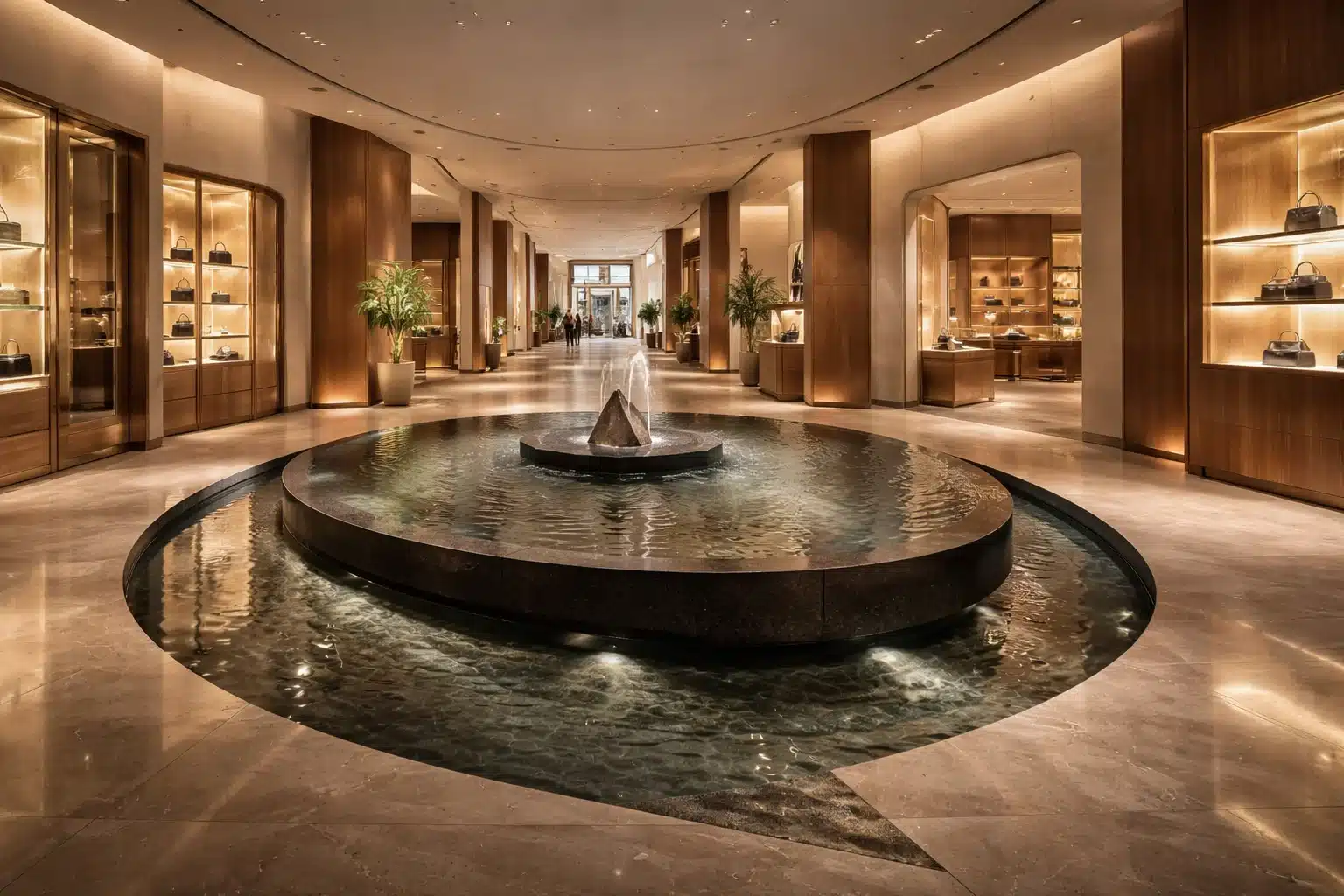
Immersive-retail-fountains

Immersive Retail: How High-End Stores Use Fountains to Shape Customer Flow

Introduction: When Retail Becomes an Experience

Luxury retail is no longer just about selling products, it is about crafting environments that evoke emotion, encourage exploration, and subtly guide customer behavior. As e-commerce continues to dominate transactional convenience, brick-and-mortar stores are responding by becoming immersive destinations. From scent marketing and curated soundscapes to architectural lighting and sculptural design, every detail is intentional.

Among the most powerful yet underappreciated tools in immersive retail design are fountains and architectural water features. Once reserved for hotel lobbies, civic plazas, or garden estates, fountains have found a new role inside and around high-end retail spaces. Whether through indoor water fountains, wall fountains, or dramatic rain curtain water features, luxury brands are using water to shape customer flow, influence dwell time, and reinforce brand identity.

This article explores how high-end stores strategically use fountains, indoors and outdoors, to influence movement patterns, create moments of pause, and turn retail environments into sensory journeys.

The Psychology of Water in Retail Environments

Why Humans Are Drawn to Water

Human attraction to water is deeply rooted in biology and psychology. Researchers often refer to the concept of biophilia, our innate tendency to seek connections with nature. Flowing water signals life, safety, and tranquility. In retail settings, this translates to:

  • Reduced stress and anxiety
  • Increased comfort and sense of well-being
  • Longer dwell times
  • More positive brand associations

Luxury retailers understand that a calm, emotionally resonant customer is more likely to browse slowly, engage with products, and make considered purchases.

Water as a Non-Verbal Guide

Unlike signage or barriers, fountains influence movement subconsciously. The sound, motion, and visual gravity of water gently pull customers in specific directions. A strategically placed indoor fountain can slow foot traffic, while a linear rain curtain fountain can guide customers along a desired path.

In this way, water becomes a silent architectural language, one that communicates without words.

Fountains as Anchors in Store Layout Design
Creating Natural Focal Points

In large luxury stores, customers can feel overwhelmed by scale. Designers often use fountains as spatial anchors, visual “pause points” that help customers orient themselves.

Examples include:

  • A sculptural floor fountain at the center of an atrium
  • A cascading wall fountain behind a hero product display
  • A minimalist reflecting pool integrated into the flooring

These features create landmarks within the store, helping customers intuitively navigate the space.

Encouraging Circular Flow Patterns

High-end retailers often want customers to experience multiple collections before exiting. Circular or looped layouts are ideal for this, and fountains are often placed at key nodes within these loops.

For example:

A water feature at the midpoint of the store encourages customers to continue rather than turn back.

Multiple small indoor water fountains can act as stepping stones, guiding customers deeper into the retail environment.

Outdoor Fountains: The Threshold Experience

First Impressions Begin Outside

The customer journey starts long before someone walks through the door. Outdoor fountains play a crucial role in setting expectations and signaling luxury.

High-end brands often use:

  • Grand outdoor water fountains in entry plazas
  • Linear reflecting pools leading to the entrance
  • Sculptural garden fountains integrated with landscaping

These features slow the approach, encouraging customers to transition mentally from the busy outside world into a curated brand environment.

Outdoor Water Fountains as Crowd Managers

In high-traffic shopping districts, outdoor fountains subtly control movement. People naturally walk around water rather than across open plazas, allowing designers to:

  • Direct foot traffic toward main entrances
  • Prevent congestion in undesirable areas
  • Create natural gathering zones without signage

Luxury retail centers often combine outdoor fountains with seating and greenery, increasing dwell time and reinforcing the sense of exclusivity.

Indoor Fountains and the Art of Dwell Time
Slowing the Pace Inside the Store

Once inside, luxury retailers want customers to slow down. Indoor fountains are particularly effective at reducing walking speed. The sound of trickling water masks ambient noise and creates a calming rhythm that encourages lingering.

Popular applications include:

  • Wall fountains behind lounge seating
  • Slim water panels between departments
  • Sculptural indoor water fountains near fitting rooms

These installations subtly tell customers that this is a place to relax, explore, and savor the experience.

Tabletop Fountains in VIP and Private Areas

While large fountains shape overall flow, smaller tabletop fountains are often used in private shopping lounges, VIP rooms, or consultation areas. Their purpose is intimacy rather than spectacle.

Benefits include:

  • Enhancing privacy through white noise
  • Reinforcing a spa-like, high-touch atmosphere
  • Supporting longer, more personalized interactions

In luxury retail, where personal service is paramount, these small water features can significantly elevate perceived value.

Rain Curtain Fountains: Movement, Transparency, and Drama

What Is a Rain Curtain Fountain?

A rain curtain fountain consists of water falling in a thin, uniform sheet, often from ceiling to floor. Unlike traditional fountains, rain curtains are visually transparent, allowing sightlines to remain open while still creating a strong sensory impact.

Guiding Customer Flow with Rain Curtains

Luxury stores use rain curtain water features as dynamic partitions. These features can:

  • Separate departments without solid walls
  • Signal transitions between collections
  • Frame entrances to exclusive areas

Because customers can see through them, rain curtain fountains feel inviting rather than restrictive. The sound and movement of falling water naturally draw people forward.

Elevating Brand Drama

Immersive Retail

Few water features deliver as much theatrical impact as a rain curtain. High-end fashion houses and flagship stores use them to convey innovation, craftsmanship, and bold identity. Integrated lighting can transform a rain curtain fountain into a living sculpture that changes throughout the day.

Floor Fountains and Interactive Luxury

Breaking the Boundary Between Architecture and Water

Floor fountains, where water emerges directly from the ground—blur the line between structure and feature. In retail environments, they create moments of surprise and delight.

Applications include:

  • Entry corridors with subtle bubbling jets
  • Central atriums with programmable water patterns
  • Transitional zones between indoor and outdoor spaces

When carefully designed, floor fountains encourage customers to slow down and engage, often becoming social media focal points.

Interactive but Controlled

Unlike public splash fountains, retail floor fountains are designed with precision. The goal is interaction without chaos, movement without mess. This controlled interactivity reinforces the idea that luxury is playful yet refined.

Wall Fountains as Vertical Storytelling Elements

Maximizing Impact in Limited Space

In urban luxury stores where floor space is at a premium, wall fountains provide dramatic impact without disrupting circulation. These vertical water features act as living backdrops for products or architectural elements.

Common placements include:

  • Behind staircases or elevators
  • Along long corridors to encourage forward movement
  • As focal points at the end of sightlines

Brand Storytelling Through Materials

Wall fountains offer endless customization opportunities. Materials such as stone, glass, metal, or textured panels can align the water feature with the brand’s identity—whether that’s heritage craftsmanship or modern minimalism.

Garden Fountains and Outdoor-Indoor Transitions

Blurring the Boundary Between Inside and Outside

Many luxury stores incorporate courtyards or semi-open spaces. Garden fountains in these areas help bridge indoor and outdoor environments, maintaining continuity in customer experience.

Benefits include:

  • Creating serene resting zones mid-journey
  • Encouraging customers to explore multiple levels or wings
  • Reinforcing a lifestyle-oriented brand narrative

Outdoor Water Features as Lifestyle Statements

For luxury home, fashion, or jewelry brands, garden fountains and outdoor water features subtly reinforce the aspirational lifestyle associated with the brand. Customers are not just shopping, they are stepping into a world they want to belong to.

Sustainability and Smart Water Features in Retail

Responsible Luxury

Modern luxury consumers value sustainability. Today’s fountains are designed with recirculating systems, efficient pumps, and smart controls that minimize water and energy usage.

High-end retailers often highlight these features as part of their environmental commitment, proving that opulence and responsibility can coexist.

Adaptive and Programmable Systems

Advanced water features can adapt to foot traffic, time of day, or events. Lighting, flow rate, and sound levels can all be adjusted to shape customer flow dynamically, making fountains an active part of retail strategy rather than static décor.

The Future of Immersive Retail and Water Design

As retail continues to evolve, fountains will play an increasingly strategic role. Beyond aesthetics, they are becoming tools for behavioral design, guiding movement, shaping emotion, and defining brand memory.

From dramatic rain curtain fountains to intimate tabletop fountains, water in retail is no longer decorative background noise. It is a core component of spatial storytelling and customer experience design.

Luxury stores that understand this are not just selling products, they are creating environments customers want to return to, photograph, and remember.

Conclusion: Flow, Emotion, and the Power of Water

In high-end retail, every step a customer takes matters. Fountains, whether indoor, outdoor, vertical, or interactive—offer a unique way to influence that journey without force or instruction. They slow the pace, create moments of wonder, and subtly guide customers through carefully designed paths.

By integrating indoor fountains, outdoor water fountains, wall fountains, and innovative features like rain curtain water features, luxury retailers transform physical stores into immersive destinations. In a world where experience is the ultimate currency, water is proving to be one of retail’s most powerful design elements.

FAQs:

Fountains guide movement subconsciously through sound and visual attraction, creating a more elegant and immersive experience than overt signage.
Yes. Modern indoor water fountains are designed with closed-loop systems, low maintenance requirements, and smart controls suitable for high-traffic retail spaces.
Rain curtain fountains and large wall fountains are especially effective for creating visual drama while maintaining open sightlines and smooth customer flow.