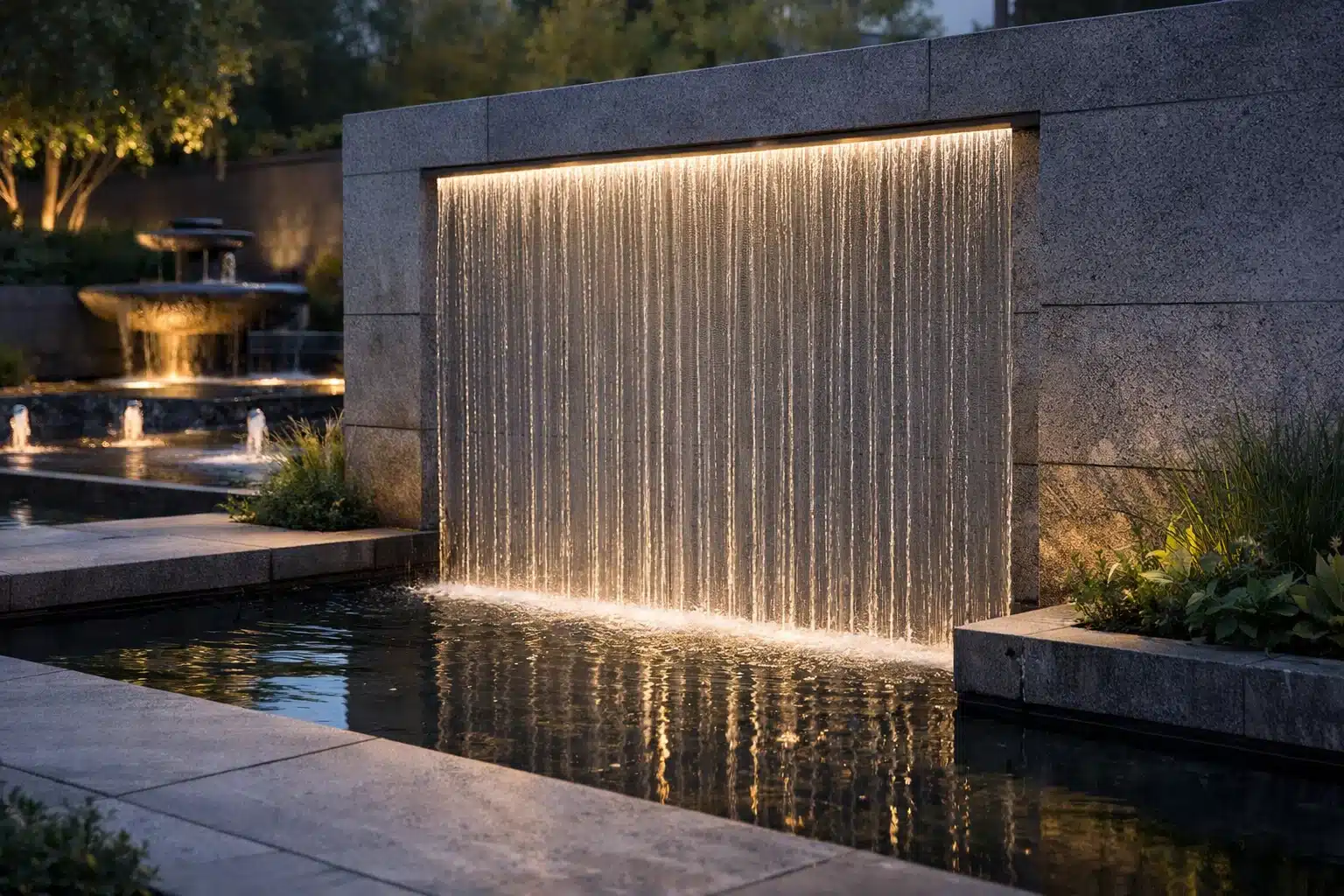
Invisible-Innovation-Fountain

Invisible Innovation: Celebrating What the Eye Never Sees

Introduction: The Art of What We Don’t Notice

When we admire fountains, whether they are elegant outdoor water fountains in public plazas, serene garden fountains in private homes, or minimalist indoor fountains tucked into modern interiors, we tend to focus on what is immediately visible: the flowing water, the reflections of light, the calming soundscape, and the emotional response they evoke. Fountains are often photographed, shared, and celebrated for their surface beauty.

Yet beneath that beauty lies a world of invisible innovation.

Invisible innovation is the unseen engineering, design thinking, material science, and technological integration that make modern water features reliable, sustainable, safe, and emotionally powerful. It is the quiet success of systems that work flawlessly without calling attention to themselves. When a rain curtain fountain creates a perfect sheet of water, when floor fountains emerge seamlessly from stone, or when tabletop fountains run silently for years, it is invisible innovation doing its job.

This article celebrates that hidden brilliance. We will explore how innovation shapes fountains across environments, outdoor fountains, indoor water fountains, wall fountains, rain curtain water features, and more, while remaining almost entirely unseen. By the end, you may never look at fountains the same way again.

The Evolution of Fountains: From Visible Grandeur to Invisible Intelligence

Historically, fountains were symbols of power, wealth, and technical mastery. Ancient Roman fountains proudly displayed aqueduct-fed water pressure. Renaissance fountains showcased mechanical ingenuity with visible sculptures and elaborate basins. In these eras, innovation was meant to be seen.

Modern fountains, however, have shifted toward subtlety.

Today’s fountains are defined less by obvious mechanical complexity and more by seamless integration into architecture, landscapes, and interiors. The most successful outdoor water fountains no longer dominate a space, they enhance it. Garden fountains blend into planting schemes. Indoor fountains quietly complement furniture and lighting. This shift demands innovation that works behind the scenes.
Invisible innovation is what allows fountains to disappear into their environments while still performing with precision.

The Hidden Engineering Behind Water Flow

Precision Hydraulics

At the heart of every fountain is water movement. Achieving smooth, consistent flow—especially in features like wall fountains or rain curtain fountains, requires sophisticated hydraulic design.
Invisible innovations include:

  • Laminar flow engineering that minimizes turbulence
  • Custom nozzle design tailored to water pressure and height
  • Flow regulators that maintain consistency despite fluctuations

In rain curtain water features, the challenge is even greater. Creating a uniform sheet of water without breaks, splashing, or distortion requires microscopic tolerances in the delivery system. When the curtain looks effortless, it’s because the engineering has been perfected.

Silent Pump Technology

Noise is the enemy of tranquility. Modern fountains rely on advanced pump systems designed to operate almost silently.

Behind the scenes, innovation appears in:

  • Vibration-dampening mounts
  • Energy-efficient impeller designs
  • Acoustic insulation within pump housings

Whether it’s a tabletop fountain on a desk or a large outdoor fountain in a resort, silence is not accidental, it is engineered.

Material Innovation: Strength Without Visibility

Corrosion-Resistant Materials

Water is relentless. Over time, it corrodes, stains, and weakens poorly chosen materials. Invisible innovation ensures that fountains last years, or decades, without visible degradation.

Modern water features rely on:

  • Marine-grade stainless steel
  • Advanced polymer composites
  • Powder-coated metals with UV resistance

These materials often look simple on the surface, but their performance is anything but.

Hidden Structural Support

Many contemporary fountains, especially floor fountains and minimalist outdoor fountains, appear to float or emerge effortlessly from the ground. This illusion is made possible by hidden structural systems designed to support weight, resist water pressure, and handle environmental stress.

The viewer sees elegance. The innovation remains unseen.

Sustainability: The Quiet Revolution in Fountains

One of the most important forms of invisible innovation is sustainability. Today’s fountains are expected to be environmentally responsible without compromising aesthetics.

Closed-Loop Water Systems

Most modern fountains use recirculating systems that dramatically reduce water waste. Once installed, the same water is filtered, treated, and reused continuously.

This is especially critical for:

  • Outdoor water fountains in public spaces
  • Garden fountains in drought-prone regions
  • Indoor fountains in commercial buildings

The sustainability impact is enormous, yet invisible to the casual observer.

Energy Efficiency

Advances in pump efficiency, LED lighting, and smart controllers have significantly reduced the energy footprint of fountains.

Invisible innovations include:

  • Variable-speed pumps that adjust flow dynamically
  • Low-voltage LED systems with long lifespans
  • Automated timers and sensors

A modern rain curtain fountain may look dramatic, but behind the scenes it is often far more efficient than older, simpler designs.

Filtration and Water Quality: Cleanliness You Don’t See

Clean water is essential not only for aesthetics but also for health and longevity.

Advanced Filtration Systems

Modern fountains incorporate multi-stage filtration systems that remove debris, algae, and microscopic particles. These systems are hidden within basins, walls, or underground vaults.

This innovation is critical for:

  • Indoor water fountains where air quality matters
  • Wall fountains with visible vertical surfaces
  • Tabletop fountains used in close proximity

The absence of visible grime or cloudiness is not luck, it is filtration science.

Automated Water Treatment

Invisible chemical balance systems maintain proper pH levels and inhibit biological growth without harsh chemicals. Many outdoor fountains now use eco-friendly treatments that protect both users and surrounding plant life.

Lighting Innovation: Making Water Glow Without Glare

Lighting is one of the most emotionally impactful aspects of fountains, yet the technology behind it is carefully concealed.

Integrated LED Systems

Modern fountain lighting is often fully integrated into the structure, with no visible fixtures or wiring. Waterproof LED modules are hidden beneath water surfaces, within walls, or behind spillways.

Innovations include:

  • Color-changing RGB systems
  • Programmable lighting scenes
  • Heat-dissipating housings

In outdoor fountains, these systems must withstand weather extremes while remaining invisible.
Light and Water Interaction

Designers now use advanced modeling software to predict how light will refract through moving water. This allows for precise placement of lighting elements so that water appears to glow from within.

The magic feels effortless. The innovation is anything but.

Invisible Innovation Across Fountain Types

Invisible Innovation

Outdoor Fountains and Outdoor Water Fountains

Outdoor fountains face the greatest challenges: weather, temperature fluctuations, debris, and heavy usage. Invisible innovation ensures durability through hidden drainage systems, freeze protection, and structural reinforcements.

Public outdoor water fountains often include vandal-resistant components and smart monitoring systems that alert maintenance teams before problems become visible.

Garden Fountains

Garden fountains are designed to feel organic and natural. Hidden plumbing lines, concealed reservoirs, and disguised access panels allow these water features to blend seamlessly into landscapes.
The innovation lies in making technology disappear into nature.

Indoor Fountains and Indoor Water Fountains

Indoor fountains must operate safely, quietly, and cleanly in enclosed environments. Innovations such as sealed basins, moisture control systems, and silent pumps are essential.
Wall fountains in offices and homes rely on precision mounting systems that distribute weight evenly and protect walls from moisture, completely out of sight.

Tabletop Fountains

Tabletop fountains are small, but their design challenges are significant. Miniaturized pumps, compact filtration, and splash-control engineering ensure reliable performance without mess.
Their simplicity is deceptive. Their innovation is hidden.

Wall Fountains

Wall fountains appear to defy gravity, with water cascading down vertical surfaces. Hidden reservoirs, internal plumbing channels, and custom spillways make this possible while maintaining clean lines.

Floor Fountains

Floor fountains often integrate directly into architecture. Drainage systems, load-bearing structures, and safety features are embedded beneath the surface, allowing water to emerge and disappear seamlessly.

Rain Curtain Fountain and Rain Curtain Water Feature

Perhaps the purest expression of invisible innovation, rain curtain fountains rely on precision engineering to create uninterrupted sheets of water. Any flaw in design becomes immediately visible, so the innovation must be flawless.

Hidden distribution chambers, micro-engineered slots, and pressure-balanced systems work together silently to create visual poetry.

Smart Technology: Intelligence You Rarely Notice

The newest frontier in fountain design is smart technology.

Automation and Control Systems
Modern fountains can be controlled via apps or building management systems. Flow rates, lighting scenes, and operating schedules can be adjusted remotely.

Yet the user experience remains simple and intuitive, because the complexity is hidden.

Sensors and Predictive Maintenance

Sensors monitor water levels, pump performance, and system health. When something goes wrong, alerts are triggered before visible failure occurs.

This invisible innovation reduces downtime and extends the lifespan of water features.

The Emotional Impact of Invisible Innovation

Why does invisible innovation matter?

Because it allows fountains to focus on what they do best: creating emotion.
When systems work flawlessly, people can relax, reflect, and connect with the space. The sound of water calms the mind. The movement of light soothes the eye. The presence of water reconnects us with nature, even indoors.

Invisible innovation ensures that nothing distracts from that experience.

Designing the Future: Where Innovation Continues to Disappear

As fountain design evolves, innovation will continue to move further behind the scenes. Future developments may include:

  • AI-driven water management
  • Ultra-efficient closed-loop ecosystems
  • Self-cleaning surfaces

Adaptive water features that respond to weather and user interaction

The paradox is clear: the more advanced fountains become, the less we will notice the technology behind them.And that is the ultimate success of invisible innovation.

Conclusion: Honoring the Unseen

Fountains are more than decorative elements. They are complex systems of engineering, design, sustainability, and technology, working quietly beneath the surface.

From outdoor fountains and garden fountains to indoor water fountains, wall fountains, floor fountains, tabletop fountains, and rain curtain water features, invisible innovation is what makes modern water features reliable, beautiful, and timeless.
The next time you stand before a fountain and feel a sense of calm, remember: what you don’t see is just as important as what you do.

FAQs:

Modern fountains use invisible innovations such as advanced pumps, filtration systems, corrosion-resistant materials, and smart controls that improve durability and reduce maintenance.
Despite their complex appearance, rain curtain fountains are designed with hidden distribution and filtration systems that make maintenance manageable when properly installed.

Yes. Indoor fountains often use low-voltage pumps and LED lighting, making them highly energy-efficient while providing strong visual and emotional impact.