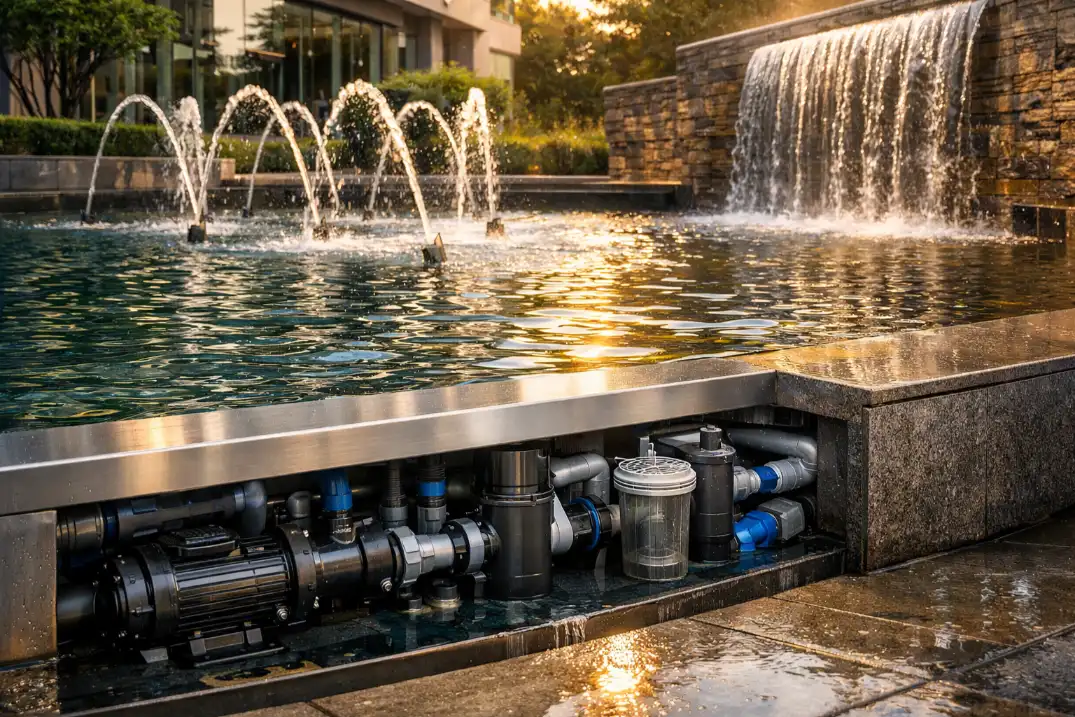
Commercial fountains are designed to operate continuously, often running 24 hours a day to maintain a stunning visual centerpiece. Whether installed in luxury hotels, corporate plazas, shopping centers, hospitals, or public parks, these water fountains and water features create calming environments, attract visitors, and elevate architectural spaces.
However, continuous operation places significant stress on one crucial component: the pump.
The pump is the heart of every fountain system. Without proper care, even high-quality pumps can fail prematurely, leading to costly repairs, downtime, and disruption of the visual impact that outdoor fountains, indoor fountains, and decorative water features are meant to provide.
Preventive pump care is the most effective strategy to keep commercial fountains operating efficiently, reduce maintenance costs, and extend equipment lifespan.
This guide explores practical preventive maintenance strategies for pumps used in outdoor water fountains, garden fountains, wall fountains, rain curtain fountains, and other commercial water installations.
Why Pump Maintenance Matters for Commercial Fountains
Unlike residential decorative features, commercial water fountains often operate continuously. Pumps must circulate large volumes of water while maintaining consistent pressure and flow.
Without preventive care, several problems can occur:
- Pump overheating
- Reduced water flow
- Blocked filtration systems
- Mineral buildup inside pump components
- Increased energy consumption
- Complete pump failure
For commercial spaces that depend on visually striking water features, even short downtime can affect visitor experience and brand perception.
Regular pump care ensures reliable performance across various fountain types, including:
- Outdoor water fountains
- Indoor water fountains
- Garden fountains
- Wall fountains
- Tabletop fountains
- Floor fountains
- Rain curtain fountain systems
- Rain curtain water features
Preventive maintenance protects both the pump and the overall fountain structure.
How Fountain Pumps Work
Understanding the basic operation of a fountain pump helps facility managers and maintenance teams recognize early signs of problems.
A pump performs three key functions:
- Draws water from the basin
- Pressurizes the water
- Circulates it through pipes and fountain nozzles
In decorative water fountains, pumps must maintain precise flow rates to produce desired visual effects.
For example:
- Wall fountains require smooth cascading sheets of water
- Rain curtain fountains depend on even water distribution across multiple outlets
- Floor fountains often rely on synchronized jets
- Indoor fountains prioritize quiet pump operation
Any pump issue can immediately disrupt the appearance of these water features.
Preventive care ensures pumps continue delivering consistent pressure and flow.
Common Causes of Pump Failure
Pump failure rarely happens suddenly. Most issues develop slowly due to preventable conditions.
Debris Accumulation
Leaves, dirt, sand, and algae often enter outdoor fountains. Over time, debris can clog pump intake screens and internal impellers.
This reduces water flow and forces the pump motor to work harder.
Mineral Buildup
Hard water can cause calcium and mineral deposits inside pumps.
This buildup affects impeller rotation and reduces efficiency.
Commercial outdoor water fountains are especially vulnerable to mineral scaling.
Dry Running
Pumps must always remain submerged in water.
Low water levels in garden fountains, floor fountains, or wall fountains can cause pumps to run dry, which leads to overheating and damage.
Electrical Stress
Continuous operation can strain wiring and motor components.
Without routine inspection, small electrical issues may evolve into serious failures.
Establishing a Preventive Pump Care Routine
Preventive pump care should follow a structured maintenance schedule.
Daily, weekly, and monthly tasks ensure optimal performance across all fountain types.
Daily Pump Monitoring
Daily inspections help detect issues before they escalate.
Key checks include:
- Confirm consistent water flow
- Listen for unusual pump noise
- Check water levels
- Inspect spray patterns
Irregular spray patterns may indicate partial pump blockage.
For rain curtain water features, uneven water distribution can reveal pump pressure problems.
Even quick daily checks protect commercial water fountains from unexpected downtime.
Weekly Pump Cleaning
Weekly cleaning removes debris before it enters the pump system.
Recommended tasks include:
- Cleaning intake screens
- Removing floating debris
- Checking filters
- Inspecting fountain basins
This step is essential for outdoor fountains exposed to wind, dust, and organic material.
Keeping the intake clear helps pumps maintain proper water circulation.
Monthly Pump Inspection
Monthly inspections involve deeper maintenance.
Maintenance teams should:
- Remove the pump from the basin
- Inspect the impeller for debris
- Check wiring and seals
- Clean mineral buildup
These inspections significantly extend the life of pumps used in outdoor water fountains, garden fountains, and wall fountains.
Managing Water Quality for Pump Longevity
Water quality plays a major role in pump health.
Poor water conditions accelerate corrosion, clogging, and scaling.
Proper water treatment reduces strain on fountain pumps.
Recommended water management practices include:
- Maintaining balanced pH levels
- Preventing algae growth
- Controlling mineral concentration
- Using filtration systems
Clean water improves pump performance in both indoor water fountains and outdoor fountains.
It also enhances the visual clarity of the fountain display.
Preventing Pump Overheating
Pump overheating is one of the most common causes of failure.
Continuous-run commercial fountains must manage heat carefully.
Key strategies include:
Maintain Proper Water Levels
Low water levels reduce cooling around the pump motor.
This is especially important for tabletop fountains, indoor fountains, and smaller decorative installations.
Ensure Adequate Water Flow
Clogged filters or blocked pipes restrict circulation.
Reduced flow forces pumps to work harder, increasing heat.
Provide Proper Ventilation
In enclosed indoor fountains, pumps may sit inside pump chambers.
Adequate ventilation helps dissipate heat.
Special Considerations for Outdoor Fountains
Commercial outdoor fountains face additional challenges.
Environmental exposure introduces debris, weather fluctuations, and seasonal changes.
Preventive strategies include:
Seasonal Cleaning
Spring and fall cleaning removes accumulated debris and organic matter.
Freeze Protection
In colder climates, water inside pumps can freeze and expand.
Winterizing outdoor water fountains protects pumps and plumbing.
UV Exposure
Sunlight can degrade plastic components over time.
Routine inspection helps detect early wear.
Maintaining Pumps in Indoor Water Features
While indoor water fountains face fewer environmental threats, they require specialized care.
Indoor pump maintenance focuses on:
- Noise reduction
- Water clarity
- Consistent water flow
Luxury hotels and corporate buildings rely on quiet fountain operation.
Regular cleaning prevents vibration and humming.
Proper care ensures indoor fountains, wall fountains, and tabletop fountains operate smoothly.
Pump Maintenance for Rain Curtain Fountains
A rain curtain fountain creates a dramatic vertical water display by allowing water to fall in thin streams from overhead nozzles.
These installations rely heavily on consistent pump pressure.
Any pressure fluctuation can disrupt the uniform water curtain effect.
Preventive pump care for rain curtain water features includes:
- Regular nozzle cleaning
- Pressure monitoring
- Filtration system maintenance
- Pump flow calibration
Because these water features are often used in high-end commercial architecture, maintaining consistent performance is essential.
Choosing the Right Pump for Commercial Fountains
Preventive maintenance works best when paired with the right equipment.
Selecting a pump designed for continuous operation improves reliability.
Important factors include:
- Flow rate capacity
- Energy efficiency
- Durable materials
- Quiet operation
- Compatibility with fountain size
Large floor fountains or plaza water features require heavy-duty commercial pumps.
Smaller tabletop fountains and decorative indoor fountains may use compact pumps.
Choosing the correct pump reduces stress on the system and simplifies maintenance.
Energy Efficiency and Pump Care
Efficient pumps reduce operational costs for commercial fountains.
Maintenance directly affects energy efficiency.
A clean pump operates with less resistance and lower power consumption.
Simple actions like cleaning filters and removing debris can improve efficiency by preventing the pump motor from working harder than necessary.
For large outdoor water fountains, energy savings from proper pump care can be significant over time.
Signs Your Fountain Pump Needs Attention
Maintenance teams should recognize early warning signs of pump problems.
Common indicators include:
- Reduced water flow
- Unusual pump noise
- Irregular spray patterns
- Increased energy consumption
- Visible debris near intake
For wall fountains and rain curtain fountains, visual irregularities often signal pump issues.
Addressing these signs early prevents costly repairs.
Creating a Long-Term Fountain Maintenance Plan
Commercial fountains should operate under a documented maintenance plan.
A structured program helps facility managers track pump care and schedule service.
A typical plan includes:
- Daily visual inspections
- Weekly debris removal
- Monthly pump cleaning
- Seasonal system checks
- Annual professional service
This proactive approach ensures long-term reliability for all types of water features, including garden fountains, indoor fountains, and outdoor fountains.
The Value of Preventive Pump Care
Preventive pump care protects the investment in commercial fountains.
Well-maintained pumps offer several benefits:
- Longer equipment lifespan
- Reduced maintenance costs
- Improved fountain performance
- Lower energy consumption
- Consistent visual display
Whether maintaining outdoor water fountains, elegant wall fountains, or sophisticated rain curtain water features, pump maintenance ensures that these installations continue delivering beauty and tranquility.
With a proactive maintenance routine, commercial water fountains remain reliable architectural highlights for years to come.