362.1.Fountain-Mist

The Science of Mist: How Fountains Create Atmospheric Effects

Introduction

There is something almost magical about the way fountains transform a space. Whether it’s a grand outdoor fountain in a city square, a delicate indoor water fountain adding tranquility to a home, or a mesmerizing rain curtain fountain cascading with elegance, water features have captivated humans for centuries. Beyond their aesthetic beauty, fountains have a scientific foundation in the way they interact with air, light, and sound. One of the most enchanting aspects of fountains is their ability to create mist and atmospheric effects that cool, soothe, and inspire.

This article dives into the science of mist, exploring how different types of fountains, such as garden fountains, wall fountains, tabletop fountains, and rain curtain water features, generate unique atmospheres. We’ll uncover the physics behind mist creation, the role of aerodynamics, and the practical applications of these features for both outdoor and indoor environments.

The Physics of Mist in Fountains

Surface Tension and Droplet Formation

At the heart of mist creation is water’s unique property of surface tension. When a fountain pump forces water upward or outward, it breaks into droplets. If those droplets are small enough (typically under 200 microns in diameter), they remain suspended in the air as mist.

This mist doesn’t just happen randomly. The interaction of water pressure, nozzle design, and airflow determines whether a fountain produces a fine cooling mist or larger droplets that fall back quickly into the basin.

Evaporation and Cooling Effects

Mist works as a natural air conditioner. When the tiny droplets evaporate, they absorb heat energy from the surrounding air, creating a cooling effect. This is why outdoor fountains often feel refreshing on hot days, and why misting systems are popular in desert climates.

In a garden fountain, for example, the mist not only cools the air but also nourishes surrounding plants with extra humidity. Indoor environments benefit as well, indoor fountains can help maintain healthy humidity levels, reducing dryness in heated spaces.

Light Refraction and Atmospheric Effects

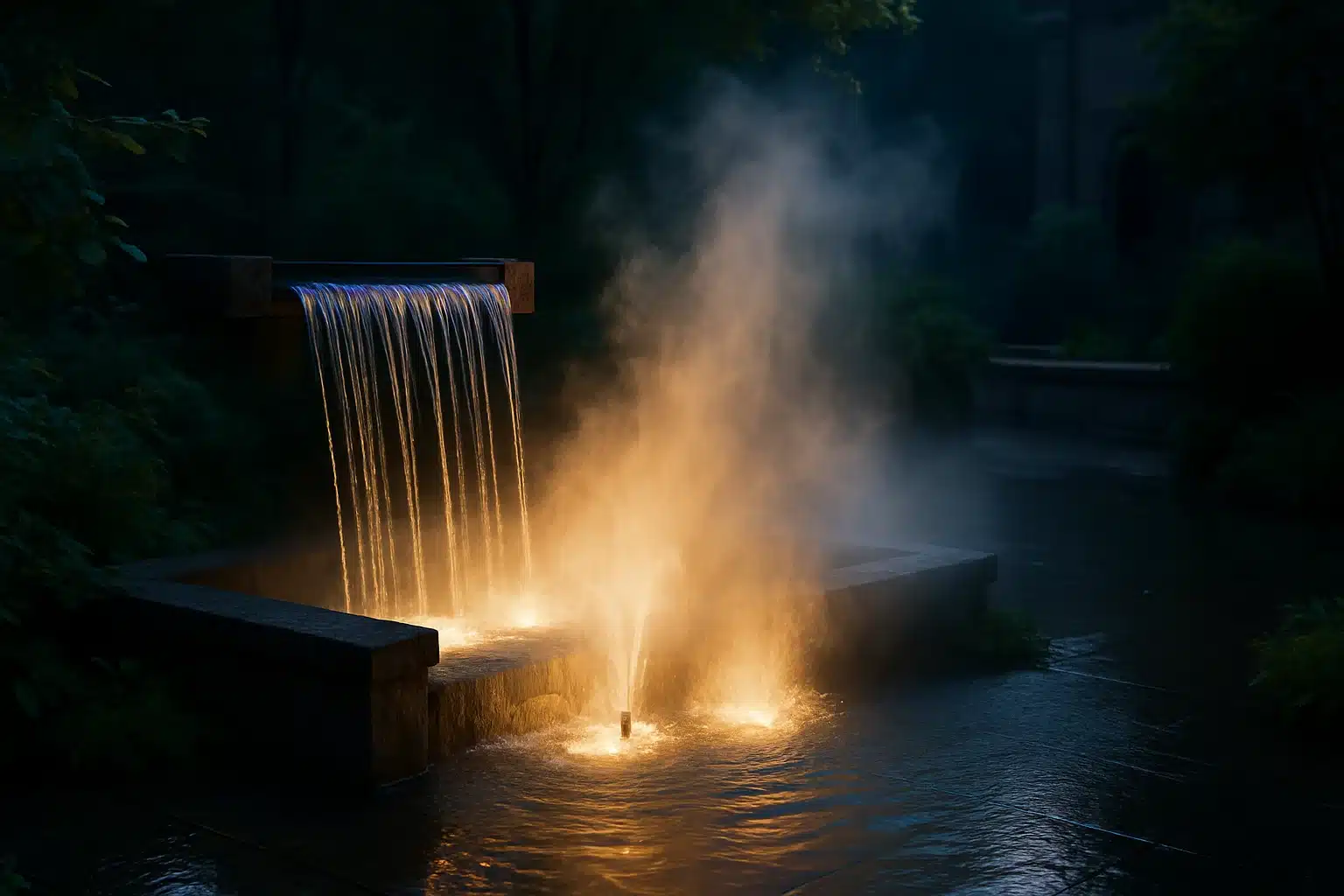
Mist particles scatter light, creating halos, rainbows, and soft glowing effects. This explains why a rain curtain water feature illuminated by LED lights looks so mesmerizing. As light interacts with the suspended droplets, it refracts and reflects, enhancing the sensory experience.

Types of Fountains That Create Mist

1. Outdoor Fountains

Outdoor water fountains are designed to withstand natural elements while enhancing gardens, patios, and public spaces. When paired with misting nozzles or designed with high-pressure jets, they create a cooling cloud effect. In large public floor fountains, mist can be used to lower ambient temperatures in urban heat islands.

2. Garden Fountains

Garden fountains bring both beauty and function. The gentle mist they produce can act as a microclimate enhancer, supporting delicate plants like ferns, orchids, and mosses. When combined with natural stone basins, these fountains blend atmospheric science with landscape artistry.

3. Indoor Water Fountains

Inside the home, indoor fountains provide more than décor, they contribute to wellness. Mist from tabletop fountains or wall fountains increases humidity, reduces static electricity, and promotes relaxation. The sound of water trickling, combined with the cooling mist, creates a spa-like atmosphere.

4. Rain Curtain Fountains

A rain curtain fountain (sometimes called a rain curtain water feature) creates a theatrical effect by guiding streams of water downward in parallel lines. When fine droplets break off these streams, mist forms naturally. This type of fountain is especially popular in modern architecture, luxury hotels, and event spaces for its dramatic yet calming effect.

5. Tabletop Fountains

Small but mighty, tabletop fountains often use ultrasonic technology to create mist. These devices vibrate water at high frequencies, producing a cool fog that enhances relaxation and adds an element of sensory wellness to desks, bedrooms, or meditation areas.

6. Wall Fountains

Wall fountains offer vertical elegance. Depending on their design, they can incorporate misting features that make the cascading water appear even more ethereal. By diffusing light and sound through mist, they create a stunning focal point in both residential and commercial interiors.

7. Floor Fountains

Floor fountains are often installed in lobbies, gardens, or outdoor plazas. Their large surfaces and high-pressure pumps make them perfect candidates for mist effects. Combined with modern lighting, floor fountains can fill entire spaces with an enchanting atmospheric ambiance.

Mist as an Environmental Enhancer

Cooling Microclimates

In hot climates, outdoor fountains with misting effects can lower surrounding air temperatures by several degrees. Cities like Dubai and Las Vegas strategically use mist-producing water features in public squares to combat extreme heat.

Humidity Control

Indoor environments, especially during winter, can suffer from dryness. A tabletop fountain or indoor water fountain introduces natural humidity, supporting respiratory health and reducing skin dryness. Unlike mechanical humidifiers, fountains also provide soothing sounds and visual beauty.

Air Quality and Negative Ions

Flowing water releases negative ions, which are believed to attract airborne particles like dust, pollen, and pollutants. The mist created by fountains enhances this effect, improving air quality in homes and offices.

Psychological and Sensory Benefits

Mist enhances not only physical comfort but also mental well-being. Studies in environmental psychology show that water features, including indoor fountains, rain curtain fountains, and garden fountains, promote relaxation, reduce stress, and even improve focus.

The Role of Fountain Design in Mist Creation

The Role of Fountain Design in Mist Creation

Nozzle Engineering

Nozzles determine droplet size and spray patterns. A fine atomizing nozzle produces mist, while wider nozzles create streams and splashes. In outdoor water fountains, engineers often mix both designs to achieve balance between aesthetics and cooling effects.

Pump Pressure

High-pressure pumps break water into smaller droplets, making mist more likely. Rain curtain water features rely on consistent pump pressure to maintain uniform streams that can fragment into mist at the edges.

Integration of Ultrasonics

Modern indoor fountains and tabletop fountains frequently use ultrasonic transducers. These devices vibrate water molecules so fast that they break into a visible cool mist—similar to fog machines used in theaters.

Mist in Modern Architecture and Landscape Design

Fountains are no longer just decorative. Architects and landscape designers increasingly incorporate water features with mist into functional designs. Examples include:

  • Urban Plazas: Outdoor floor fountains that double as play areas for children while cooling the environment.
  • Luxury Hotels: Dramatic rain curtain fountains that welcome guests with a misty, light-enhanced spectacle.
  • Wellness Centers: Indoor water fountains paired with aromatherapy to create immersive relaxation spaces.
  • Botanical Gardens: Large garden fountains producing mist to sustain delicate plant ecosystems.

By combining science with artistry, designers leverage the cooling, aesthetic, and psychological effects of mist.

Practical Considerations

Maintenance

While mist adds beauty, it also requires upkeep. Nozzles can clog with mineral deposits, especially in hard water regions. Regular cleaning and water treatment keep outdoor fountains and indoor fountains functioning properly.

Safety

Mist increases surface moisture, which can make floors slippery around floor fountains or indoor wall fountains. Designers often incorporate textured flooring or drainage systems to minimize risk.

Energy Efficiency

Today’s water features use energy-efficient pumps and LED lighting. Some even integrate solar technology, allowing garden fountains and outdoor water fountains to create mist sustainably.

Conclusion

The creation of mist in fountains is not just an aesthetic flourish, it’s the result of intricate interactions between water, air, light, and technology. From the soothing trickle of tabletop fountains to the dramatic spectacle of rain curtain water features, mist enriches our environments both visually and physically. Whether installed outdoors to cool urban plazas or indoors to enhance relaxation and humidity, fountains embody a fusion of science and art.

By understanding the mechanics of mist and the wide variety of water features available, we gain a deeper appreciation for how fountains transform ordinary spaces into extraordinary experiences.

FAQs:

Outdoor fountains produce mist through high-pressure nozzles or natural fragmentation of water streams into tiny droplets. When combined with airflow and evaporation, these droplets remain suspended in the air, creating mist.

Yes. Indoor water fountains increase humidity, reduce dryness, and may improve air quality by releasing negative ions. They also contribute to relaxation and stress relief.
A rain curtain fountain is a type of water feature where water streams down in parallel lines, resembling falling rain. As the water interacts with air, it can create mist while providing a stunning visual effect.