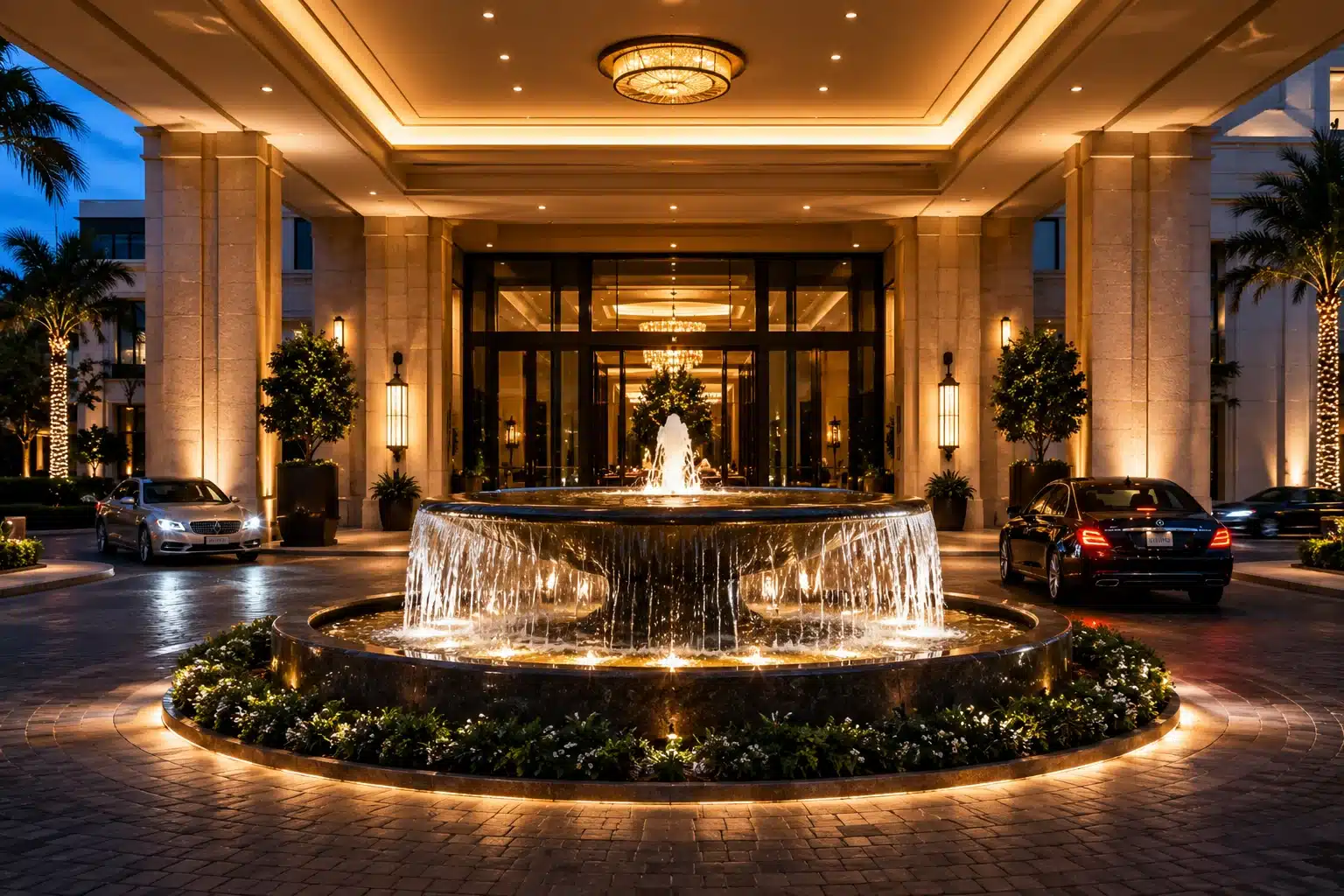
A commercial fountain is a long-term operational commitment. Unlike most building systems that operate largely invisibly and require intervention only when something fails, a fountain is a highly visible feature where operational quality directly affects the impression it creates.
Fountain systems that are well-managed look impeccable, sound correct, and run reliably year after year. Systems that are under-managed deteriorate visibly, including cloudy water, algae growth, failing lights, and worn pump performance, in ways that are immediately apparent to every visitor.
The difference between these two outcomes is almost entirely a function of operational discipline: consistent, scheduled attention to the full range of maintenance and operational tasks that commercial fountains require.
Why Commercial Fountain Maintenance Matters
A commercial fountain is often one of the most visible features on a property. While visitors may never notice pumps, filtration equipment, control systems, or water treatment equipment, they immediately notice cloudy water, algae growth, malfunctioning lighting, inactive water displays, or unusual fountain operation.
Consistent fountain maintenance protects the appearance, performance, and lifespan of the installation while reducing costly repairs and unexpected downtime. A proactive maintenance program also helps preserve the value of the owner’s investment and supports a positive visitor experience for tenants, guests, customers, and visitors.
Year-Round Monthly Tasks
These tasks form the foundation of an effective commercial fountain maintenance program and should be performed every month regardless of season. Consistency is often the difference between a fountain that operates reliably for decades and one that experiences recurring operational problems.
Water Chemistry Management
- Test free sanitizer (chlorine or bromine), pH, and total alkalinity weekly; adjust as needed
- Record all test results in a dated maintenance log
- Inspect and replenish chemical storage for automated dosing systems
- Check automated dosing system sensor calibration monthly
Visual Inspection
- Inspect basin interior for algae growth, debris accumulation, and staining
- Inspect all water display zones for correct flow patterns and any inactive nozzles
- Inspect lighting for non-functioning fixtures; replace promptly
- Inspect coping, stone, and finish materials for damage, efflorescence, or staining
- Inspect surrounding paving for drainage issues or slip hazards
Pump and Mechanical Check
- Verify pump operating pressure is within normal range
- Listen for unusual pump noise including cavitation, bearing noise, or vibration
- Inspect strainer baskets; clean if debris accumulation exceeds 25% of basket area
- Verify auto-fill system is functioning and make-up water usage is within normal range
- Check control panel for fault logs; clear and document any fault events
Regular inspection and preventive pump care can significantly reduce unexpected equipment failures and extend the lifespan of critical fountain components.
The Importance of Maintenance Planning
Successful commercial fountain operations rely on structured scheduling rather than reactive repairs. Establishing a documented program of inspections, testing, cleaning, and equipment servicing helps property teams identify issues before they become expensive failures.
For larger installations, comprehensive maintenance planning should be incorporated into broader facility management and asset preservation programs.
Quarterly Maintenance Tasks
Q1 — Post-Winter Assessment and Spring Startup
For fountains in cold climates after seasonal winterization:
- Inspect all piping for freeze damage before refilling
- Inspect pump seals, impellers, and housings
- Inspect basin interior for freeze-related cracking or waterproofing damage
- Inspect electrical conduit and junction boxes for moisture intrusion
- Conduct full system test before returning the fountain to public view
- Establish water chemistry before full operation begins
For all climates:
- Schedule annual backflow preventer test with a certified tester
- Inspect UV lamp output; replace if lamp hours indicate end of service life
- Clean UV quartz sleeve
- Inspect and lubricate all valve stems
- Review and update operating schedule for daylight and seasonal changes
Q2 — Active Season Preparation
- Increase monitoring frequency as temperatures rise because higher temperatures accelerate biological growth
- Inspect nozzle heads for mineral scale buildup; clean as needed
- Test and verify lighting control system for extended summer-hours operation
- Inspect and clean all drain and overflow strainers
- Confirm water treatment chemical inventory for the summer season
Q3 — Peak Season Management
- Maintain increased monitoring during peak summer temperatures
- Monitor evaporation rate and make-up water consumption because evaporation increases significantly in summer
- Inspect and clean filters at increased frequency if water quality indicates the need
- Document any recurring operational issues for planning and remediation during the off-season
Q4 — Winterization and Off-Season Preparation
For cold climates:
- Execute winterization procedure before hard freeze conditions
- Drain all piping, pump housings, and nozzle bodies completely
- Blow out piping with compressed air at all low-point drains
- Remove and store removable components
- Cover basin openings to prevent debris accumulation
- Tag out all electrical disconnects
- Document shutdown condition with photographs for spring startup reference
For warm climates:
- Reduce chemical dosing as temperatures and biological loading decrease
- Perform annual mechanical inspection during the lower-traffic off-season period
Annual Deep Maintenance
Schedule during the lowest-traffic period of the year. These tasks should not be deferred indefinitely because they protect the long-term integrity of the installation.
Basin Drain and Inspection
- Drain completely and inspect waterproofing membrane for cracks or separation
- Inspect all penetrations for seal integrity
- Clean basin thoroughly including biofilm from submerged surfaces
- Inspect structural concrete or steel for deterioration
- Refill and rebalance water chemistry after refill
Pump Maintenance
- Remove and inspect all pumps
- Inspect mechanical seals; replace if worn
- Inspect impellers for wear or damage
- Clean pump intake screens
- Check motor winding insulation resistance
Control System Review
- Back up all PLC programs
- Review and update operating schedules
- Test all automatic sequences and alarm functions
- Verify remote monitoring connectivity
Lighting System Annual Review
- Replace UV lamps regardless of apparent condition
- Inspect all fixture lenses and seals
- Verify lighting control program is current
Documentation Requirements
Proper documentation is not a bureaucratic formality. It is a management tool and a liability protection asset.
Maintain:
Maintenance Log
Dated entries for every maintenance visit with observations and work performed.
Water Chemistry Records
Test results with date, tester, and adjustment actions.
Fault Log
Documented fault events from the control system with timestamps.
Repair Records
Parts replaced, repairs performed, and contractor invoices.
Photograph Record
Periodic photographs of the installation in good condition and any areas of concern.
Key Takeaway
Successful commercial fountain ownership requires proactive maintenance rather than reactive repairs.
Property managers who follow a structured annual maintenance program typically experience fewer equipment failures, better water quality, lower long-term operating costs, and improved visual performance. Regular inspections, water chemistry management, pump maintenance, and documentation help protect the fountain’s appearance and extend equipment life.
The most reliable commercial fountains are not necessarily the newest systems. They are the systems supported by disciplined maintenance programs and consistent operational oversight.
Long-Term Operational Value
Commercial fountains managed with disciplined adherence to an annual operations program consistently outperform those managed reactively. They experience fewer unexpected failures, maintain better visual quality, and last longer, protecting the owner’s investment over the full life of the installation.
A 20-year-old commercial fountain that has been properly maintained still looks and performs like a quality installation. A 10-year-old fountain that has been poorly maintained looks like a problem.
Work With Fountains.com
Fountains.com provides custom commercial fountain design, fabrication, installation, and operational support services. We also provide O&M documentation packages to help facility managers and maintenance teams maintain fountain performance throughout the installation’s life.
Whether you’re developing a new fountain or improving an existing maintenance program, our team can assist with maintenance strategy, equipment evaluation, operational planning, and long-term asset management.
Explore our fountain maintenance resources or contact our team to discuss your commercial fountain project and operational requirements.
FAQs:
Complete basin draining and refilling are typically performed annually. Partial water replacement through blowdown and make-up water replenishment is an ongoing routine practice throughout the year.
Deferred maintenance, particularly neglected water quality management and postponed pump maintenance. Most commercial fountain failures are preventable with consistent adherence to a maintenance program.
For complex commercial installations, a specialized fountain maintenance contractor is typically the better choice for mechanical and water quality work. In-house staff should be responsible for daily visual inspections and routine water chemistry monitoring.
Annual maintenance costs for a mid-sized commercial fountain typically range from 2–5% of the initial installation cost, depending on complexity, climate, and operating hours.
The fountain should look and perform consistently well throughout the year. Recurring water quality problems, frequent equipment failures, or visible deterioration of finishes are indicators that the maintenance program needs review.