...
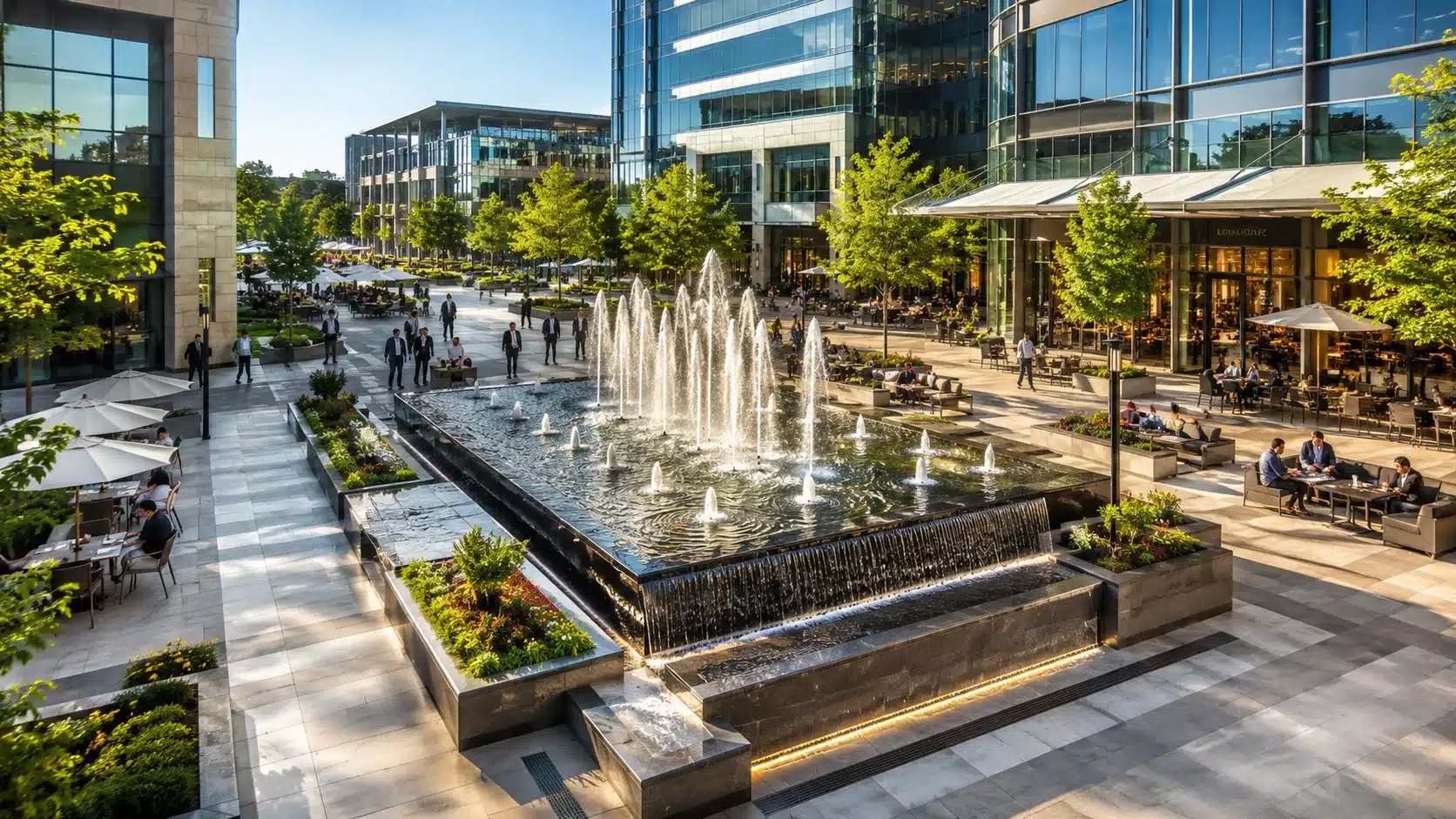
Developers reviewing the complete budget breakdown for a commercial fountain installation during a project planning meeting.

The True Cost of a Commercial Fountain: A Complete Budget Breakdown for Developers

The true cost of a commercial fountain goes beyond the visible water feature. A comprehensive budget should cover design, engineering, fabrication, mechanical equipment, electrical infrastructure, structural coordination, installation, commissioning, and long-term operating costs. Early planning for each phase helps developers reduce risk, avoid costly change orders, and ensure reliable project performance for decades.

Commercial Fountain Budget at a Glance

Design & Engineering

8–15%

Fountain Fabrication

40–60%

Mechanical Systems

20–35%

Electrical Infrastructure

8–15%

Structural Coordination

Project dependent

Installation & Commissioning

15–25%

Annual Operating Costs

Ongoing throughout ownership

Commercial Fountain Budget Checklist

Before requesting bids, make sure your project budget includes:

  • Architectural and fountain design fees
  • Structural and MEP engineering
  • Custom fountain fabrication
  • Mechanical equipment and controls
  • Electrical infrastructure
  • Installation and commissioning
  • Annual maintenance planning
  • Long-term operating expenses

Omitting any of these categories can significantly impact the total project investment.

Developers often ask one simple question:

“How much does a commercial fountain cost?”

The answer is more complex than a single dollar amount. A commercial fountain is a fully engineered architectural system that integrates structural design, hydraulic engineering, electrical infrastructure, specialty fabrication, automation, and long-term maintenance.

This complexity often leads to project challenges.

A developer may budget $100,000 for the visible fountain alone, only to later realize that pumps, filtration, electrical work, structural reinforcement, commissioning, and maintenance planning were excluded. These overlooked components can represent nearly half of the total project cost. Understanding the full cost of a commercial fountain before design begins enables project teams to make informed decisions, coordinate consultants efficiently, and set realistic budgets for successful delivery.ry.

Regardless of project type, understanding all cost components is essential to keeping the project on schedule and within budget.

Why Commercial Fountain Costs Are Frequently Underestimated

Commercial fountains are often compared to sculptures, monuments, or landscape features.

In reality, commercial fountains function more like building systems.

Behind every finished fountain is an engineered network of pumps, filtration equipment, piping, lighting, automation controls, and electrical infrastructure that must operate continuously while maintaining exceptional water quality and reliability.

The visible fountain attracts attention but represents only a portion of the total investment.

A Commercial Fountain Is an Engineered System

Every commercial fountain combines multiple construction disciplines into one coordinated installation.

Project teams commonly include:

  • Architects
  • Landscape architects
  • Structural engineers
  • Mechanical engineers
  • Electrical engineers
  • Civil engineers
  • Fountain designers
  • General contractors
  • Commissioning specialists

Each discipline impacts the overall commercial fountain budget. Early collaboration is essential to avoid redesigns and unexpected costs.

Visible Construction Represents Only Part of the Budget

First-time developers are often surprised that the decorative fountain structure typically accounts for only 40–60% of the total installed project cost.

The remaining investment covers the systems required for safe and efficient fountain operation.

A complete commercial fountain budget typically includes:

  • Professional design and engineering
  • Custom fabrication
  • Mechanical equipment
  • Electrical infrastructure
  • Structural coordination
  • Installation
  • Commissioning
  • Lifecycle maintenance planning

Understanding this early enables developers to evaluate proposals accurately and reduce costly scope changes during construction.

Explore examples of completed Commercial Fountains:

https://fountains.com/commercial-fountains/

Cost Category 1: Design and Engineering

Every successful commercial fountain begins long before construction starts.

Professional planning establishes the foundation for hydraulic performance, structural integrity, long-term maintenance, and overall project coordination.

Skipping this phase often leads to higher construction costs.

Fountain Design

Custom fountain designers translate architectural concepts into buildable systems.

Responsibilities typically include conceptual layouts, construction documentation, hydraulic coordination, shop drawing reviews, equipment selection, and collaboration with the broader design team.

Effective design balances aesthetics with practical operation.

A visually impressive fountain that is difficult to maintain can quickly become a liability instead of an asset.

Hydraulic and Mechanical Engineering

Hydraulic engineering determines how water moves throughout the fountain.

Pump sizing, pipe diameters, nozzle performance, filtration systems, overflow design, and water treatment equipment all influence long-term reliability and operating efficiency.

Modern systems increasingly incorporate Variable Frequency Drives (VFDs), automated controls, and smart monitoring to reduce energy consumption while maintaining consistent water displays.

Structural Engineering

Commercial fountains impose substantial loads due to water weight, concrete foundations, stone finishes, and mechanical equipment.

Structural engineers verify that foundations, podium decks, rooftops, or elevated plazas can safely support these loads while coordinating waterproofing and drainage systems.

Early structural coordination often prevents expensive redesigns later in the project.

Lighting Design

Lighting has become an essential part of commercial fountain design.

Integrated LED systems highlight architectural details, improve nighttime visibility, and enhance visitor experiences while minimizing energy consumption.

Lighting designers coordinate beam angles, fixture placement, control systems, and maintenance accessibility from the earliest stages of design.

Professional design services often include:

  • Architectural fountain design
  • Hydraulic engineering
  • Mechanical coordination
  • Electrical coordination
  • Structural review
  • Lighting integration
  • Construction documentation
  • Commissioning support

Design fees are usually a small part of the total commercial fountain cost, but they often provide the greatest long-term value by reducing construction conflicts, minimizing change orders, and improving operational performance. Developers planning fully customized installations often begin by exploring completed Custom Fountains to understand how engineering and craftsmanship influence both project scope and investment.

https://fountains.com/custom-fountains/

Cost Category 2: Custom Fountain Fabrication

Most developers initially consider fabrication when estimating commercial fountain costs.

This includes the basin, architectural finishes, decorative elements, specialty metals, stonework, nozzles, and visible components that define the fountain’s appearance.

Fabrication is a major budget category, but costs vary significantly based on material selection, customization, manufacturing complexity, and installation requirements.

Material Selection Drives Budget

The material palette significantly influences both aesthetics and project cost.

Premium materials generally offer greater durability, longer service life, and stronger architectural impact, but they also require specialized fabrication techniques.

Common fabrication materials include:

  • Marine-grade stainless steel
  • Natural limestone
  • Granite
  • Hand-carved marble
  • GFRC (Glass Fiber Reinforced Concrete)
  • Architectural bronze
  • Copper

Each material has unique fabrication requirements, maintenance needs, and lifecycle costs, so early selection is critical for effective budget planning.

A commercial fountain fabrication facility featuring craftsmen assembling marine-grade stainless steel basins

Cost Category 3: Mechanical Systems

The mechanical system is a major contributor to overall commercial fountain costs, yet it is largely hidden after construction. Pumps, filtration systems, valves, controls, and piping are typically located beneath the plaza or in an equipment vault, ensuring daily operation.

A well-fabricated fountain requires a properly engineered mechanical system to function effectively.

Pump Systems

Pump selection determines the performance of every water feature. Whether the design includes dramatic vertical jets, cascading waterfalls, interactive displays, or tranquil reflecting pools, pumps must be carefully sized to deliver consistent flow while operating efficiently.

Modern commercial fountains typically use Variable Frequency Drives (VFDs) that automatically adjust pump speed based on demand. This improves energy efficiency, reduces equipment wear, and provides greater flexibility for seasonal programming.

Filtration and Water Treatment

Clear, healthy water is essential for both appearance and equipment longevity.

Commercial fountain systems often include automated filtration, chemical dosing, UV sterilization, and continuous water-quality monitoring to minimize algae growth, scale buildup, and equipment corrosion.

Proper water treatment not only improves aesthetics but also extends the lifespan of pumps, nozzles, and plumbing components.

Automation and Controls

Smart control systems have become standard for many commercial fountain installations.

Building owners can monitor pump performance, lighting schedules, water levels, and equipment status remotely through centralized management systems.

Automated controls also reduce maintenance costs by identifying potential issues before they become major repairs.

Mechanical systems commonly include:

  • Primary and secondary circulation pumps
  • Variable Frequency Drives (VFDs)
  • Sand or cartridge filtration systems
  • Automatic chemical dosing
  • UV sterilization systems
  • PLC control panels
  • Remote monitoring technology
  • Equipment vaults

Although hidden from visitors, these systems often represent 20–35% of the total commercial fountain budget and are essential for long-term reliability.

Cost Category 4: Electrical Infrastructure

Electrical infrastructure is another cost category often underestimated during early project planning.

Every commercial fountain requires dedicated electrical service to power pumps, lighting, automation systems, sensors, and maintenance equipment.

Since electrical work is often handled by separate contractors, these costs should be included in the overall commercial fountain budget, not treated as a separate scope.

Dedicated Power Distribution

Commercial fountains typically require:

  • Dedicated electrical panels
  • Individual pump circuits
  • Lighting circuits
  • Ground fault protection
  • Equipment bonding
  • Underground conduit systems
  • Emergency disconnects

Effective coordination between the fountain designer and electrical engineer helps prevent costly field changes during construction.

Architectural Lighting

Lighting now extends well beyond basic underwater fixtures.

Today’s commercial fountains commonly feature programmable LED systems that can change colors for holidays, special events, or branding while consuming significantly less energy than older lighting technologies.

Smart lighting controls enable facility managers to automate schedules and lower operating costs.

Commercial fountain mechanical room with pumps, filtration equipment, electrical controls, and automated water treatment systems.

Cost Category 5: Structural Coordination

Water is heavy.

At approximately 8.34 pounds per gallon, even modest commercial fountains place substantial loads on foundations and supporting structures.

Combined with reinforced concrete, natural stone, stainless steel, and mechanical equipment, these factors make structural planning essential.

Ground-Level Installations

Ground-supported fountains require reinforced foundations capable of supporting the basin while accounting for drainage, settlement, and underground utilities.

Proper structural planning prevents cracking, movement, and long-term maintenance issues.

Elevated Plazas and Rooftop Installations

Commercial fountains installed on podium decks or rooftops introduce additional engineering requirements.

Structural teams evaluate:

  • Dead loads
  • Live loads
  • Dynamic water movement
  • Equipment vibration
  • Waterproofing assemblies
  • Drainage systems
  • Maintenance access

Coordinating these requirements during design significantly reduces construction delays and costly redesigns.

Key structural considerations include:

  • Foundation reinforcement
  • Equipment vault construction
  • Waterproofing integration
  • Expansion joints
  • Maintenance access
  • Future equipment replacement pathways

Cost Category 6: Installation and Commissioning

Fabricating a commercial fountain is only one phase of the project.

Installation requires specialized contractors experienced in fountain hydraulics, waterproofing, mechanical systems, electrical coordination, and precision leveling.

All components must function together before the fountain is operational.

Installation

Installation typically includes:

  • Setting fountain basins
  • Mechanical equipment installation
  • Piping connections
  • Electrical integration
  • Lighting installation
  • Waterproofing verification
  • System startup

With multiple trades involved, scheduling and coordination are essential to keep construction on track.

Commissioning

Commissioning confirms that every system performs exactly as designed.

Commissioning goes beyond activating the fountain; it verifies hydraulic performance, lighting, automation programming, safety systems, and water treatment before project acceptance.

Commissioning typically includes:

  • Pump testing
  • Hydraulic balancing
  • Lighting verification
  • Control programming
  • Water chemistry startup
  • Operator training
  • Maintenance documentation

Projects that invest in professional commissioning typically experience fewer operational issues after opening.

Common Budget Mistakes Developers Should Avoid

Even experienced development teams may underestimate the true cost of a commercial fountain if key budget categories are overlooked.

1. Budgeting Only for the Visible Fountain

Problem:

Developers often budget only for the architectural fountain while overlooking mechanical systems, electrical infrastructure, engineering, and commissioning.

Solution:

Prepare a comprehensive project budget that includes every phase from design through long-term maintenance.

2. Waiting Too Long to Coordinate Consultants

Problem:

Late coordination between architects, engineers, contractors, and fountain specialists frequently results in redesigns, schedule delays, and costly change orders.

Solution:

Engage the complete project team during conceptual planning to identify coordination issues before construction begins.

3. Ignoring Lifecycle Costs

Problem:

Projects sometimes focus solely on construction costs while overlooking annual maintenance, energy consumption, and equipment replacement.

Solution:

Evaluate the fountain’s total cost of ownership, including operational expenses over its expected lifespan.

4. Choosing the Lowest Proposal

Problem:

Selecting a contractor based solely on price can lead to lower-quality equipment, simplified mechanical systems, and higher future maintenance costs.

Solution:

Compare proposals based on engineering quality, equipment reliability, long-term performance, manufacturer support, and overall lifecycle value rather than initial price alone.

Reliability is not achieved at the end of the project.

It is built into the budget from the start.

Final Thoughts

Understanding the true cost of a commercial fountain involves more than estimating fabrication expenses. Successful projects account for every phase, from design and engineering to commissioning and long-term maintenance.

Developers who budget comprehensively from the outset are better able to control costs, reduce construction risks, and deliver water features that enhance property value for decades.

Instead of viewing a fountain as a standalone landscape feature, consider it an integrated architectural investment that supports placemaking, visitor experience, and the long-term identity of the development.

Work With Fountains.com

Fountains.com partners with developers, architects, landscape architects, general contractors, and property owners throughout every project phase, from concept to completion.

Our team provides transparent budgeting, custom engineering, precision fabrication, and expert installation support for projects ranging from corporate campuses and luxury resorts to public plazas and mixed-use developments.

Explore our collections:

Contact our team to discuss your commercial fountain project and receive expert guidance on budgeting, planning, engineering, and long-term operational success.

Key Takeaway

The cost of a commercial fountain goes well beyond the visible water feature. By planning for design, engineering, fabrication, mechanical systems, electrical infrastructure, commissioning, and lifecycle maintenance, developers can create architectural fountains that deliver lasting performance, strengthen property value, and become defining features of their developments.

Frequently Asked Questions

Commercial fountain costs vary based on size, materials, engineering requirements, and site conditions. Smaller projects may start in the tens of thousands of dollars, while large custom installations can reach several hundred thousand dollars or more when engineering, fabrication, mechanical systems, and installation are included.

Initial estimates often focus on the visible fountain and overlook engineering, mechanical systems, electrical infrastructure, structural coordination, commissioning, and ongoing operational costs. A complete budget covers every phase of the project from concept through long-term ownership.

Selecting energy-efficient pumps, LED lighting, automated water treatment systems, and smart controls can significantly reduce operating expenses. Preventative maintenance and proper commissioning also help extend equipment life while minimizing costly repairs.

Related Resources

Continue exploring commercial fountain planning and design:

SUMMER SALE: 10% OFF ALL PRODUCTS
Use Code: SUMMER10