

Introduction: When Winter Freezes Take You by Surprise
Even with the best preparation, nature sometimes has other plans. Perhaps you forgot to winterize your fountain, or an unexpected cold snap hit harder than forecasted. Either way, waking up to a frozen fountain mid-winter can feel alarming. Frozen water isn’t just inconvenient, it can expand inside pipes, pumps, and basins, leading to cracks, leaks, or costly replacements.
But don’t panic. There are safe, practical steps you can take if your fountain freezes in the middle of winter. In this article, we’ll walk you through immediate emergency actions, preventative strategies, and longer-term solutions to protect your fountain investment. Whether you own a small garden fountain, a multi-tiered showpiece, or a custom-built commercial installation, these tips will help you minimize damage and restore beauty to your landscape.
Understanding the Risks of a Frozen Fountain
The Science of Freezing Water
Water expands when it freezes, up to about 9% of its original volume. This seemingly small increase puts enormous pressure on fountain components such as pipes, pump housings, or basins. Even durable materials like concrete or cast stone can crack under pressure if water seeps into tiny pores or joints.
Common Damage Issues
- Cracked bowls and basins: Expansion can split decorative tiers or bowls.
- Damaged pumps: Pumps filled with water may crack internally, requiring full replacement.
- Broken pipes and tubing: Internal plumbing can rupture, leading to leaks once thawed.
- Surface erosion: Repeated freeze-thaw cycles wear down fountain finishes and sealants.
Cost Implications
Repairing or replacing parts isn’t just inconvenient, it’s often expensive. A new pump can cost anywhere from $150 to $600 or more, while repairing cracked basins might require full replacement. Taking emergency action quickly is key to preventing small issues from snowballing into major expenses.
Emergency Steps if Your Fountain Freezes
If you find your fountain frozen mid-winter, follow these steps in order. The goal is to minimize immediate risk, prevent further damage, and set the stage for safe thawing.
1. Turn Off the Pump Immediately
If the pump is still running in partially frozen water, shut it off right away. Running a pump against ice can burn out the motor or damage impellers. Disconnect the power supply before doing anything else.
2. Assess the Situation Carefully
Take a close look at your outdoor fountain. Is it lightly frozen with a thin layer of ice, or completely encased? Are there visible cracks or bulges? Document what you see with photos—this can be helpful for future repairs or warranty claims.
3. Do NOT Force the Ice to Break
Avoid hitting, prying, or chipping at the ice. Doing so can cause more damage than the freeze itself. Fountain materials are more brittle in cold temperatures, and sharp impacts can create cracks.
4. Thaw Slowly and Safely
If temperatures are expected to rise soon, allow the fountain to thaw naturally. For quicker thawing:
- Use warm (not hot) water poured gently over icy areas.
- Position space heaters or heat lamps at a safe distance, never directly against the fountain surface.
- Wrap heating cables (if available) around vulnerable tubing or pumps.
- Never use boiling water or open flames, as sudden temperature changes can cause thermal shock and cracks.
5. Remove Ice in Stages
As sections thaw, carefully scoop out chunks of ice and discard them. This relieves pressure on the fountain’s structure and gives remaining ice more room to expand safely.
6. Drain Residual Water
Once thawed enough, drain as much water as possible from the basin and internal pipes. A wet/dry vacuum can help remove stubborn water pockets. This prevents re-freezing if temperatures drop again.
Temporary Protective Measures
After the immediate emergency is under control, you’ll want to stabilize your fountain until permanent repairs or maintenance can be scheduled.
Insulate the Fountain
Wrap vulnerable sections with insulating blankets, towels, or specialized fountain covers. Even household materials like bubble wrap or old quilts can provide a temporary buffer against freezing air.
Use De-Icers or Heaters
Floating de-icers, commonly used in ponds, can keep small sections of water from freezing solid. Submersible pond heaters are another option if your fountain has enough volume to accommodate one safely.
Add Salt or Safe Additives?
Avoid using regular salt or chemical de-icers in your fountain. These can corrode pumps, stain materials, and harm wildlife. If you must use an additive, choose non-toxic products designed specifically for fountains or ponds.
Long-Term Prevention: Preparing for Future Winters
The best emergency plan is prevention. Here’s how to ensure you’re not caught off guard again.
1. Winterize in Advance
Before temperatures dip consistently below freezing:
- Drain the fountain completely.
- Remove and store the pump indoors.
- Clean and dry all surfaces.
- Cover the fountain with a breathable, waterproof cover.
2. Consider Fountain Placement
Fountains exposed to harsh wind chill freeze faster. Installing near a windbreak—such as a wall, fence, or shrubs, can extend operating time and reduce risk.
3. Upgrade Materials
If your fountain is particularly vulnerable, consider upgrading parts to more freeze-resistant materials. Fiberglass, resin, and certain metals withstand freeze-thaw cycles better than porous stone or concrete.
4. Use Temperature Sensors
Smart home technology makes prevention easier. Attach a sensor that notifies you when outdoor temperatures approach freezing. You’ll have a window to shut down the fountain or activate heating measures before ice sets in.
5. Routine Inspections
Check your fountain throughout the winter, even if it’s shut down. Covers can blow off, debris can accumulate, and small cracks can worsen if unnoticed. A 5-minute check every week can save you hundreds of dollars.
What If Damage Has Already Occurred?
Sometimes, despite your best efforts, freezing causes damage. Here’s how to respond:
- Cracked Basins: Small cracks can sometimes be sealed with waterproof epoxy. Large cracks may require replacement.
- Pump Replacement: If your pump froze solid, test it indoors once thawed. If it doesn’t run smoothly, replacement is usually necessary.
- Pipe Repairs: Leaks in tubing can often be fixed with patch kits or replacement hoses. For larger fountains with buried plumbing, professional repair may be needed.
- Professional Help: If your fountain is large, custom, or historically significant, contact a professional fountain service to assess and repair damage safely.
Case Study: A Garden Fountain in Subzero Temperatures
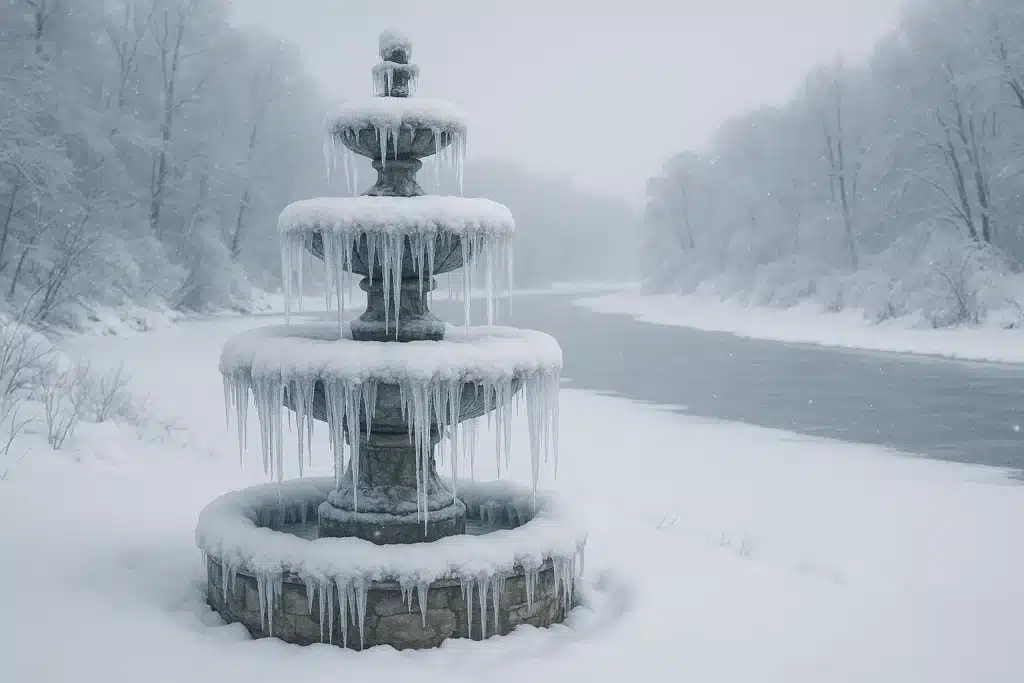
Imagine a homeowner in Minnesota with a three-tiered cast stone fountain. A sudden polar vortex drives temperatures to -15°F overnight. By morning, the fountain is a frozen sculpture.
The homeowner:
- Turns off the pump immediately.
- Photographs the fountain for reference.
- Uses lukewarm water and a space heater at a safe distance to begin thawing.
- Removes ice gradually over several hours.
- Drains the basin with a wet/dry vacuum once water begins to flow.
- Wraps the fountain in thick blankets for temporary insulation until a permanent cover arrives.
In this case, no cracks appeared because the homeowner acted quickly and avoided forceful methods. The pump, however, had minor damage and was replaced in spring.
Practical Checklist for Frozen Fountain Emergencies
Here’s a quick-reference list you can print or save for emergencies:
- Shut off the pump immediately.
- Document visible damage with photos.
- Do not break ice manually.
- Thaw gradually with warm water or heaters.
- Remove ice chunks as thawing progresses.
- Drain residual water using a pump or vacuum.
- Insulate or cover the fountain temporarily.
- Schedule inspection or repairs if damage is suspected.
Conclusion: Protecting Your Fountain Investment
A frozen fountain doesn’t have to spell disaster. With prompt action, careful thawing, and preventive planning, you can safeguard your water feature against winter’s harshest conditions. Think of your fountain as both art and engineering—it deserves attentive care to remain a beautiful centerpiece for years to come.
Taking time now to prepare for next winter will save you stress, money, and heartache. A few hours of effort each season can preserve the elegance and serenity your fountain brings to your space, regardless of the weather outside.


